Cap Table Management 2026: Beyond Spreadsheets
Stop spreadsheet meltdowns. Learn how founders track equity, SAFEs, and option pools in 2026 with clean, audit-ready systems and zero manual errors.
 James · Content Manager August 8, 2026 12 min read
Cap Table Management 2026: How Early Founders Track Equity, SAFEs, and Option Pools Without Messy Spreadsheets
Your cap table is not just a spreadsheet; it is the single source of truth for your company’s ownership. In 2026, the stakes are higher. Investors demand precision, regulators require transparency, and founders are juggling complex instruments like SAFEs, convertible notes, and dynamic option pools. If you are still managing this data in Excel, you are one typo away from a fundraising disaster.
This guide cuts through the noise. We will show you how to transition from fragile spreadsheets to a robust, audit-ready equity management system. You will learn exactly what documents to keep, how to structure your option pool, and why automation is no longer optional for serious founders.
Why Spreadsheets Fail You in 2026
It starts innocently enough. You create a simple Excel file to track founder shares. It works for six months. Then, you issue a SAFE to an early angel investor. You add a row. Then, you grant options to your first engineer. You update the percentage. Six months later, an investor asks for your cap table. You send the file. They ask a follow-up question about the conversion price. You realize you forgot to account for the dilution from the previous round. Panic sets in.
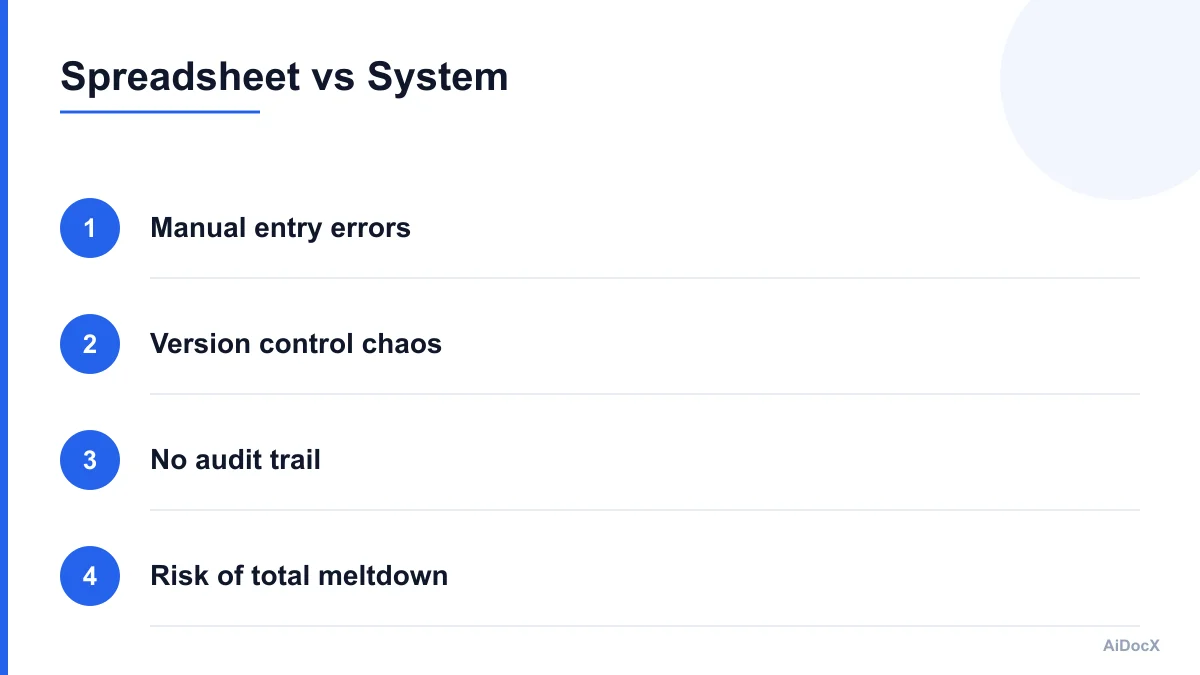
Spreadsheets are inherently fragile. They lack version control, meaning you cannot easily trace who changed what and when. They have no built-in validation, so a simple typo can skew dilution calculations across the board. Most critically, they do not integrate with your legal documents. A spreadsheet is a record of intent, not a record of execution. In 2026, investors and lawyers expect a digital, version-controlled ecosystem where every equity event is tied to a signed document. Relying on a static file is no longer a best practice; it is a liability.
The shift away from spreadsheets is not about technology for technology's sake. It is about risk mitigation. When you manage equity manually, you introduce human error into the most sensitive part of your business. A single misaligned percentage can delay a term sheet, confuse a board meeting, or, in worst-case scenarios, lead to legal disputes over ownership. The modern founder’s goal is to eliminate this friction. You need a system that automatically updates when documents are signed, ensuring your cap table always reflects reality. This is where dedicated cap table management software becomes essential, transforming equity from a administrative burden into a strategic asset.
The Essential Documents You Must Track
Before you can manage your cap table, you must understand the source documents that feed it. Your cap table is a derivative of your legal paperwork. If the paperwork is messy, the cap table will be wrong. In 2026, the standard equity stack includes four key categories of documents. Each serves a distinct purpose and requires specific tracking.
Founder Agreements These are the bedrock of your ownership structure. A founder agreement outlines the initial equity split, vesting schedules, and what happens if a founder leaves. It is critical to have this in writing, even among co-founders who trust each other implicitly. Disputes over equity often arise when expectations are not documented. Your cap table should reflect the fully vested and unvested shares as defined in these agreements.
SAFEs and Convertible Notes Simple Agreement for Future Equity (SAFEs) and convertible notes are the most common early-stage funding instruments. Unlike direct equity purchases, these instruments convert into equity later, typically at the next priced round. Each SAFE is a distinct legal obligation. You must track the investor’s name, the amount invested, the valuation cap, the discount rate, and the date of issuance. When the conversion event happens, these documents dictate how many shares the investor receives. Missing a single SAFE detail can lead to incorrect dilution calculations during due diligence.
Option Pool Grants Employee stock options are a primary tool for attracting and retaining talent. Each grant is a separate legal event. You need to track the employee’s name, the number of shares granted, the exercise price, the vesting schedule (usually four years with a one-year cliff), and the grant date. The option pool itself is a reserve of shares set aside for future grants. The size of this pool is often negotiated with investors before a priced round, and it directly impacts the pre-money valuation.
Stock Purchase Agreements For any direct equity purchases, such as those made by advisors or early investors who prefer immediate ownership, you need stock purchase agreements. These documents confirm the transfer of shares and update the shareholder register. Unlike SAFEs, these do not convert; they are immediate equity.
Keeping these documents organized is the first step toward a clean cap table. Without them, you are guessing. With them, you are recording. The goal is to have a centralized repository where every equity event is linked to its corresponding legal document. This creates an audit trail that stands up to scrutiny.
Structuring Your Cap Table for Growth
A cap table is more than a list of names and numbers. It is a structural blueprint of your company. How you structure it today will determine how easily you can raise funds and manage growth tomorrow. In 2026, investors expect your cap table to be clean, logical, and compliant.
Clean Up Your Capital Structure Start by ensuring all shares are properly categorized. Common stock, preferred stock, and options should be in separate buckets. Avoid having multiple classes of common stock unless there is a specific legal or tax reason. Investors prefer a simple capital structure because it reduces complexity during due diligence. If you have messy classes of stock, you will spend weeks explaining them to potential investors.
Plan for the Option Pool The option pool is often the most contentious part of a fundraising round. Investors will typically require a pre-money option pool, meaning the pool is created before the valuation is set. This dilutes the founders, not the investors. To manage this, you need to model different scenarios. If you need a 10% option pool, how does that affect your ownership percentage? Use a cap table tool to simulate these changes. This allows you to negotiate from a position of knowledge. You can show investors exactly how the pool impacts their stake, making the conversation more transparent.
Track Vesting Schedules Accurately Vesting is the mechanism that protects the company if a founder or employee leaves early. Standard vesting is four years with a one-year cliff. This means no shares vest until the first anniversary, after which 25% vests, and the rest vests monthly over the next three years. Your cap table must reflect this. If a founder leaves after six months, they should only have 0% vested (assuming a one-year cliff). If they leave after 18 months, they should have 50% vested. Manual tracking of these dates is error-prone. Automated systems can calculate vesting based on start dates and schedules, ensuring accuracy.
Account for Dilution Dilution is the reduction in ownership percentage as new shares are issued. Every time you issue new shares, whether through funding, options, or conversions, existing shareholders are diluted. Your cap table should show both the absolute number of shares and the percentage ownership. It should also show the fully diluted share count, which includes all outstanding shares, options, and convertible securities. This metric is crucial for understanding the true value of each share.
The Role of SAFEs in Modern Equity Management
SAFEs have revolutionized early-stage fundraising, but they complicate cap table management. Because they do not have an immediate share count, they create a "floating" liability on your cap table. You cannot simply add them to the equity column. You must track them separately and model their conversion.
Tracking SAFE Details Each SAFE must be tracked individually. Key data points include:
- Investor Name: Who holds the SAFE?
- Investment Amount: How much was invested?
- Valuation Cap: What is the maximum valuation at which the SAFE converts?
- Discount Rate: What percentage discount does the SAFE holder get?
- MFN Clause: Does the SAFE have Most Favored Nation terms, allowing it to take better terms if a later SAFE is issued?
Modeling Conversion Scenarios When a priced round occurs, SAFEs convert into equity. The number of shares issued depends on the conversion price, which is determined by the valuation cap or discount rate. You need to model this conversion accurately. If you have multiple SAFEs with different caps, they will convert at different rates. A manual spreadsheet makes this calculation nearly impossible without complex formulas that are prone to error. Cap table software automates this process, calculating the exact number of shares each SAFE holder receives based on the terms of the priced round.
Impact on Option Pool SAFEs also impact the option pool. In many cases, the option pool is created after SAFEs convert. This means the SAFEs are diluted by the creation of the pool. You need to model this sequence correctly. If you create the pool before the SAFE conversion, the SAFEs get more shares. If you create it after, the SAFEs get fewer. The order of operations matters significantly for the final ownership percentages.
Building a Bulletproof Equity System
Transitioning from spreadsheets to a robust system requires a deliberate approach. It is not just about buying software; it is about establishing a process. Here is how to build a system that withstands investor scrutiny.
1. Centralize Your Documents Every equity document must be stored in one place. This includes founder agreements, SAFEs, option grants, and stock purchase agreements. Use a digital platform that allows you to upload, sign, and store these documents. This creates a single source of truth. When an investor asks for your cap table, you can verify every number against a signed document. This builds trust and speeds up due diligence.
2. Automate Calculations Manual calculations are the enemy of accuracy. Use a cap table management tool that automatically updates your cap table when you input new data. When you add a new SAFE, the tool should update the fully diluted share count. When you grant options, it should adjust the option pool. This eliminates human error and ensures that your cap table is always current.
3. Maintain an Audit Trail Every change to your cap table should be logged. Who made the change? When did it happen? Why was it made? An audit trail is essential for legal compliance and for resolving disputes. If an investor questions a share count, you can show them the history of changes. This transparency is a hallmark of professional equity management.
4. Regular Reconciliation Even with automation, regular reconciliation is necessary. At least quarterly, review your cap table against your legal documents. Ensure that all grants have been issued, all conversions have been processed, and all vesting schedules are accurate. This proactive approach catches errors before they become problems.
5. Integrate with Legal and Accounting Your cap table should integrate with your legal and accounting systems. When you issue a stock option, it should automatically update your accounting records. When you raise a round, the cap table should sync with your legal documents. This integration reduces administrative overhead and ensures consistency across your business.
Common Mistakes Founders Make
Even with the best intentions, founders often make critical errors in equity management. Avoiding these mistakes can save you time, money, and stress.
Ignoring Vesting for Co-Founders One of the most common mistakes is not vesting co-founder shares. If a co-founder leaves after six months, they walk away with 25% of the company. This is unfair to the remaining founders and investors. Always implement vesting schedules for all founders.
Not Modeling Dilution Founders often focus on their ownership percentage in the early stages, ignoring the impact of future rounds. If you do not model dilution, you may be surprised by how much your stake shrinks after multiple funding rounds. Use your cap table tool to project ownership through several rounds. This helps you set realistic expectations.
Forgetting to Update the Cap Table Issuing a stock option is not enough. You must update the cap table. If you issue options but forget to update the cap table, your records will be inaccurate. This can lead to problems when you try to raise a round or sell the company. Make updating the cap table a mandatory step in your equity issuance process.
Using Outdated Spreadsheets Some founders continue to use old spreadsheets even after raising significant funding. This is a red flag for investors. It suggests a lack of professionalism and attention to detail. Upgrade to a dedicated cap table management tool as soon as you issue your first SAFE or option.
Checklist for Equity Readiness
Before you engage with investors, ensure your equity management is in order. Use this checklist to audit your current system.
- All founder agreements are signed and stored digitally.
- All SAFEs and convertible notes are tracked with full details.
- Option pool size is defined and modeled for future rounds.
- Vesting schedules are set for all founders and employees.
- Cap table is updated to reflect all current equity events.
- Audit trail is maintained for all changes to the cap table.
- Fully diluted share count is calculated and verified.
- Cap table software is integrated with legal and accounting systems.
Conclusion: From Chaos to Clarity
Managing equity is not just an administrative task; it is a strategic imperative. In 2026, the ability to present a clean, accurate, and auditable cap table is a competitive advantage. It signals to investors that you are organized, professional, and ready for scale.
Transitioning away from spreadsheets is not difficult. It requires a shift in mindset and the right tools. By centralizing your documents, automating calculations, and maintaining a rigorous audit trail, you can eliminate the stress of equity management. You can focus on building your business, knowing that your ownership structure is solid.
Remember, every equity document — from founder agreements to SAFEs and option grants — plays a role in your cap table. Keeping these documents in one signed, version-controlled record ensures that your cap table stands up to investor and lawyer scrutiny. Tools like AiDocX can help you achieve this by keeping every equity document in one place, so you never have to worry about losing a critical signature or misaligning a percentage again.
Start today. Review your current system. Identify the gaps. Then, take the step toward clarity. Your cap table is the foundation of your company’s future. Build it on solid ground.
Ready to automate your documents with AI?
Start free with AiDocX — AI contract drafting, meeting minutes, consultation notes, e-signatures, and more in one platform.
Get Started FreeMore from AiDocX Blog
Affiliate Agreement Template (2026): Protect Your Business When Paying Commissions
Free affiliate agreement template for 2026: key clauses, FTC disclosure requirements, affiliate vs referral agreement compared, a worked example, and a copy-paste version.
James September 22, 2026 11 min
AI Receipt Generator (2026): Create Professional Payment Receipts in Seconds
Generate professional payment receipts with AI in seconds. Receipt vs invoice vs credit note explained, the fields to include, a worked example, and a copy-paste template.
James September 22, 2026 9 min
Bill of Sale Template (2026): Free Generator for Cars, Trailers & Personal Property
Free bill of sale template for 2026: the fields to include, state notarization rules, federal odometer disclosure, a worked example, and a copy-paste version.
James September 22, 2026 10 min