Commission-Only Sales Agreement Template 2026 Guide
Protect your startup with a clear commission-only sales agreement. Learn payout triggers, clawbacks, and dispute prevention for hiring your first sales rep in 2026.
 James · Content Manager August 9, 2026 10 min read
Commission-Only Sales Agreement Template 2026: How to Structure Pay for a Rep with No Base Salary
Hiring your first sales representative is a pivotal moment for any small business or startup. It signals growth, ambition, and the need to scale revenue. However, bringing on a commission-only sales rep without a base salary introduces significant financial and legal risks if the compensation structure is ambiguous. A poorly drafted agreement can lead to disputes over who gets paid, when they get paid, and what happens if a client cancels.
In 2026, the landscape of freelance and contract sales remains competitive, but so does the scrutiny around fair compensation and clear contractual terms. Founders must move beyond handshake deals and vague promises. You need a robust, legally sound commission-only sales agreement that protects your cash flow while offering your rep a clear path to earnings. This guide provides the framework to structure that agreement, ensuring both parties agree on the math before the first sale closes.
Why Commission-Only Agreements Require Extra Care
A commission-only arrangement shifts the financial risk entirely onto the sales representative. In exchange for this risk, the rep typically earns a higher percentage than a salaried employee would. While this can be attractive for startups with limited cash burn, it creates a high-stakes environment where clarity is paramount.
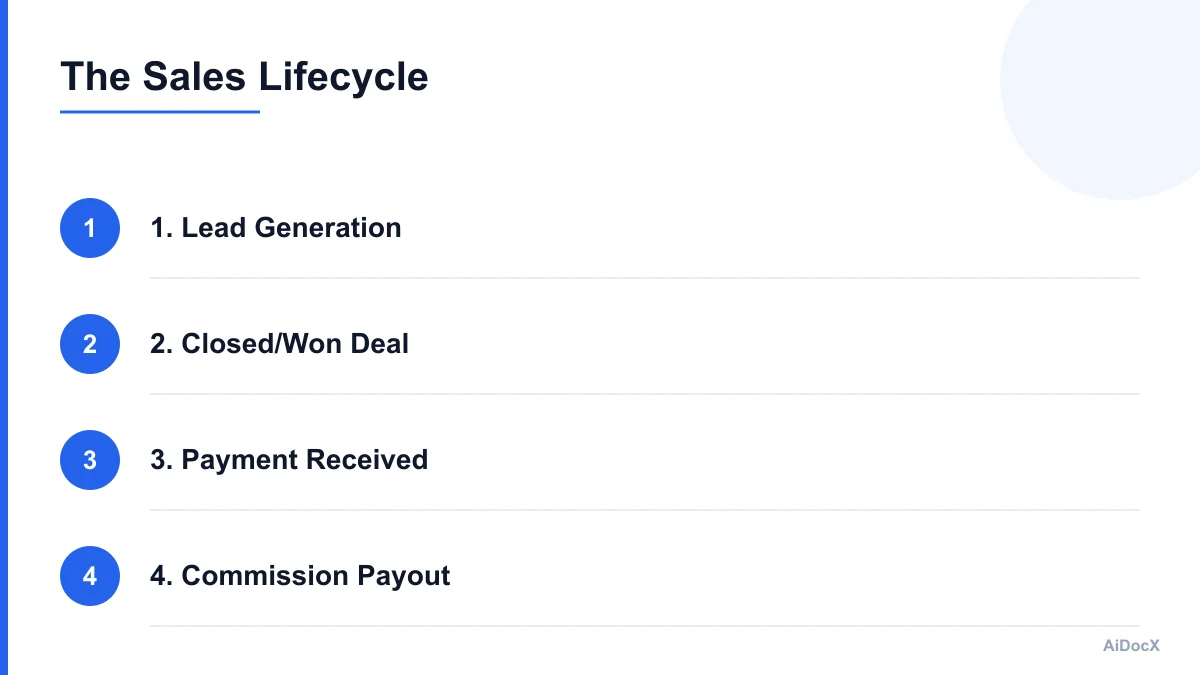
Without a base salary, the rep’s income is directly tied to their performance. This means the definition of "performance" must be unassailable. Disputes often arise from three sources:
- Attribution: Did the rep close the deal, or did they just introduce the client to a marketing channel that did the work?
- Timing: Is commission paid when the contract is signed or when the cash hits your bank account?
- Termination: If the rep leaves, do they still get paid on deals they closed but haven’t been paid for yet?
A well-drafted commission-only sales agreement template addresses these ambiguities upfront. It serves as the single source of truth, preventing "he said, she said" scenarios later. By defining the rules of engagement in writing, you protect your business from unexpected liabilities and ensure your rep feels secure in their earning potential.
Defining the Commission Structure
The foundation of any sales agreement is the commission structure. This section must detail exactly how the rep earns money. Vague terms like "competitive rates" or "standard industry percentages" are legal traps. You must specify the mechanism.
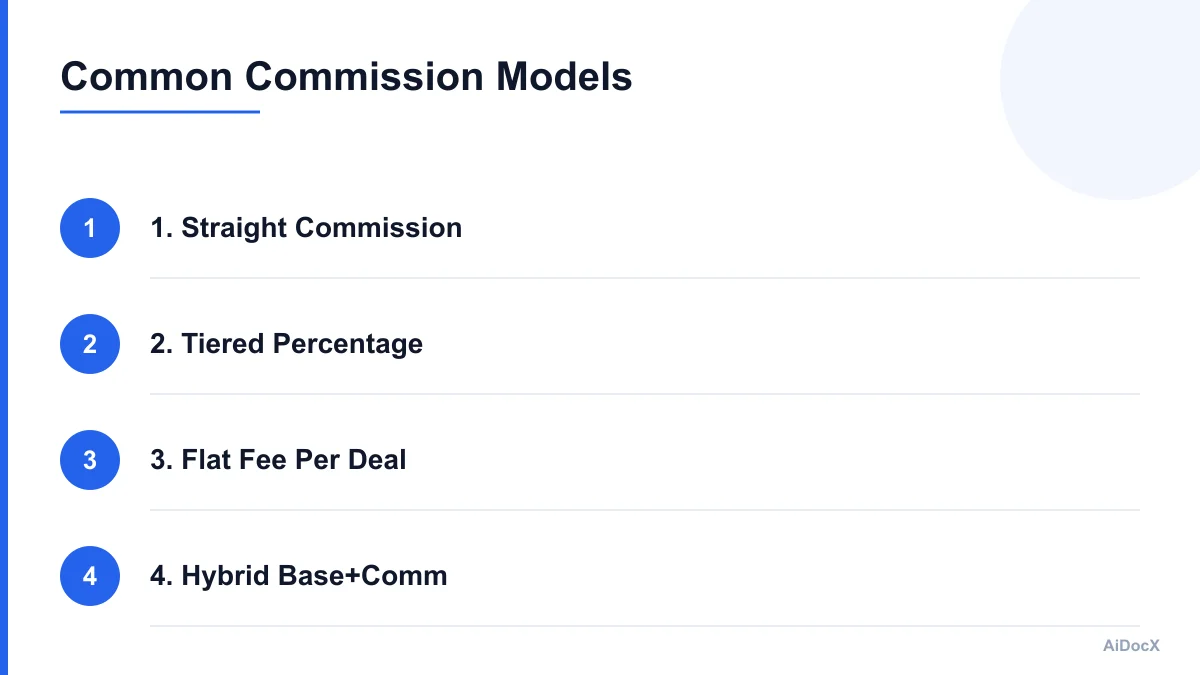
Straight Percentage Commission
The most common model is a flat percentage of the gross revenue generated by the rep’s efforts. For example, a 10% commission on all closed deals. This is simple to calculate and easy for the rep to understand. However, you must define what "gross revenue" includes. Does it include taxes? Shipping? Discounts?
Tiered Commission Structures
To incentivize higher performance, many founders use tiered structures. For instance:
- 0–$50,000 in sales: 10% commission
- $50,001–$100,000 in sales: 15% commission
- Over $100,000 in sales: 20% commission
This approach rewards high performers and aligns their goals with your growth targets. Ensure your agreement clearly defines the threshold dates. Does the tier reset annually, quarterly, or per deal?
Flat Fee Per Deal
For high-ticket items or standardized products, a flat fee may be more appropriate. For example, $500 per qualified lead that converts, or $1,000 per closed enterprise deal. This model simplifies accounting and removes the variability of deal size, though it may discourage reps from pursuing larger, more complex deals unless the fee scales with deal value.
Non-Cash Compensation
In 2026, equity or profit-sharing may supplement cash commissions, especially in early-stage startups. If you offer equity, ensure it is separate from the commission agreement or clearly integrated with vesting schedules. Never mix equity vesting triggers with sales commission payouts, as they serve different purposes.
Determining Payout Triggers and Timing
One of the most frequent sources of conflict in commission-only agreements is the timing of payouts. When does the rep actually get paid? The answer must be specific and tied to verifiable events.
Cash-Received vs. Contract-Signed
There are two primary schools of thought:
- Signed Contract: Commission is earned when the customer signs the agreement. This is aggressive and benefits the rep, as they get paid even if the client defaults or cancels shortly after.
- Cash-Received (Collected): Commission is earned only when the company receives payment from the client. This is the standard for most small businesses because it protects cash flow. If the client doesn’t pay, the rep doesn’t get paid.
For commission-only reps, the "cash-received" model is generally more sustainable for the business. However, you must define what happens if a client pays in installments. Do you pay commission on each installment as it arrives, or do you wait for full payment? The latter is risky for the rep and may lead to churn. A hybrid approach—paying commission as payments are received, capped at the total commission value—is often the fairest compromise.
Payment Schedule
Specify exactly when commissions are paid. Common schedules include:
- Net 15 days after receipt of customer payment.
- Net 30 days after the end of the calendar month in which payment was received.
- Bi-weekly or monthly, regardless of individual payment receipt (requires careful cash flow management).
Avoid open-ended terms like "when convenient" or "as funds permit." These create uncertainty and distrust.
Implementing Clawback Provisions
A clawback clause allows the business to reclaim commission if a customer cancels, requests a refund, or fails to pay. This is critical for commission-only agreements because the rep has already received money that the business may no longer be able to keep.
When Does a Clawback Apply?
Define specific triggers for clawbacks:
- Cancellation: The client cancels the contract within a specified period (e.g., 30 or 90 days).
- Non-Payment: The client fails to pay an invoice.
- Chargebacks: The client disputes the charge with their credit card company.
How Is the Clawback Calculated?
If a clawback is triggered, how is the amount determined?
- Full Clawback: The rep returns the entire commission associated with that deal.
- Pro-Rata Clawback: If the client cancels halfway through a service, the rep returns half the commission.
- Offset Against Future Commissions: Instead of demanding cash back, the business deducts the clawback amount from the rep’s next commission check. This is often easier to administer and less adversarial.
Ensure your agreement states that the rep is responsible for returning clawback amounts if they no longer work for the company. Include a clause allowing the business to withhold any final payments or payouts to satisfy clawback obligations.
Managing Territory and Lead Attribution
Disputes often arise over who gets credit for a sale. Did the rep find the client, or was it a warm lead from marketing? Did the rep close a deal that was already in the pipeline?
Exclusive vs. Non-Exclusive Territory
Define whether the rep has exclusive rights to a specific geographic region, industry vertical, or customer segment. If they are non-exclusive, clarify how conflicts are resolved. For example, if two reps pursue the same prospect, who gets the commission? A "first-to-file" or "first-to-introduce" rule can help.
Lead Registration and CRM Usage
Require the rep to log all prospects in a Customer Relationship Management (CRM) system. Commission should only be paid for leads that are registered and approved by the business. This prevents "cherry-picking" easy deals while ignoring harder ones.
Override Commissions
If the rep recruits other salespeople or manages a team, you may need to include override commissions. For example, the rep earns 5% of the sales generated by their subordinates. Define the duration of these overrides and how they change if the rep is promoted or leaves.
Termination and Residual Commissions
What happens when the relationship ends? This is often the most contentious part of the agreement. Reps want to be paid for deals they closed but haven’t been paid for yet. Businesses want to avoid paying for work that will no longer be supported.
Post-Termination Commissions
Standard practice is to pay commissions on deals that were closed and contracted before the termination date, provided the client pays. This is known as a "tail period." Define the length of this tail (e.g., 90 days, 6 months).
Exclusion of New Deals
Clearly state that the rep is not entitled to commissions on any deals closed after the termination date, even if they were initially introduced by the rep. This prevents reps from lingering on the books to collect residual income without contributing to current sales efforts.
Non-Compete and Non-Solicitation
Consider including non-solicitation clauses to prevent the rep from taking existing clients to a competitor. Non-compete clauses are harder to enforce in many jurisdictions, particularly for independent contractors, so consult local labor laws.
Drafting the Agreement: Best Practices for 2026
As you prepare your commission-only sales agreement, keep these practical tips in mind.
Use Clear, Plain Language
Avoid legalese where possible. The agreement should be understandable to both the founder and the sales rep. Ambiguity leads to litigation. Use defined terms (e.g., "Gross Revenue," "Effective Date," "Termination Date") and stick to them.
Separate Independent Contractor Status
Ensure the agreement explicitly states that the rep is an independent contractor, not an employee. This affects tax obligations, benefits, and control over work methods. Misclassification can lead to severe legal penalties. Include language about the rep’s autonomy, their responsibility for their own taxes, and their lack of entitlement to employee benefits.
Regular Review and Updates
Sales strategies and market conditions change. Include a clause that allows for the modification of commission rates or terms with written notice. For example, you may need to adjust rates during a product launch or a shift in business strategy.
Use Technology to Streamline
Drafting a comprehensive commission agreement can be time-consuming. Tools like AiDocX draft a commission agreement with clear rates, payout triggers, and clawback terms, then gets it signed so both sides agree on the math before the first sale closes. This ensures that critical legal elements are not overlooked and that the document is legally sound.
Checklist: Finalizing Your Commission Agreement
Before you have your sales rep sign the agreement, run through this checklist to ensure completeness and clarity.
- Commission Rate Defined: Is the percentage or flat fee explicitly stated?
- Base Calculation: Is "Gross Revenue" clearly defined (excluding taxes, discounts, etc.)?
- Payout Trigger: Is it tied to contract signing or cash receipt?
- Payment Schedule: Are specific dates or timeframes (e.g., Net 30) defined?
- Clawback Clause: Are conditions for reclaiming commissions clearly outlined?
- Territory/Lead Rules: Is there a process for lead registration and attribution?
- Termination Terms: Are post-termination commissions and tail periods defined?
- Independent Contractor Status: Is the non-employment relationship explicitly stated?
- Governing Law: Is the state/country jurisdiction specified?
- Signatures: Are both parties ready to sign digitally?
Conclusion
A commission-only sales agreement is more than a legal formality; it is a strategic tool that aligns incentives and protects your business. By clearly defining commission structures, payout triggers, clawbacks, and termination terms, you create a transparent environment where your sales rep can focus on selling, and you can focus on scaling.
In 2026, the expectation for clarity and fairness in business relationships is higher than ever. Taking the time to draft a robust agreement upfront prevents costly disputes and builds trust with your first sales hire. Remember, a good agreement doesn’t just protect you; it empowers your rep to succeed. Use available tools to streamline the process, ensure all legal bases are covered, and get the agreement signed before the first deal closes. Your future self—and your bottom line—will thank you.
Ready to automate your documents with AI?
Start free with AiDocX — AI contract drafting, meeting minutes, consultation notes, e-signatures, and more in one platform.
Get Started FreeMore from AiDocX Blog
Buy Sell Agreement Template (2026): Triggers, Valuation and Funding for Co-Owners
A free buy sell agreement template for co-owners, with triggering events, valuation methods, insurance funding and cross-purchase vs. redemption structures.
James September 26, 2026 12 min
Consignment Agreement Template (2026): Commission, Title, Risk of Loss and Unsold Goods
Free consignment agreement template for makers, artists and boutiques: commission split, title, insurance and how to protect consigned inventory.
James September 26, 2026 9 min
Distribution Agreement Template (2026): Territory, Exclusivity, Minimums and Reseller Terms
Free distribution agreement template (works as a reseller agreement template too): territory, exclusivity, minimums, pricing, IP and termination.
James September 26, 2026 13 min