Data Processing Agreement (DPA) Guide for SaaS Founders 2026
A GDPR-ready Data Processing Agreement explained for SaaS founders. Learn exactly what to include, when you need one, and how to deploy it fast.
 James · Content Manager July 4, 2026 4 min read
Data Processing Agreement (DPA) Guide for SaaS Founders 2026
If your SaaS stores, processes, or transmits any data belonging to EU residents, you need a Data Processing Agreement (DPA) in place before the first contract goes live. It is not optional paperwork—it is a legal requirement under the GDPR and a baseline expectation for enterprise buyers. This guide breaks down exactly what a DPA is, when you need one, and how to build a GDPR-ready template that actually moves deals forward.
What triggers a DPA in SaaS?
Anytime your platform handles personal data on behalf of a customer, a DPA is triggered. This covers everything from customer account information and billing contacts to usage logs that can be linked back to an individual. You do not need a DPA for purely anonymized or aggregate data, but the moment identifiable EU resident data enters your stack, regulators expect a written agreement between you and the customer.
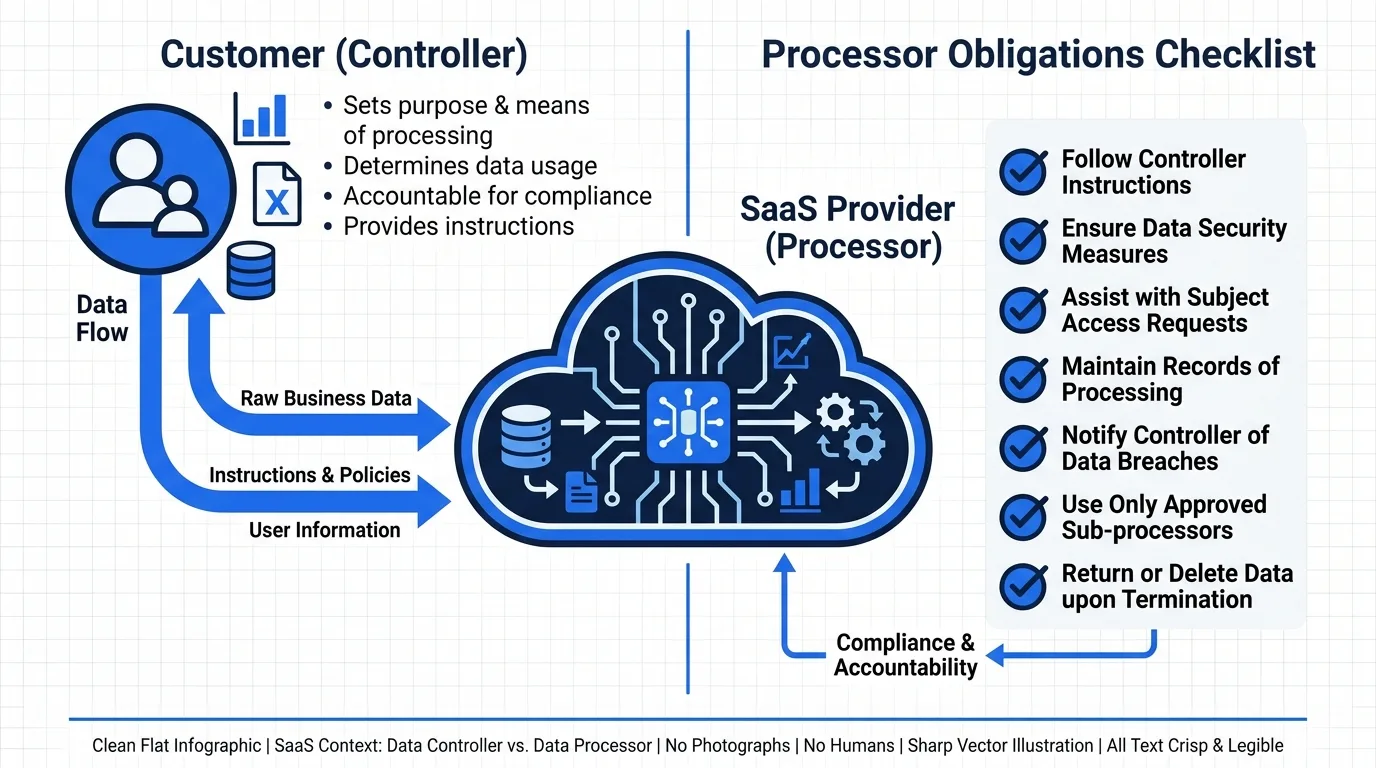
The trigger is not based on contract value or deal size. It is purely data-driven. If your product ingests, stores, or processes personal data for a B2B customer, you are acting as a data processor and must execute a DPA before or alongside the master service agreement.
Controller vs. Processor: know your role
GDPR compliance hinges on correctly mapping who decides why data is collected and who actually handles it.
- Data controller: Your customer. They determine the purpose and means of processing their users’ data.
- Data processor: Your SaaS company. You handle the data strictly according to the controller’s documented instructions.
Misclassifying your role is one of the most common compliance gaps. If you use customer data for product improvement, marketing, or AI training without explicit contractual permission, you may inadvertently become a controller. Keep your DPA tightly scoped to instruction-based processing, and document any secondary use cases separately.
The 7 must-have DPA clauses
A GDPR-ready DPA for SaaS should cover these core obligations:
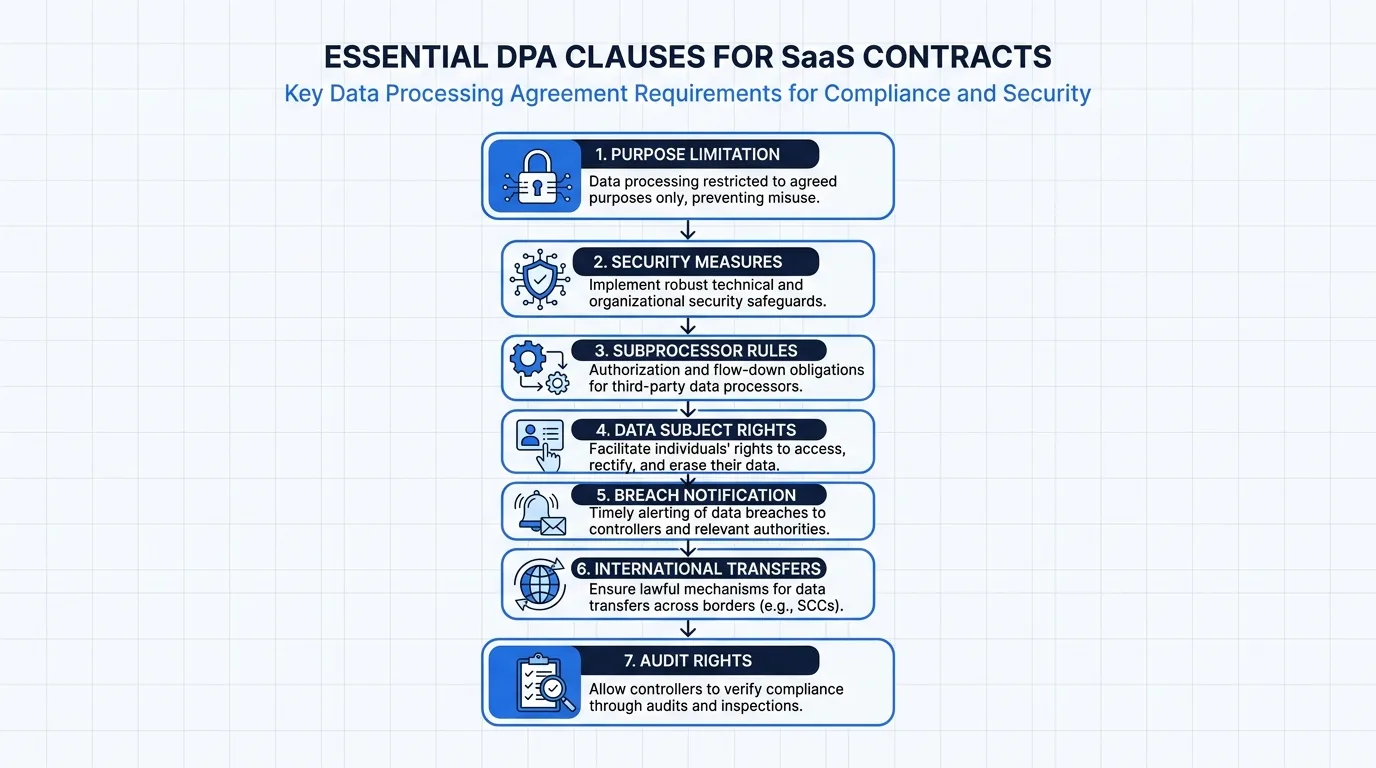
- Purpose and scope of processing: Exactly what data is handled and why.
- Security measures: Encryption, access controls, incident response, and staff training requirements.
- Subprocessor rules: Prior written authorization, flow-down obligations, and right to audit your vendors.
- Data subject rights: Your obligation to assist the controller with access, deletion, and portability requests.
- Breach notification: Timelines (typically 72 hours) and cooperation duties when a security incident occurs.
- International data transfers: Standard Contractual Clauses (SCCs) or adequacy decisions if data leaves the EEA.
- Audit and deletion: Right to inspect processing activities and mandatory return/deletion of data upon contract termination.
When do you need a DPA?
You need a DPA whenever:
- Your customer is based in the EU/EEA, or their end-users are
- You rely on third-party infrastructure (AWS, Vercel, Clerk, etc.) that touches personal data
- You embed analytics, support chat, or email tools that process user data
- Your contract includes data retention or deletion clauses
Even purely B2B customers handling employee or contractor data trigger DPA requirements. The safe rule of thumb: if your customer’s legal or procurement team asks for one, they already know what they need. Make it standard.
How to deploy DPAs without slowing sales
Manual DPA negotiation is the fastest way to kill enterprise momentum. Instead of treating it as a custom legal exercise, productize it. Attach a standardized, GDPR-ready DPA to your master service agreement and route it through e-sign alongside the main contract. This keeps legal review focused on exceptions rather than line-by-line edits.
Platforms like AiDocX let you attach a pre-approved DPA template directly to your SaaS contracts and e-sign it in one workflow. You set the guardrails once, and your sales and customer success teams execute it without waiting on outside counsel.
Quick compliance checklist
Use this before sending your next contract:
- Identify whether you are a controller or processor for the customer
- Map all subprocessors that touch personal data
- Confirm SCCs or transfer mechanisms for non-EEA hosting
- Define breach notification timelines and escalation paths
- Specify data retention and deletion procedures
- Add audit rights and security measure requirements
- Route DPA through e-sign alongside the master agreement
Next steps for your contract stack
A DPA is not a one-time document. It is a living compliance control that should evolve with your product, subprocessor stack, and regulatory guidance. Start with a standardized template, track your subprocessors in one place, and automate signature routing so compliance never becomes a bottleneck.
If you want a GDPR-ready DPA you can attach to your SaaS contracts and e-sign without reinventing the wheel, AiDocX includes a template built for modern SaaS workflows. Drop it into your contract stack, set your guardrails, and let your team close deals faster while staying audit-ready.
Ready to automate your documents with AI?
Start free with AiDocX — AI contract drafting, meeting minutes, consultation notes, e-signatures, and more in one platform.
Get Started FreeMore from AiDocX Blog
Machine Shop Job Traveler Template: Routing Sheet + Example
Copy a machine shop job traveler template for small job shops. Includes a routing sheet, filled example, traceability fields, sign-offs, and setup tips.
Weekly Status Report Template: 4 Formats + Examples
Copy one of four weekly status report templates for individual work, projects, leadership, or blockers. See a worked example and a practical review checklist.
How to Read a Business Contract: A Founder's Checklist (2026)
A practical way to review parties, scope, money, IP, liability, and exit terms before signing a business contract.
 MinjiLee October 7, 2026 9 min