Demand Letter Template 2026: Get Paid or Resolve Disputes
Small business guide to writing a professional demand letter in 2026. Get paid faster, resolve disputes, and protect your rights without hiring a lawyer.
 James · Content Manager August 2, 2026 7 min read
Demand Letter Template 2026: Get Paid or Resolve Disputes Before Hiring a Lawyer
Unpaid invoices and breached contracts are among the most stressful challenges small business owners face. While legal action is often the last resort, the most effective first step is a well-drafted demand letter. In 2026, with digital communication becoming the standard for formal disputes, a professional, legally sound demand letter can resolve issues quickly and cost-effectively. This guide provides a comprehensive framework for writing a demand letter that compels payment or resolution, complete with a template and best practices.
Why a Demand Letter Matters in 2026
A demand letter is a formal written notice to a debtor or opposing party, outlining the issues, the amount owed, and the consequences of non-compliance. It serves as a critical bridge between informal communication and legal action. In 2026, courts and mediators often look favorably upon parties who have attempted to resolve disputes amicably and formally before escalating. A demand letter demonstrates good faith and creates a paper trail.
For small businesses, the cost of litigation is prohibitive. A demand letter offers a low-cost, high-impact alternative. It forces the other party to take the dispute seriously. It shifts the dynamic from casual delay to formal obligation. Many disputes are resolved at this stage because the recipient realizes the sender is prepared to escalate.
When to Send a Demand Letter
Timing is crucial. A demand letter should be sent after informal attempts to resolve the issue have failed. This includes emails, phone calls, and meetings where the debtor has acknowledged the debt but failed to pay or perform. Sending a demand letter too early can damage relationships unnecessarily. Sending it too late can jeopardize your legal rights.
In 2026, digital records make it easier to track communication. Ensure you have documented all previous attempts to collect payment or resolve the dispute. This documentation strengthens your position and supports the claims made in the demand letter.
The Anatomy of a Winning Demand Letter
A effective demand letter is clear, concise, and professional. It should include specific details to avoid ambiguity. Here are the key components:
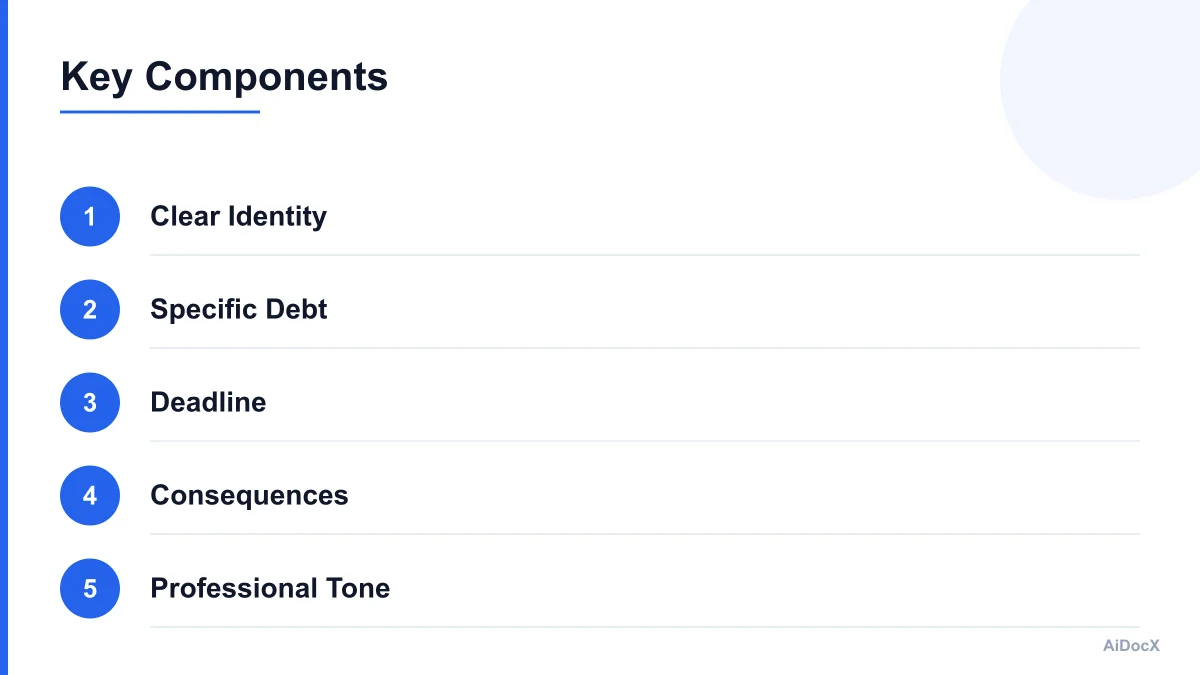
- Sender and Recipient Information: Clearly state who is sending the letter and who it is addressed to. Include full names, addresses, and contact information.
- Statement of Facts: Outline the history of the dispute. Include dates, amounts, and references to contracts or invoices. Be factual and objective.
- Specific Demand: Clearly state what you want. This could be payment of a specific amount, performance of a specific action, or cessation of a specific behavior.
- Deadline: Provide a reasonable deadline for compliance. This creates urgency and sets a clear expectation.
- Consequences: State the consequences of non-compliance. This could include legal action, reporting to credit bureaus, or other remedies.
- Professional Tone: Maintain a professional and firm tone. Avoid emotional language, threats, or insults.
Demand Letter Template 2026
Use the following template as a starting point. Customize it to fit your specific situation.
[Your Name/Business Name] [Your Address] [Your City, State, Zip Code] [Your Email] [Your Phone Number]
[Date]
[Recipient Name] [Recipient Address] [Recipient City, State, Zip Code]
Re: Demand for Payment/Performance – [Reference Number/Invoice Number]
Dear [Recipient Name],
I am writing to formally demand [payment of $Amount / performance of specific action] related to [describe the dispute, e.g., Invoice #12345 for services rendered on Date].
Statement of Facts: On [Date], we entered into an agreement for [describe the agreement]. According to the terms, [describe the obligations]. Despite our previous communications on [Dates of previous communications], the [payment/performance] has not been completed.
Specific Demand: We hereby demand that you [pay the full amount of $Amount / perform the specific action] by [Deadline Date, e.g., 14 days from the date of this letter].
Consequences of Non-Compliance: If you fail to comply with this demand by the stated deadline, we will have no choice but to [describe consequences, e.g., file a lawsuit, report to credit bureaus, seek other legal remedies]. This may result in additional costs, including legal fees and interest.
We hope to resolve this matter amicably and avoid further escalation. Please contact us at [Contact Information] to confirm your compliance or discuss this matter.
Sincerely,
[Your Name] [Your Title] [Your Business Name]
How to Customize Your Demand Letter
While the template provides a structure, customization is key to effectiveness. Tailor the letter to the specific details of your dispute.
- Be Specific: Include exact amounts, dates, and contract references. Vague statements weaken your position.
- Attach Evidence: Consider attaching copies of invoices, contracts, or previous correspondence. This provides immediate context and proof.
- Adjust the Tone: Depending on the relationship and the severity of the dispute, you may need to adjust the tone. However, always remain professional.
- Consult Legal Advice: If the dispute is complex or involves significant amounts, consider consulting with an attorney before sending the letter. They can help ensure the letter is legally sound.
Common Mistakes to Avoid
Avoid these common pitfalls when drafting your demand letter:
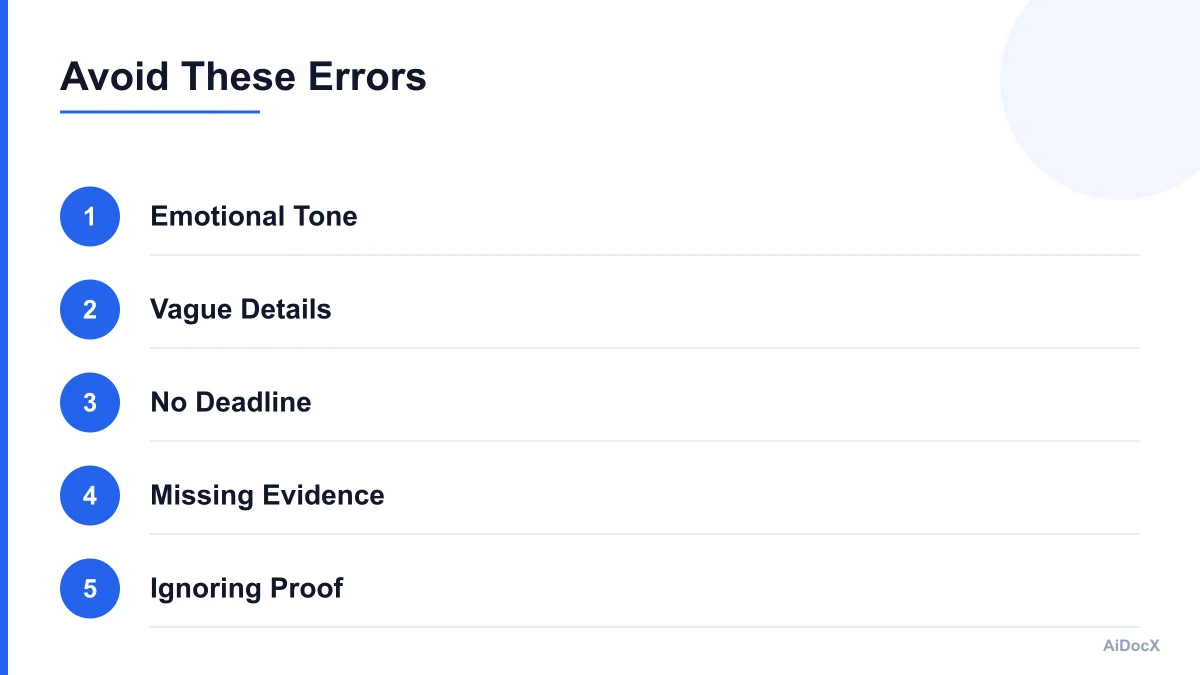
- Emotional Language: Avoid angry, threatening, or insulting language. This can undermine your credibility and may even expose you to legal liability.
- Vague Details: Be specific about what is owed or what action is required. Vague demands are easy to ignore.
- Missing Deadline: Always include a clear deadline for compliance. Without a deadline, the demand lacks urgency.
- Ignoring Proof: Ensure you have all necessary evidence to support your claims. If the recipient disputes the facts, you need proof.
- Sending Too Early: Do not send a demand letter as a first resort. Allow time for informal resolution attempts.
Proofreading and Delivery
Before sending, proofread the letter carefully. Check for spelling, grammar, and factual accuracy. A sloppy letter can undermine your professionalism.
In 2026, delivery method matters. Send the letter via a trackable method, such as certified mail with return receipt requested, or through a secure digital platform that provides timestamped delivery confirmation. This creates a verifiable record that the letter was sent and received.
Using AiDocX for Professional Demand Letters
Drafting a legally sound demand letter can be complex. AiDocX simplifies this process by generating firm, professional demand letters tailored to your specific situation. The platform ensures that all necessary legal elements are included and provides a timestamped, signed record of the letter. This record is invaluable if the dispute escalates, as it demonstrates your formal attempt to resolve the issue. AiDocX helps small businesses maintain professionalism and legal compliance without the need for immediate legal representation.
Checklist: Before You Send
- Review all facts and figures for accuracy.
- Ensure the tone is professional and firm.
- Include a clear deadline for compliance.
- Attach relevant evidence (invoices, contracts).
- Choose a trackable delivery method.
- Keep a copy of the letter and proof of delivery.
Conclusion
A well-crafted demand letter is a powerful tool for small business owners. It can resolve disputes quickly, save money on legal fees, and protect your rights. By following the guidelines and template provided in this guide, you can create a professional and effective demand letter. Remember to customize the letter to your specific situation, maintain a professional tone, and keep detailed records. For those seeking additional support, platforms like AiDocX offer streamlined solutions for drafting and documenting demand letters, ensuring you are prepared for any outcome.
Don't let unpaid invoices or contract disputes disrupt your business. Take control of the situation today by drafting a professional demand letter. Use the template provided, follow the best practices outlined, and consider using AiDocX for a polished, legally sound document. Your business deserves to be paid and respected.
Ready to automate your documents with AI?
Start free with AiDocX — AI contract drafting, meeting minutes, consultation notes, e-signatures, and more in one platform.
Get Started FreeMore from AiDocX Blog
AI Press Release Generator: Write One in Minutes (+ Template)
Learn what a press release is, the AP-style format, and how to use an AI press release generator to draft one in minutes with a fill-in template.
James September 21, 2026 10 min
Angel Investment Agreement (2026): Key Terms + Template Guide
Angel investor agreement explained: the four structures founders actually sign, key terms, securities basics, a closing checklist and a summary term sheet.
James September 21, 2026 12 min
Artist Commission Contract Template (2026): Free Template + Guide
Free artist commission contract template with license tiers, deposit, revision, refund and AI-training clauses, plus a guide to getting it e-signed.
James September 21, 2026 12 min