Digital vs Electronic Signatures: 2026 Legal Guide
Confused by digital vs electronic signatures? Learn the legal differences, eIDAS/ESIGN act rules, and when you need cryptographic security for your contracts in 2026.
 James · Content Manager August 14, 2026 11 min read
Digital Signature vs Electronic Signature: What’s Actually Different (2026 Guide)
You are likely reading this because your sales team sent a contract that required a "digital signature," but your vendor sent one that was just a scanned image of a name typed into an email. In casual business conversation, these terms are used interchangeably. In the eyes of the law, technology, and risk management, they are fundamentally different.
Understanding the distinction is no longer a technical nuance reserved for IT departments. As cyber fraud increases and cross-border commerce becomes the norm, the legal enforceability and security guarantees of your signatures are under scrutiny. This guide cuts through the marketing jargon to explain what electronic and digital signatures are, why the difference matters for your bottom line, and how to ensure your contracts hold up in court or during an audit in 2026.
The Core Difference: Definition and Scope
To understand the landscape, you must first accept that one term is a broad umbrella, and the other is a specific, secure type within that umbrella.
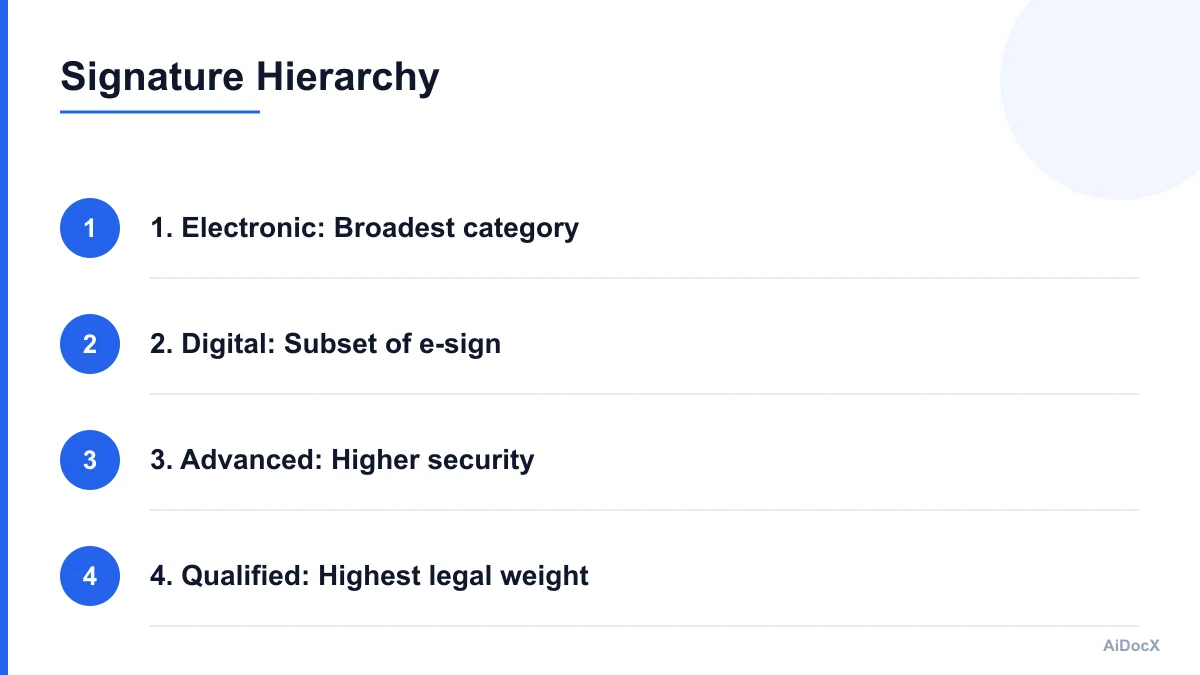
Electronic Signature (e-signature) is the broadest category. Legally, it is defined as any electronic sound, symbol, or process attached to or logically associated with a contract or other record and executed or adopted by a person with the intent to sign. This includes:
- Typing your name at the bottom of an email.
- Scanning a handwritten signature and pasting it into a PDF.
- Clicking an "I Agree" checkbox on a website.
- Using a platform like DocuSign or Adobe Sign to draw a signature on a screen.
The key element here is intent. If the technology can prove you intended to sign the document, it is generally considered an electronic signature. However, an e-signature does not inherently provide evidence of who signed it, when they signed it, or if the document was altered after signing.
Digital Signature is a specific, technical implementation of an electronic signature. It uses cryptographic techniques, specifically Public Key Infrastructure (PKI), to bind the signature to the document in a way that is mathematically verifiable. A digital signature does two critical things:
- Authenticity: It verifies the identity of the signer.
- Integrity: It ensures the document has not been altered since the moment of signing.
If an electronic signature is the legal concept of "signing," a digital signature is the technological lock that secures it. Think of it this way: All digital signatures are electronic signatures, but not all electronic signatures are digital signatures.
The Legal Framework: ESIGN, UETA, and eIDAS
In 2026, the legal landscape for signatures is mature but complex, especially if you operate across borders. You need to know which framework applies to your business.
United States: ESIGN and UETA
The Electronic Signatures in Global and National Commerce Act (ESIGN) and the Uniform Electronic Transactions Act (UETA) establish that a signature, contract, or record may not be denied legal effect solely because it is in electronic form. Both laws treat electronic signatures as legally valid, provided there is consent and intent.
However, neither ESIGN nor UETA strictly defines "digital signature." They leave the technical standards to industry practice. This means a simple typed name is legally binding in most commercial transactions in the US, but it offers less protection against disputes about authenticity than a cryptographic digital signature.
European Union: eIDAS Regulation
The eIDAS (electronic IDentification, Authentication and trust Services) Regulation is stricter and more structured. It defines three tiers of electronic signatures:
- Simple Electronic Signature (SES): Equivalent to the US e-signature. Legally valid, but with lower evidentiary weight.
- Advanced Electronic Signature (AdES): Requires unique linkage to the signer, capability to identify the signer, detection of subsequent data changes, and use of data under the signer’s sole control.
- Qualified Electronic Signature (QES): An AdES created by a qualified signature creation device and based on a qualified certificate. QES has the equivalent legal effect of a handwritten signature across all EU member states and cannot be challenged in court solely on the grounds that it is electronic.
For businesses operating in the EU, the distinction between SES and AdES/QES is not just technical—it is a compliance requirement. If you are handling sensitive personal data or public sector contracts, you may be legally required to use a "digital signature" (in the eIDAS sense) rather than a simple e-signature.
The Technology Behind the Signature: How PKI Works
Why do digital signatures provide more security? The answer lies in cryptography.
When you use a standard e-signature platform, the system records metadata: who signed, when, and from what IP address. This is an audit trail. While useful, it can be challenged. A signer can claim their account was hacked, or that the IP address was spoofed.
A digital signature uses Public Key Infrastructure (PKI). Here is the simplified process:
- Key Generation: The signer’s software generates a pair of keys: a private key (kept secret) and a public key (shared).
- Hashing: The signing software creates a unique digital fingerprint (hash) of the document. Even a single character change in the document results in a completely different hash.
- Encryption: The signer’s private key encrypts this hash. This encrypted hash is the digital signature.
- Verification: The recipient uses the signer’s public key to decrypt the signature and reveal the original hash. They then create a new hash of the received document. If the two hashes match, the signature is valid, and the document is unaltered.
Because the private key never leaves the signer’s device (in ideal implementations), it is extremely difficult to forge. The cryptographic bond between the signer and the document is mathematically robust. This is why digital signatures are preferred for high-stakes transactions, government filings, and regulated industries.
When Does the Distinction Actually Matter?
For most routine business operations, a simple electronic signature is sufficient. You don’t need a cryptographic digital signature to approve a $50 software subscription or sign an NDA with a freelance contractor. The cost and complexity of PKI often outweigh the benefits for low-risk agreements.
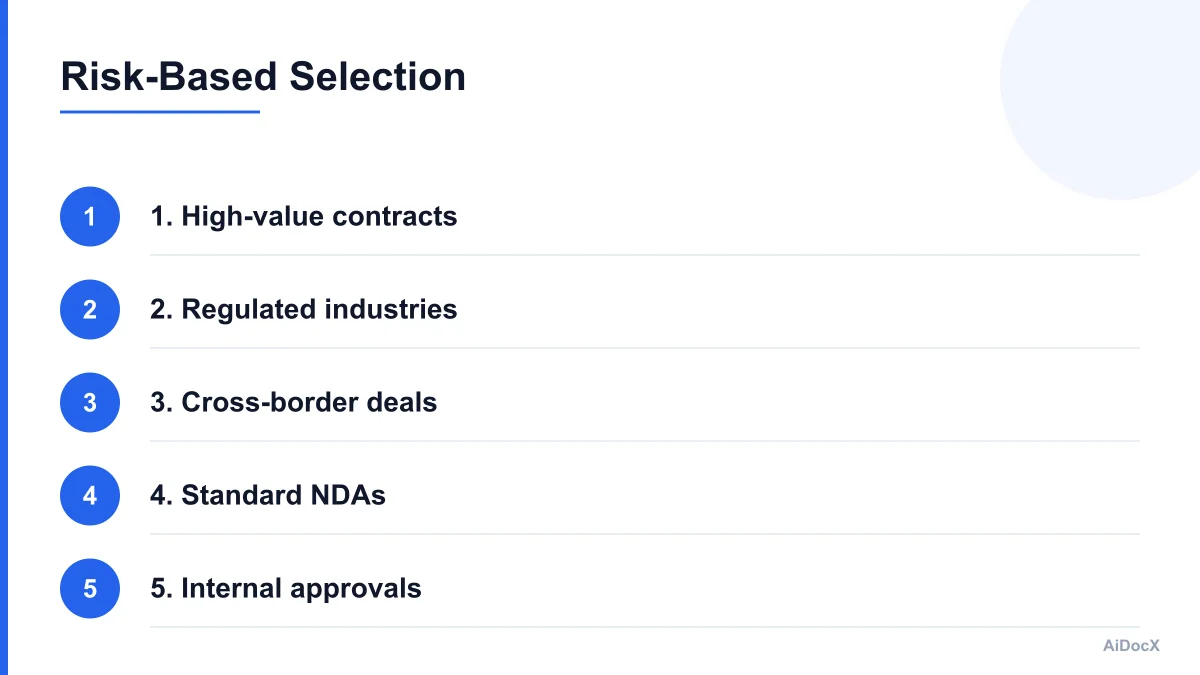
However, there are specific scenarios where the distinction matters significantly.
High-Value Contracts
If you are entering into a contract worth hundreds of thousands or millions of dollars, the potential cost of a dispute is high. In litigation, a digital signature provides a much stronger evidentiary basis for authenticity. It shifts the burden of proof. If a party claims they didn’t sign, the cryptographic evidence makes that claim harder to sustain.
Regulated Industries
Healthcare (HIPAA), finance (SEC, FINRA), and pharmaceuticals often have strict requirements for non-repudiation. These industries need to prove beyond reasonable doubt that the person who signed the document was who they claimed to be and that the terms were not altered. Many regulatory frameworks implicitly or explicitly require advanced or qualified electronic signatures.
Cross-Border Transactions
If you are doing business with entities in the EU, Middle East, or parts of Asia, local laws may mandate specific levels of signature security. For example, in Germany, certain notarial acts require a qualified electronic signature. Using a simple e-signature for these documents could render them invalid, causing significant delays and legal exposure.
Remote Work and Distributed Teams
As more companies operate with fully remote teams, the risk of identity fraud increases. A digital signature ties the action to a verified identity. If you are onboarding remote employees or contractors, ensuring that the signer is who they say they are is a critical security control.
Common Mistakes and Misconceptions
Even with this knowledge, businesses often make critical errors when managing signatures.
Mistake 1: Assuming All E-Sign Platforms Are Equal
Not all e-signature platforms offer true digital signatures with PKI. Some platforms offer "audit trails" but do not use cryptographic hashing to bind the signature to the document. Others may offer PKI but charge extra for it. Always verify the technical specifications. Look for terms like "PKI-based," "cryptographically signed," or "eIDAS Advanced/Qualified."
Mistake 2: Ignoring the Certificate Authority
A digital signature is only as strong as the Certificate Authority (CA) that issued the signer’s digital certificate. Not all CAs are equal. Reputable CAs undergo rigorous audits and adhere to strict standards (like WebTrust or ETSI). Using a signature from an unknown or unverified CA can undermine the legal standing of the document.
Mistake 3: Confusing Metadata with Cryptography
Some businesses believe that logging IP addresses and timestamps is enough. While this is good practice, it is not a digital signature. Metadata can be faked or disputed. Cryptographic hashing cannot be faked without altering the document, which breaks the signature. Do not confuse the two.
Mistake 4: Over-Securing Low-Risk Documents
Implementing digital signatures for every single document, including internal memos or low-value purchase orders, creates unnecessary friction and cost. It slows down the signing process and increases administrative overhead. Adopt a risk-based approach. Use simple e-signatures for low-risk items and digital signatures for high-risk, high-value, or regulated documents.
How to Choose the Right Solution for Your Business
Selecting the right signature technology is a strategic decision. Here is a practical framework for choosing.
Step 1: Assess Your Risk Profile
Categorize your contracts by risk.
- Low Risk: NDAs, internal approvals, standard service agreements under a certain threshold. Simple e-signatures are fine.
- Medium Risk: Vendor contracts, employment agreements, mid-value sales. Advanced e-signatures with strong identity verification are recommended.
- High Risk: M&A deals, intellectual property assignments, regulated healthcare/finance documents. Digital signatures with PKI are essential.
Step 2: Verify Compliance Requirements
Check the laws that apply to your industry and geography. If you operate in the EU, understand eIDAS tiers. If you are in the US, ensure your provider complies with ESIGN/UETA and offers robust audit trails. For global businesses, look for platforms that support multiple compliance standards.
Step 3: Evaluate the User Experience
Security should not come at the cost of usability. If the signing process is too complex, users will find workarounds, which undermines security. The best signature solutions integrate seamlessly into your existing workflow (CRM, ERP, email) and require minimal clicks from the signer.
Step 4: Check the Audit Trail and Storage
Ensure your platform provides a tamper-proof audit trail. This should include who signed, when, from where, and the cryptographic hash of the final document. The platform should also store the signed documents and the audit evidence securely for the required retention period.
Step 5: Consider Integration Capabilities
Your signature solution should integrate with your contract management system, CRM, and document automation tools. Manual uploading and downloading of documents increases the risk of errors and version control issues.
AiDocX: Simplifying Secure Signatures
For many business owners, the complexity of PKI and certificate management is a barrier. Historically, implementing true digital signatures required purchasing separate PKI products, managing certificates, and training staff on cryptographic concepts. This complexity often led businesses to settle for weaker e-signatures, leaving them exposed.
AiDocX addresses this gap by embedding cryptographic security into its e-signature workflow. AiDocX’s platform automatically applies the necessary cryptographic hashing and certificate-backed audit trails to your documents. This means you get the legal strength and security of a digital signature without the need to shop for a separate PKI product or manage complex key infrastructure.
Whether you are sending a standard NDA or a high-value commercial contract, AiDocX ensures that your signatures are legally robust and cryptographically verifiable. This approach simplifies compliance, reduces risk, and allows your team to focus on closing deals rather than managing security protocols.
Checklist: Pre-Signing Security Review
Before finalizing your signature strategy, use this checklist to ensure you are protected.
- Identify Contract Risk Level: Have you categorized all contracts by value and regulatory risk?
- Verify Jurisdiction: Do you know if eIDAS or other local laws apply to your signers?
- Check Platform Capabilities: Does your e-signature provider use PKI and cryptographic hashing?
- Review Audit Trail: Can you produce a tamper-proof record of who signed what and when?
- Test Identity Verification: How does your platform verify the signer’s identity before allowing them to sign?
- Update Policies: Have your internal policies been updated to reflect the distinction between e-signatures and digital signatures?
- Train Staff: Are your sales and ops teams trained on when to use which type of signature?
Conclusion
The difference between a digital signature and an electronic signature is not just semantic; it is a matter of security, legal enforceability, and risk management. In 2026, as cyber threats evolve and regulatory frameworks tighten, relying on simple e-signatures for high-stakes contracts is a gamble you cannot afford.
By understanding the hierarchy of signatures and implementing a risk-based approach, you can ensure that your contracts are legally binding, secure, and defensible. Whether you need a simple click-to-sign for low-risk agreements or a cryptographic digital signature for complex, regulated transactions, the right tool and strategy are available.
Don’t let confusion over terminology expose your business to unnecessary risk. Evaluate your current processes, align them with your risk profile, and consider solutions like AiDocX that bring enterprise-grade security to your everyday signing workflow. Your contracts are your business’s foundation—make sure they are built to last.
Ready to automate your documents with AI?
Start free with AiDocX — AI contract drafting, meeting minutes, consultation notes, e-signatures, and more in one platform.
Get Started FreeMore from AiDocX Blog
Buy Sell Agreement Template (2026): Triggers, Valuation and Funding for Co-Owners
A free buy sell agreement template for co-owners, with triggering events, valuation methods, insurance funding and cross-purchase vs. redemption structures.
James September 26, 2026 12 min
Consignment Agreement Template (2026): Commission, Title, Risk of Loss and Unsold Goods
Free consignment agreement template for makers, artists and boutiques: commission split, title, insurance and how to protect consigned inventory.
James September 26, 2026 9 min
Distribution Agreement Template (2026): Territory, Exclusivity, Minimums and Reseller Terms
Free distribution agreement template (works as a reseller agreement template too): territory, exclusivity, minimums, pricing, IP and termination.
James September 26, 2026 13 min