Employee Handbook Template 2026: Clear & Legally Sound
Draft a legally compliant employee handbook for 2026. Learn essential policies, legal updates, and how to automate acknowledgment with AiDocX.
 James · Content Manager August 2, 2026 11 min read
Employee Handbook Template 2026: Clear & Legally Sound
Writing your first employee handbook feels like trying to decode a legal textbook while simultaneously designing a company culture. For small business owners and first-time HR operators, the gap between "what feels fair" and "what is legally defensible" is often where disputes begin. In 2026, with evolving remote work laws, updated wage transparency requirements, and stricter data privacy norms, a generic template is no longer sufficient. You need a document that reflects your actual operations while protecting your business from liability.
This guide breaks down exactly what a small business needs in its 2026 employee handbook. We will move beyond fluff to cover the concrete policies, legal updates, and structural best practices that keep you compliant. We will also look at how modern tools can help you draft, customize, and track these critical documents without needing a full legal department.
Why a Handbook Is No Longer Optional in 2026
Many small business owners view an employee handbook as a bureaucratic hurdle—a box to check before hiring the first employee. In reality, it is your primary tool for consistent management and legal protection. Without a written policy, you are relying on memory and verbal instruction, which are easily misinterpreted or forgotten.
In 2026, the regulatory landscape for small businesses has become more fragmented. Federal laws like the Fair Labor Standards Act (FLSA) continue to evolve, but state and local regulations are where you will likely face the most scrutiny. From paid sick leave mandates in specific cities to new requirements for pay transparency in job postings and internal promotions, the compliance burden has increased.
A well-drafted handbook serves three critical functions:
- Legal Defense: It demonstrates that you provided notice of policies. In cases of wrongful termination or discrimination claims, showing that an employee acknowledged a clear policy can be your strongest defense.
- Consistency: It ensures that all employees are treated equally. If one employee gets away with arriving late, but you discipline another for the same behavior, you open yourself up to claims of unfair treatment or discrimination.
- Culture Setting: It defines the tone of your workplace. Is it formal and structured, or casual and flexible? The language in your handbook sets expectations for communication, collaboration, and conduct.
The Core Sections of a 2026 Employee Handbook
While every business is unique, certain sections are non-negotiable for legal soundness and operational clarity. Below is the essential structure for a 2026 handbook, tailored for small businesses.
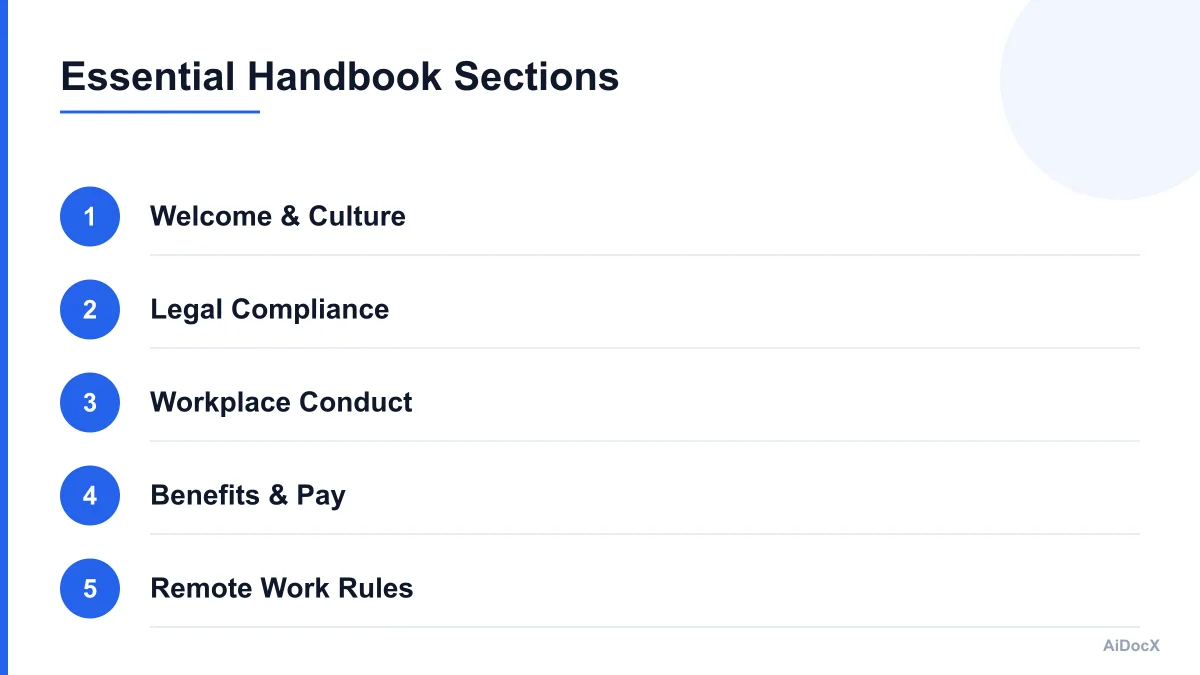
1. Welcome and Company Overview
Start with a warm welcome from the CEO or founder. This section should outline your mission, vision, and core values. It is not just about stating what you do, but how you do it. This sets the cultural baseline before you dive into the rules.
- Mission Statement: Why does your company exist?
- Core Values: What behaviors are rewarded? (e.g., "Integrity," "Innovation," "Respect")
- Equal Opportunity Statement: A clear disclaimer that you do not discriminate based on race, color, religion, sex, national origin, age, disability, or other protected characteristics. This is often required by law in many jurisdictions.
2. Employment Classification
Clearly defining the type of employment is crucial for tax and legal compliance. Misclassification is one of the most common and costly errors small businesses make.
- At-Will Employment: If you are in an at-will state, explicitly state that employment can be terminated by either party at any time, with or without cause. Warning: Do not use language that implies a contract for indefinite employment (e.g., "we promise to keep you employed as long as you do good work").
- Exempt vs. Non-Exempt: Clearly distinguish between salaried employees exempt from overtime and hourly employees eligible for overtime. Refer to the current FLSA salary thresholds for 2026.
- Independent Contractors: If you work with freelancers, include a section clarifying the difference between an employee and an independent contractor. Misclassifying employees as contractors can lead to severe penalties.
3. Workplace Policies and Conduct
This is the heart of the handbook. It covers the day-to-day rules that keep the workplace safe and productive.
- Anti-Harassment and Discrimination: Detail the company’s zero-tolerance policy. Include definitions of sexual harassment and hostile work environment. Most importantly, outline the reporting process. Who do employees contact? How will complaints be investigated?
- Code of Conduct: Address professional behavior, dress code (if applicable), and use of company property.
- Social Media Policy: In 2026, social media is deeply integrated into work and life. Define what employees can and cannot post regarding company information, clients, and colleagues. Protect your trade secrets while respecting employee free speech where applicable.
- Drug and Alcohol Policy: State your stance on substance use. Are you a drug-free workplace? Do you allow off-duty cannabis use if legal? Be specific about testing policies if applicable.
4. Compensation and Benefits
Transparency in pay and benefits builds trust. 2026 sees many states requiring more detailed compensation information.
- Pay Periods: Specify when employees get paid (e.g., bi-weekly, monthly).
- Overtime Policy: For non-exempt employees, outline the procedure for requesting and approving overtime.
- Benefits Overview: Summarize health insurance, retirement plans, PTO, and any other perks. You do not need to list every medical plan detail, but you should provide links or references to the official benefit summaries.
- Pay Transparency: If you operate in a state with pay transparency laws (like California, New York, or Washington), ensure your handbook acknowledges these rights and explains how salary ranges are communicated.
5. Time Off and Leave Policies
Clarity here prevents resentment and confusion.
- Vacation/PTO: Is PTO accrued or granted as a lump sum? Can it be carried over? What is the process for requesting time off?
- Sick Leave: Detail your sick leave policy. Note that many states have mandatory paid sick leave laws that exceed federal requirements.
- Family and Medical Leave (FMLA): If you have 50+ employees, FMLA applies. For smaller businesses, check your state’s family leave laws. Many states have their own paid family leave programs.
- Bereavement and Jury Duty: Outline paid or unpaid leave for these specific life events.
6. Remote and Hybrid Work Policies
With remote work now a standard expectation, your handbook must address the "new normal."
- Eligibility: Which roles are eligible for remote work?
- Equipment and Stipends: Who provides the laptop? Is there a home office stipend?
- Availability: What are the core hours? How should employees communicate availability?
- Data Security: Remote workers are a security risk if not managed properly. Require the use of VPNs, secure passwords, and clean desk policies even at home.
- Right to Disconnect: Some jurisdictions are beginning to recognize the right to disconnect. Consider outlining expectations for after-hours communication to prevent burnout.
7. Health, Safety, and Emergency Procedures
Your duty of care extends beyond the physical office.
- OSHA Compliance: State your commitment to a safe workplace and reference OSHA guidelines.
- Reporting Injuries: Outline the immediate steps an employee must take if injured on the job.
- Emergency Procedures: Include evacuation routes, shelter-in-place protocols, and emergency contact information.
- Workplace Violence: Define what constitutes a threat and the consequences for violent behavior.
8. Technology and Internet Use
Define what constitutes acceptable use of company devices and internet.
- No Expectation of Privacy: Clearly state that company devices and networks are for business use. The company reserves the right to monitor activity to ensure security and compliance.
- Prohibited Activities: List prohibited uses such as downloading illegal content, gambling, or excessive personal use.
- Data Protection: Reference any relevant data privacy laws (like GDPR or CCPA/CPRA) if applicable. Require employees to report data breaches immediately.
9. Disciplinary Actions and Termination
While no one wants to think about firing, the process must be clear.
- Progressive Discipline: Outline the typical steps: verbal warning, written warning, final warning, termination. Note that you can skip steps for serious offenses like theft or harassment.
- Termination Process: Explain what happens when employment ends (return of equipment, final paycheck, COBRA notices).
- Exit Interviews: Mention that an exit interview may be conducted to gather feedback.
Common Mistakes to Avoid When Drafting
Even with a good template, small business owners often make critical errors that undermine the handbook’s effectiveness.
1. Copy-Pasting from Another Company
Every business is different. A policy that works for a tech startup may not work for a retail store. More importantly, policies from another company may not comply with your specific state and local laws. Always customize.
2. Using Outdated Legal Language
Laws change frequently. A handbook written in 2023 may be invalid in 2026. For example, changes in overtime thresholds, paid leave accruals, and non-compete restrictions can render old policies unenforceable. Review your handbook annually.
3. Being Too Vague
Phrases like "employees may be eligible for bonuses" create unrealistic expectations. Be specific. "Discretionary bonuses are awarded at the company’s sole discretion and are not guaranteed." Clarity prevents disputes.
4. Ignoring State and Local Laws
Federal law is the floor, not the ceiling. If your state offers more generous sick leave or paid family leave, your handbook must reflect that. Failing to comply with local ordinances can result in fines and lawsuits.
5. Forgetting the "At-Will" Disclaimer
If you are in an at-will state, failing to include a clear at-will employment statement can lead to employees believing they have a contract for job security. This language must be prominent and unambiguous.
6. Not Getting Sign-Off
A handbook that sits on a shelf is useless. You must have employees acknowledge receipt and understanding. Without a signature, you cannot prove they read it.
How to Finalize and Distribute Your Handbook
Creating the document is only half the battle. The process of finalizing and distributing it is where many small businesses falter. Here is a step-by-step approach to ensure legal soundness and employee engagement.
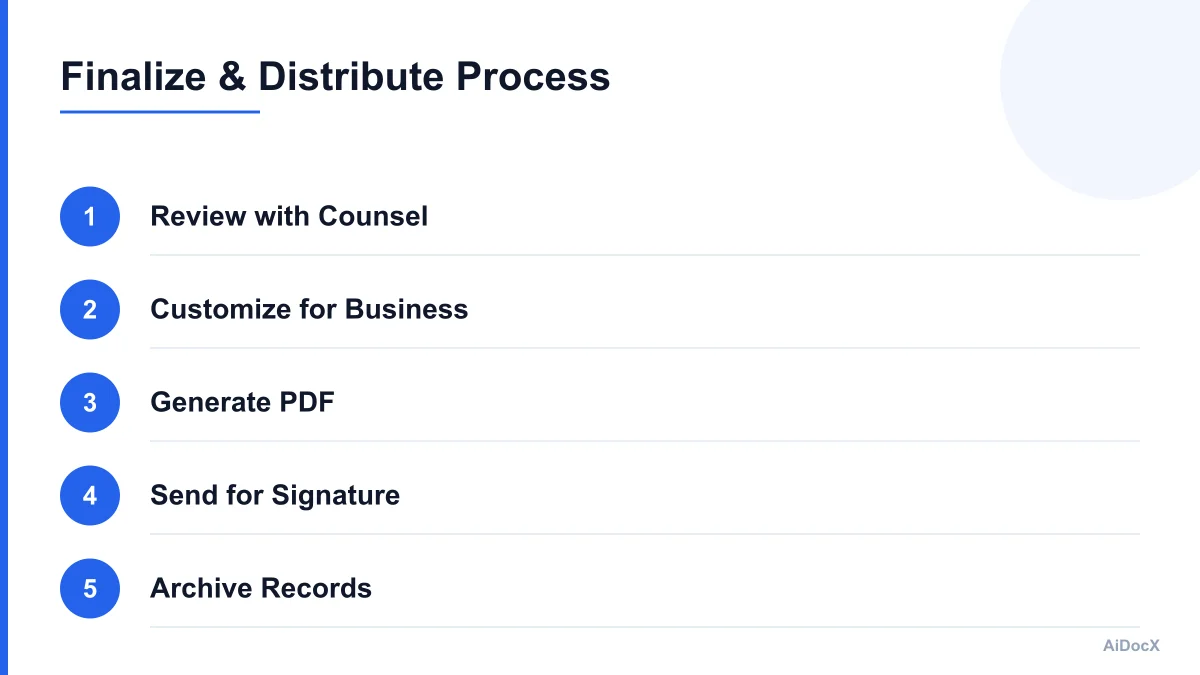
Step 1: Review with Legal Counsel
Before publishing, have an employment attorney review your draft. They can identify clauses that are unenforceable in your jurisdiction or missing required disclosures. This is a small investment that can save you thousands in legal fees later.
Step 2: Customize for Your Business Culture
Ensure the tone matches your company. If your culture is casual, avoid overly stiff legal jargon where possible, but maintain clarity. If your culture is formal, ensure the language reflects that professionalism.
Step 3: Digitize and Track
In 2026, paper handbooks are outdated. Use a digital platform to host your handbook. This allows you to update policies in real-time and track who has read them.
AiDocX drafts a tailored employee handbook from the business's actual policies and routes it to every employee for signed acknowledgment. This automation ensures that you never have to chase down signatures or worry about version control. When a policy changes, you can update the digital handbook and require employees to re-acknowledge it with a single click.
Step 4: Conduct an Onboarding Session
Do not just email the PDF. Schedule a 30-minute session during onboarding to walk new hires through the key sections. Answer their questions. This shows that you value transparency and gives them a chance to clarify misunderstandings immediately.
Step 5: Archive and Store
Keep a signed copy of the handbook and the employee’s acknowledgment form in their personnel file. If you use a digital system, ensure it has secure, immutable audit trails. These records are critical if you ever face an employment dispute.
Checklist: Is Your 2026 Handbook Ready?
Use this checklist to ensure your handbook covers all bases before distributing it to your team.
- At-Will Statement: Is the at-will employment disclaimer clear and prominent?
- Anti-Discrimination Policy: Does it include protected classes and a reporting mechanism?
- Harassment Policy: Is there a clear definition and anti-retaliation clause?
- Compensation: Are pay periods, overtime rules, and pay transparency statements included?
- PTO and Leave: Are vacation, sick, and family leave policies aligned with state laws?
- Remote Work: Are expectations for availability, equipment, and security defined?
- Technology Use: Is there a clear policy on monitoring and acceptable use?
- Safety: Are OSHA compliance and emergency procedures outlined?
- Legal Review: Has an employment attorney reviewed the draft for your specific jurisdiction?
- Acknowledgment Form: Is there a mechanism for employees to sign and date their receipt?
Conclusion
An employee handbook is not a static document; it is a living record of your company’s values and legal commitments. In 2026, the complexity of employment law makes a well-crafted handbook essential for any small business. It protects you from liability, ensures consistency, and helps you attract and retain top talent by setting clear expectations.
Start with the core sections outlined above, customize them for your unique business, and always verify with legal counsel. By leveraging tools like AiDocX to manage the distribution and acknowledgment process, you can focus on running your business rather than managing paperwork. A clear, compliant handbook is the foundation of a healthy, productive workplace.
Take the time to get it right. Your future self—and your legal team—will thank you.
Ready to automate your documents with AI?
Start free with AiDocX — AI contract drafting, meeting minutes, consultation notes, e-signatures, and more in one platform.
Get Started FreeMore from AiDocX Blog
Affiliate Agreement Template (2026): Protect Your Business When Paying Commissions
Free affiliate agreement template for 2026: key clauses, FTC disclosure requirements, affiliate vs referral agreement compared, a worked example, and a copy-paste version.
James September 22, 2026 11 min
AI Receipt Generator (2026): Create Professional Payment Receipts in Seconds
Generate professional payment receipts with AI in seconds. Receipt vs invoice vs credit note explained, the fields to include, a worked example, and a copy-paste template.
James September 22, 2026 9 min
Bill of Sale Template (2026): Free Generator for Cars, Trailers & Personal Property
Free bill of sale template for 2026: the fields to include, state notarization rules, federal odometer disclosure, a worked example, and a copy-paste version.
James September 22, 2026 10 min