Equipment Rental Agreement Template 2026: Protect Gear & Cashflow
Secure your small business with a 2026 equipment rental agreement template. Learn liability limits, deposit rules, and condition checks to protect gear and cashflow.
 James · Content Manager August 3, 2026 8 min read
Equipment Rental Agreement Template 2026: Protect Gear & Cashflow
Renting out equipment is a high-margin opportunity for small businesses, but it carries significant risk. A single accident, lost item, or unpaid invoice can wipe out months of profit. In 2026, the landscape of asset management has shifted toward stricter liability enforcement and digital verification, making a robust legal framework non-negotiable.
This guide provides a comprehensive equipment rental agreement template strategy. It covers essential clauses, liability protection, deposit structures, and condition verification. By implementing these standards, you safeguard your assets, ensure predictable cashflow, and maintain professional relationships with clients.
Why Standard Agreements Fail Small Businesses
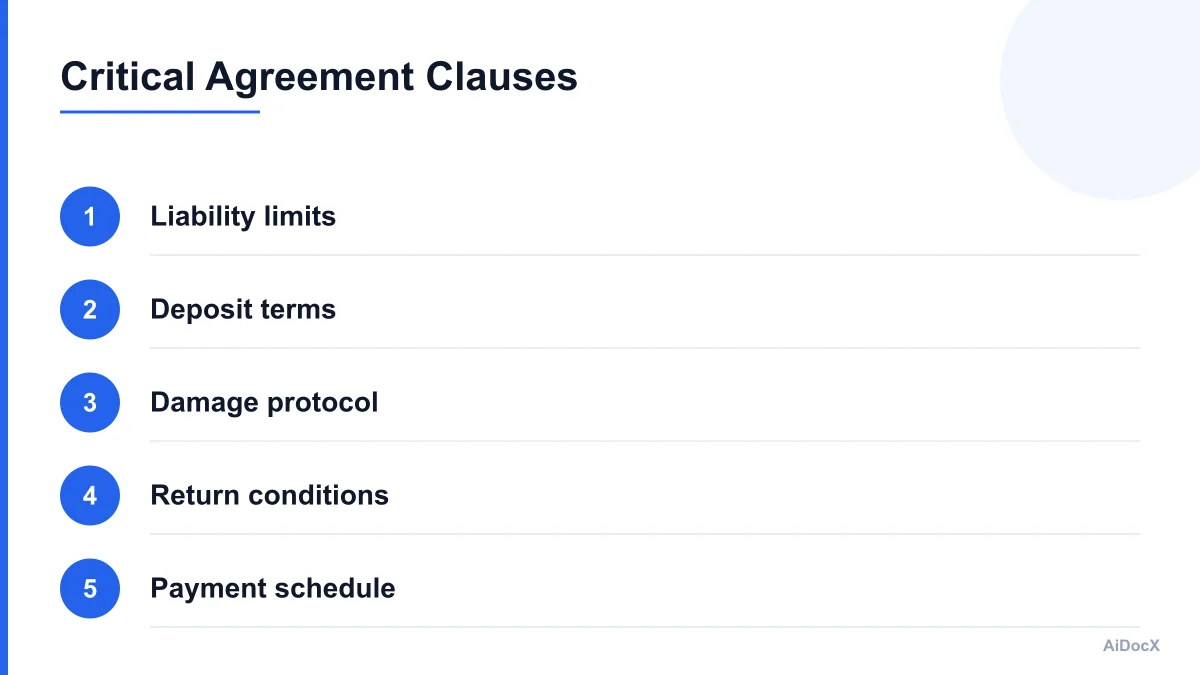
Many small business owners rely on generic "handshake" deals or simple PDF forms found online. These often lack the specific legal teeth needed to protect high-value assets. A standard agreement might state that the renter is responsible for damage, but it rarely defines how damage is assessed, when payments are due, or what constitutes force majeure.
In 2026, courts and arbitrators expect greater clarity in commercial contracts. Ambiguity favors the consumer. If your agreement doesn't explicitly state that the renter is liable for negligence, you may be stuck absorbing the cost of repairs. Furthermore, without clear late payment penalties, cashflow can suffer due to delayed settlements.
A professional agreement does more than just list terms; it sets expectations. It serves as a training tool for the renter, ensuring they understand their responsibilities before they ever touch the equipment. This proactive approach reduces disputes and protects your bottom line.
Defining Liability and Indemnification Clauses
The core of any equipment rental agreement is the liability clause. This section determines who pays when things go wrong. For small businesses, the goal is to limit your exposure to direct damages while ensuring you are compensated for repairs or replacement.
General Liability vs. Negligence
Your agreement should distinguish between normal wear and tear and negligent damage. Normal wear and tear includes minor scratches or dust accumulation. Negligent damage includes cracks from impact, water damage from misuse, or missing components.
A strong indemnification clause states that the renter agrees to hold the owner harmless against claims arising from their use of the equipment. This means if a third party is injured by the equipment due to the renter's misuse, the renter, not you, is responsible.
Insurance Requirements
For high-value equipment, require renters to provide proof of insurance. This can be a certificate of liability insurance naming your business as an additional insured. This shifts the risk to an insurance carrier rather than your small business balance sheet.
Limitation of Liability
Include a clause that caps your liability. For example, state that your total liability for any claim shall not exceed the total rental fees paid. This prevents a small rental fee from resulting in a massive lawsuit.
Structuring Deposits and Payment Terms
Cashflow protection is as critical as asset protection. Clear payment terms prevent disputes and ensure you have funds available for repairs or replacements if necessary.
Security Deposits
A security deposit acts as a financial buffer. It covers potential damages, late fees, or cleaning costs. The amount should be proportional to the equipment's value. For example, a $10,000 generator might require a $500-$1,000 deposit.
Clearly state how and when the deposit will be refunded. Specify that it will be returned within a certain number of days after the equipment is returned in good condition. This transparency builds trust and speeds up the return process.
Payment Schedules
Define the payment schedule explicitly. Is it a flat fee? An hourly rate? A daily rate? Include late payment penalties. A common practice is to charge a percentage of the outstanding balance for every week the payment is overdue. This incentivizes timely payment.
Method of Payment
Specify acceptable payment methods. Credit cards are convenient but come with processing fees. Bank transfers are cheaper but slower. Consider charging a small surcharge for credit card payments to offset transaction costs.
Verifying Condition and Preventing Disputes
One of the most common sources of dispute is the condition of the equipment at return. Without objective evidence, it becomes a "he said, she said" scenario. In 2026, digital verification is the gold standard.
Pre-Rental Inspection
Before handing over the equipment, conduct a thorough inspection. Document every detail. Take high-resolution photos and videos of the equipment from multiple angles. Note any existing scratches, dents, or missing parts.
Create a condition checklist. This checklist should include:
- Exterior body condition
- Operational status (does it turn on?)
- Accessories and attachments
- Fuel or battery levels
- Serial numbers
Post-Rental Inspection
When the equipment is returned, repeat the inspection process. Compare the current condition to the pre-rental photos. If there is new damage, document it immediately. Notify the renter before they leave the premises if possible. This prevents them from claiming the damage occurred after they returned the gear.
Digital Evidence
Use tools that allow you to store these records securely. AiDocX drafts an equipment rental agreement covering liability, deposits, and return condition, then gets it signed before the gear leaves the building. This ensures that the renter has acknowledged the condition report as part of the contract, making it legally binding evidence in case of a dispute.
Drafting the Perfect Rental Agreement
Creating a comprehensive agreement involves more than just copying and pasting text. It requires tailoring the terms to your specific business needs and the type of equipment you rent out.
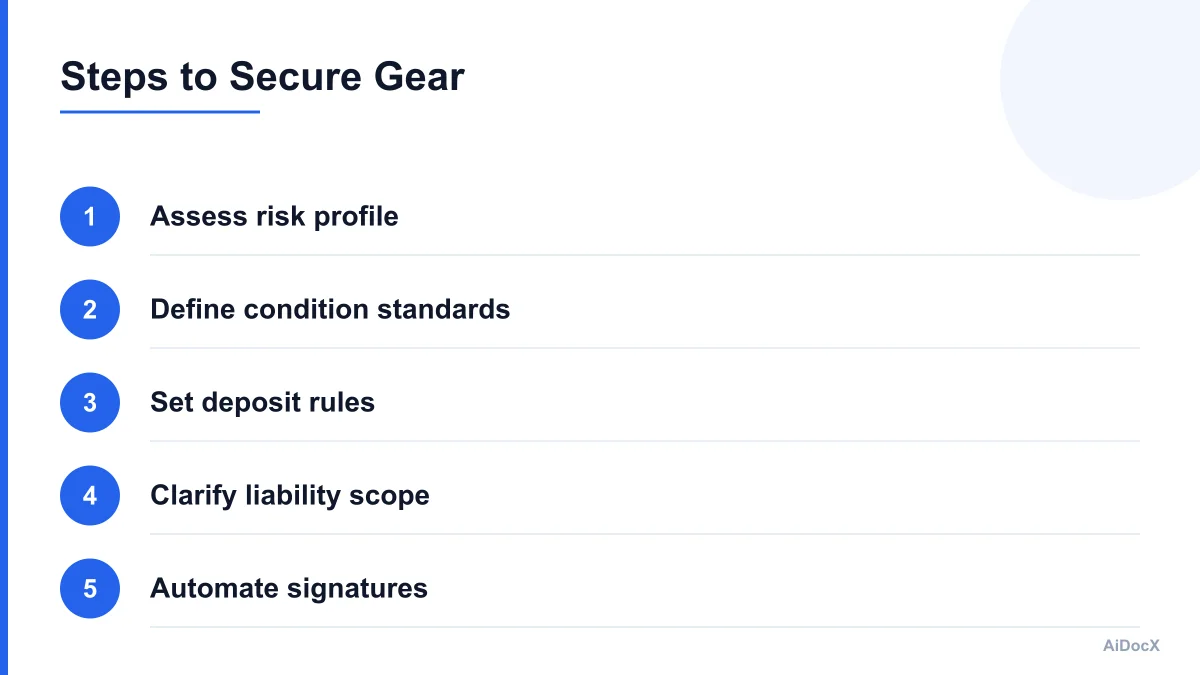
Step 1: Identify the Equipment
Clearly describe the equipment. Include make, model, serial number, and any unique identifiers. Attach photos to the agreement. This prevents confusion about which item is being rented.
Step 2: Define the Term
Specify the start and end dates and times. Include a grace period for returns, but define what happens if the equipment is returned late. Late fees should be steep enough to encourage on-time returns.
Step 3: Outline Usage Restrictions
Specify how the equipment can and cannot be used. For example, a construction generator should not be used for residential power backup without proper transfer switches. Prohibit illegal activities and unauthorized modifications.
Step 4: Include a Maintenance Clause
State who is responsible for maintenance. Generally, the renter is responsible for daily checks (oil, fuel, tires), while the owner is responsible for major repairs. However, if damage is caused by lack of maintenance, the renter pays.
Step 5: Add a Force Majeure Clause
This clause protects both parties in case of unforeseen events like natural disasters, pandemics, or government shutdowns. It should allow for cancellation without penalty if the equipment cannot be delivered or used due to these events.
Common Mistakes to Avoid
Even experienced business owners make mistakes in their rental agreements. Avoid these common pitfalls to ensure your contract is enforceable and effective.
Vague Language
Avoid terms like "good condition" or "reasonable time." Define these terms. "Good condition" means free of damage beyond normal wear and tear as defined in the attached checklist. "Reasonable time" means within 24 hours of the agreed return time.
Ignoring Local Laws
Rental agreements are subject to local, state, and federal laws. Some jurisdictions have specific consumer protection laws that override contract terms. For example, some states limit how much you can charge for late fees. Consult with a legal professional to ensure compliance.
Failing to Update the Agreement
Your business changes, and so should your contract. If you start renting out new types of equipment, update the agreement to include specific terms for those items. Regularly review your agreement to ensure it reflects current business practices.
Not Getting Signatures
A contract is not enforceable without signatures. Ensure both parties sign the agreement before the equipment is released. Digital signatures are legally binding and provide a clear audit trail.
The Role of Technology in Rental Management
Technology has transformed how small businesses manage rentals. From digital signatures to automated reminders, tools can streamline the process and reduce errors.
Digital Signatures
Paper contracts get lost. Digital signatures ensure that the agreement is stored securely and accessible to both parties. They also speed up the rental process, allowing you to get gear out the door faster.
Automated Reminders
Set up automated emails for payment reminders, return notifications, and condition checklists. This reduces administrative burden and ensures that nothing falls through the cracks.
Condition Tracking Software
Use software that allows you to upload photos and notes directly from your mobile device. This integrates the condition report with the rental agreement, creating a comprehensive record of the rental transaction.
Checklist for Small Business Owners
Use this checklist to ensure your rental agreement and process are robust.
- Review liability clauses with a legal professional
- Define "normal wear and tear" clearly
- Set appropriate security deposit amounts
- Create a detailed condition checklist
- Take pre-rental photos and videos
- Specify late payment penalties
- Require proof of insurance for high-value items
- Use digital signatures for all agreements
- Store records securely for at least 3 years
- Update agreement annually or when business changes
Conclusion
Protecting your equipment and cashflow requires more than just trust; it requires a solid legal framework. A well-drafted equipment rental agreement template for 2026 should cover liability, deposits, condition verification, and usage restrictions. By implementing these standards, you reduce risk, improve cashflow, and build a more professional reputation.
Start by auditing your current agreements. Identify gaps in liability protection and payment terms. Then, update your contracts to include clear, enforceable clauses. Consider using digital tools to streamline the process and maintain accurate records.
With the right agreement in place, you can focus on growing your business, knowing that your assets and income are protected. Take the time to get it right now, and avoid costly disputes later.
Ready to automate your documents with AI?
Start free with AiDocX — AI contract drafting, meeting minutes, consultation notes, e-signatures, and more in one platform.
Get Started FreeMore from AiDocX Blog

AI Press Release Generator: Write One in Minutes (+ Template)
Learn what a press release is, the AP-style format, and how to use an AI press release generator to draft one in minutes with a fill-in template.
James September 21, 2026 10 min
Angel Investment Agreement (2026): Key Terms + Template Guide
Angel investor agreement explained: the four structures founders actually sign, key terms, securities basics, a closing checklist and a summary term sheet.
James September 21, 2026 12 min
Artist Commission Contract Template (2026): Free Template + Guide
Free artist commission contract template with license tiers, deposit, revision, refund and AI-training clauses, plus a guide to getting it e-signed.
James September 21, 2026 12 min