Send Contracts to Multiple Signers in Order (2026 Guide)
Learn how to route contracts to multiple signers in the correct sequence. Avoid delays, enforce compliance, and close deals faster with this step-by-step guide.
 James · Content Manager July 4, 2026 4 min read
Send Contracts to Multiple Signers in Order (2026 Guide)
When a contract requires more than one signature, the order in which parties sign determines whether the deal closes cleanly or stalls in legal review. Parallel signing creates version conflicts, breaks compliance dependencies, and leaves teams chasing the wrong person. Routing contracts sequentially removes that friction and gives your pipeline a predictable cadence.
Why Sequential Signing Order Matters
Not every signature chain is flat. Some agreements require internal approval before external review. Others need legal sign-off before finance can lock pricing. When you ignore those dependencies, you introduce three recurring problems:
- Version drift: Signer B edits a clause while Signer A is still reviewing, forcing a re-send.
- Compliance gaps: Regulatory or audit requirements demand that specific roles sign in a documented sequence.
- Pipeline blind spots: You cannot forecast close dates when multiple parties are signing simultaneously with no clear handoff.
Sequential routing solves this by enforcing a single path. Each signer completes their portion, the document locks, and the next party receives a clean, finalized version. The result is fewer reworks, a tighter audit trail, and a clearer view of where each deal stands.
Mapping Your Signing Workflow Before You Send
Before you upload a document to any platform, draw the chain on paper or in a workflow tool. A structured map prevents last-minute reordering and catches edge cases early.
- List every required signer and note their exact role (e.g., vendor representative, legal counsel, CFO, client).
- Identify dependencies: Which signatures must precede others? Are there conditional paths like counter-offers or amendments?
- Assign ownership: One person should manage the send, track status, and handle escalations.
- Document the SOP: Save the mapping as a repeatable template so your team can execute it without reinventing the route each time.
A well-mapped chain also makes it easier to spot bottlenecks before they hit your inbox.
Setting Up Sequential Routes (Tools & Tactics)
Most modern e-signature platforms let you define signer order during the send process. The key is to configure the route correctly the first time:
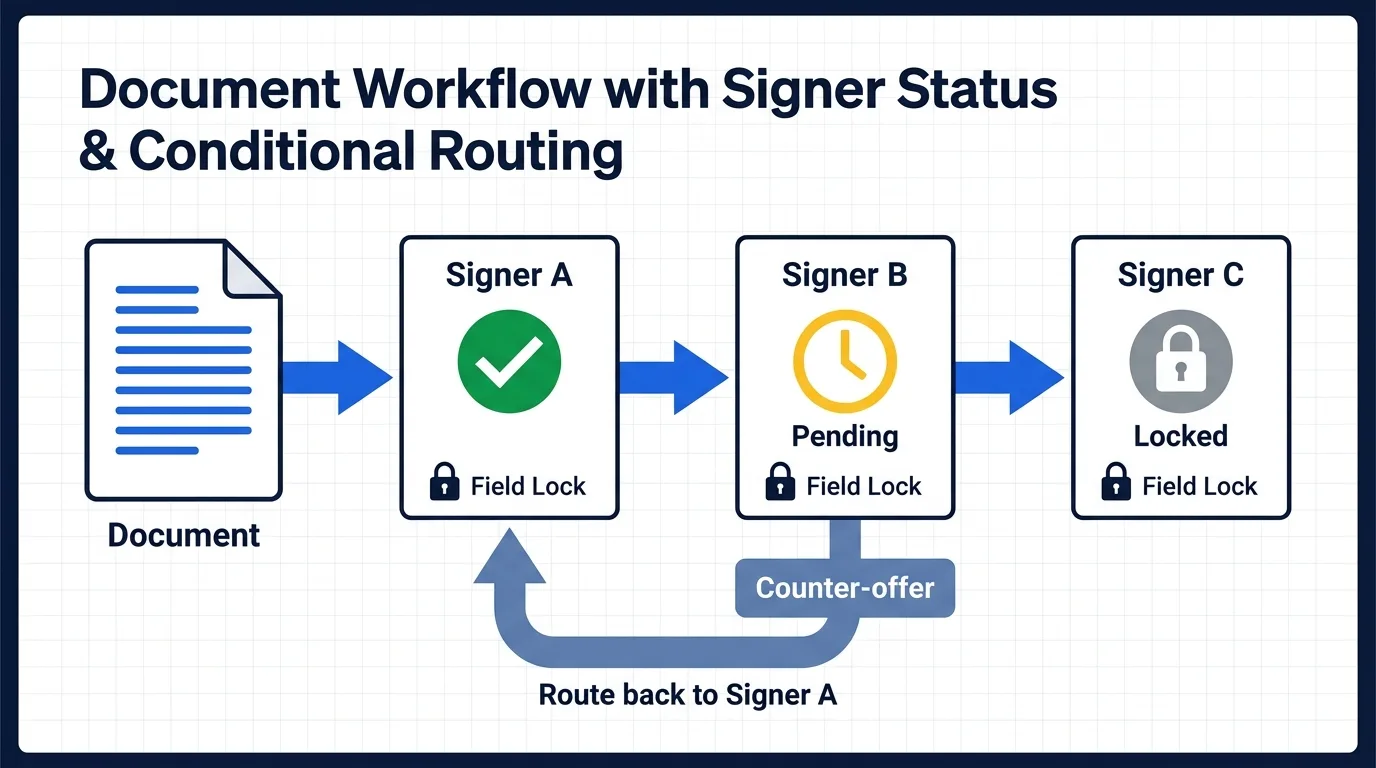
- Lock fields after each signature: Prevent downstream signers from seeing or editing clauses before the required party approves.
- Use clear subject lines and messages: Tell each signer exactly what they need to review, why they are next in line, and the expected turnaround.
- Test with internal accounts: Run the full sequence with team members before sending to external parties. Catch permission errors and routing bugs early.
- Leverage built-in sequencing: Tools like AiDocX support sequential signing order and reminders out of the box, so you can map the chain without custom scripting or workarounds.
Once the route is live, monitor it daily until the final signature lands. A single missed notification can stall a deal for days.
Handling Delays and Missed Signatures
Even with perfect routing, signers will occasionally go silent. A proactive delay-handling process keeps your pipeline moving without manual chasing.
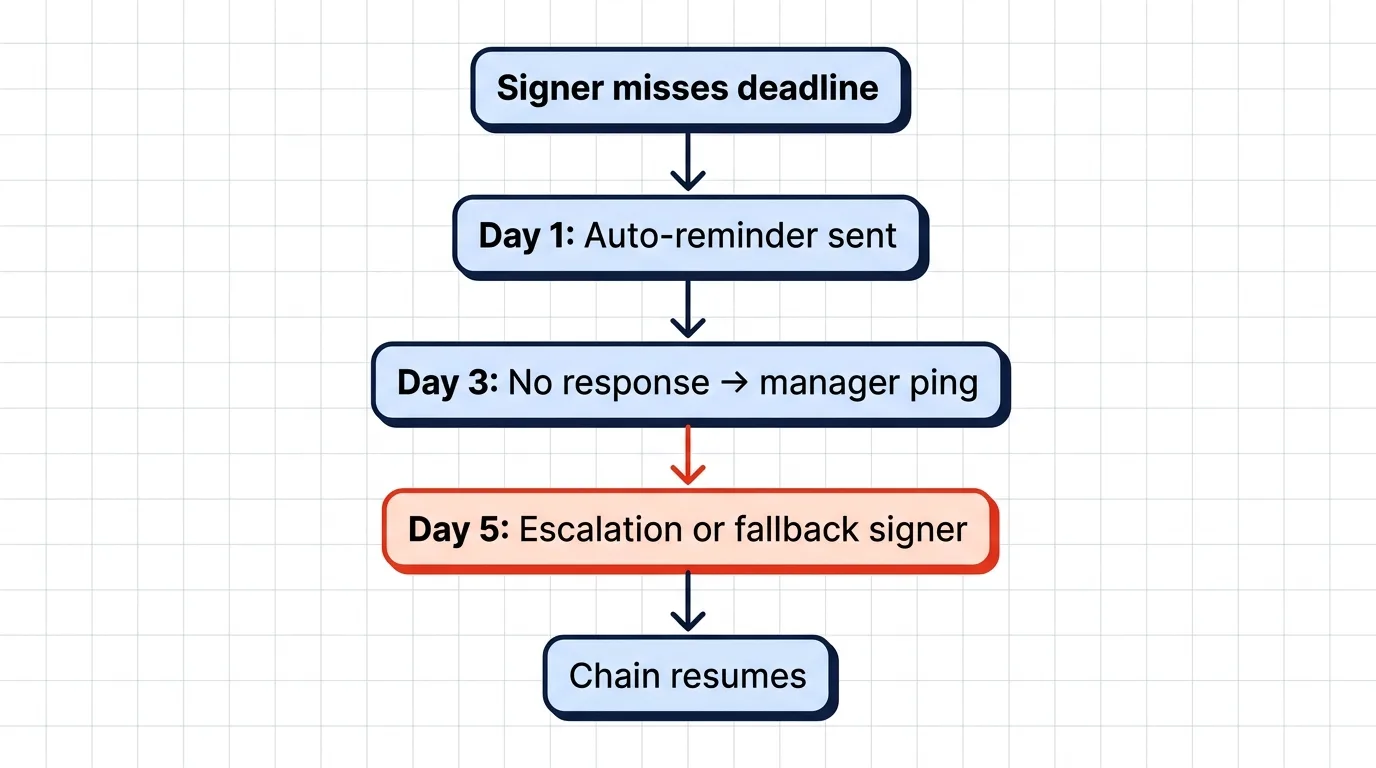
- Day 1: Trigger an automated reminder. Keep the message short and reference the exact action needed.
- Day 3: Escalate to a manager or secondary contact if no response. Many platforms allow you to assign a backup signer for this step.
- Day 5: Pause the chain rather than forcing it forward. A stalled signer often signals a content issue, not just forgetfulness. Reach out directly to uncover blockers.
- Resume or re-route: Once the blocker is resolved, restart the sequence from the exact point of failure. Never resend to everyone.
Document every escalation in the audit trail. Compliance teams and auditors expect to see a clear record of who was contacted, when, and what happened next.
Common Mistakes in Multi-Signer Contracts
Avoid these pitfalls to keep your routing clean:
- Sending to everyone at once: Parallel sends defeat the purpose of sequential routing and create conflicting edits.
- Skipping version control: Always use a single master document. If you edit after the first signature, re-upload and re-route.
- Assuming one template fits all: Different deals require different chains. Don’t force a vendor agreement into a client signing flow.
- Ignoring time zones and holidays: Schedule sends to land during the recipient’s workday, and account for weekends in your escalation timeline.
Quick-Check: Is Your Workflow Ready?
- List every required signer and their exact position in the chain
- Confirm dependencies and conditional routing paths
- Test the sequence with internal accounts before live send
- Enable automated reminders and escalation rules
- Document the SOP and store the audit trail
Close the Loop
Sequential signing is not a luxury—it is the baseline for predictable deal operations. Map your chain, configure the route, and enforce the handoffs. When your team stops guessing who signs next, contracts close faster, compliance stays intact, and your pipeline becomes a reliable forecast rather than a guessing game. Start by auditing your last five multi-party sends and rebuild the routing from the ground up.
Ready to automate your documents with AI?
Start free with AiDocX — AI contract drafting, meeting minutes, consultation notes, e-signatures, and more in one platform.
Get Started FreeMore from AiDocX Blog
Machine Shop Job Traveler Template: Routing Sheet + Example
Copy a machine shop job traveler template for small job shops. Includes a routing sheet, filled example, traceability fields, sign-offs, and setup tips.
Weekly Status Report Template: 4 Formats + Examples
Copy one of four weekly status report templates for individual work, projects, leadership, or blockers. See a worked example and a practical review checklist.
How to Read a Business Contract: A Founder's Checklist (2026)
A practical way to review parties, scope, money, IP, liability, and exit terms before signing a business contract.
 MinjiLee October 7, 2026 9 min