Force Majeure Clauses: Coverage and Drafting Guide (2026)
Learn what force majeure clauses actually cover, how to draft one that survives litigation, and the exact triggers that protect your business in 2026.
 James · Content Manager July 4, 2026 5 min read
Force Majeure Clauses: Coverage and Drafting Guide (2026)
When an unforeseeable event disrupts performance, the force majeure clause determines whether a contract survives or collapses. Poorly drafted language turns a protective shield into a litigation trap. This guide breaks down what modern clauses actually cover, the legal tests they must pass, and how to draft one that holds up in court.
What Force Majeure Actually Means in Modern Contracts
Force majeure is a French legal term meaning “superior force.” In commercial agreements, it excuses a party from performance when an external, unforeseeable event makes fulfillment impossible or commercially impracticable. Unlike a standard breach, a valid force majeure claim shifts the risk away from the performing party—provided the contract explicitly grants that protection.
Historically, courts interpreted these clauses narrowly, limiting them to acts of God, wars, and natural disasters. Today, supply chain failures, cyberattacks, regulatory shifts, and pandemics routinely trigger force majeure disputes. The clause is no longer a boilerplate afterthought; it is a primary risk-allocation tool. Businesses that treat it as a standard formality often discover too late that their operational dependencies aren’t protected.
Common Events Covered (and Frequently Missed)
Most disputes arise from vague language like “or other circumstances beyond reasonable control.” Courts often reject catch-all phrasing when the specific event isn’t listed or closely related to the enumerated examples.
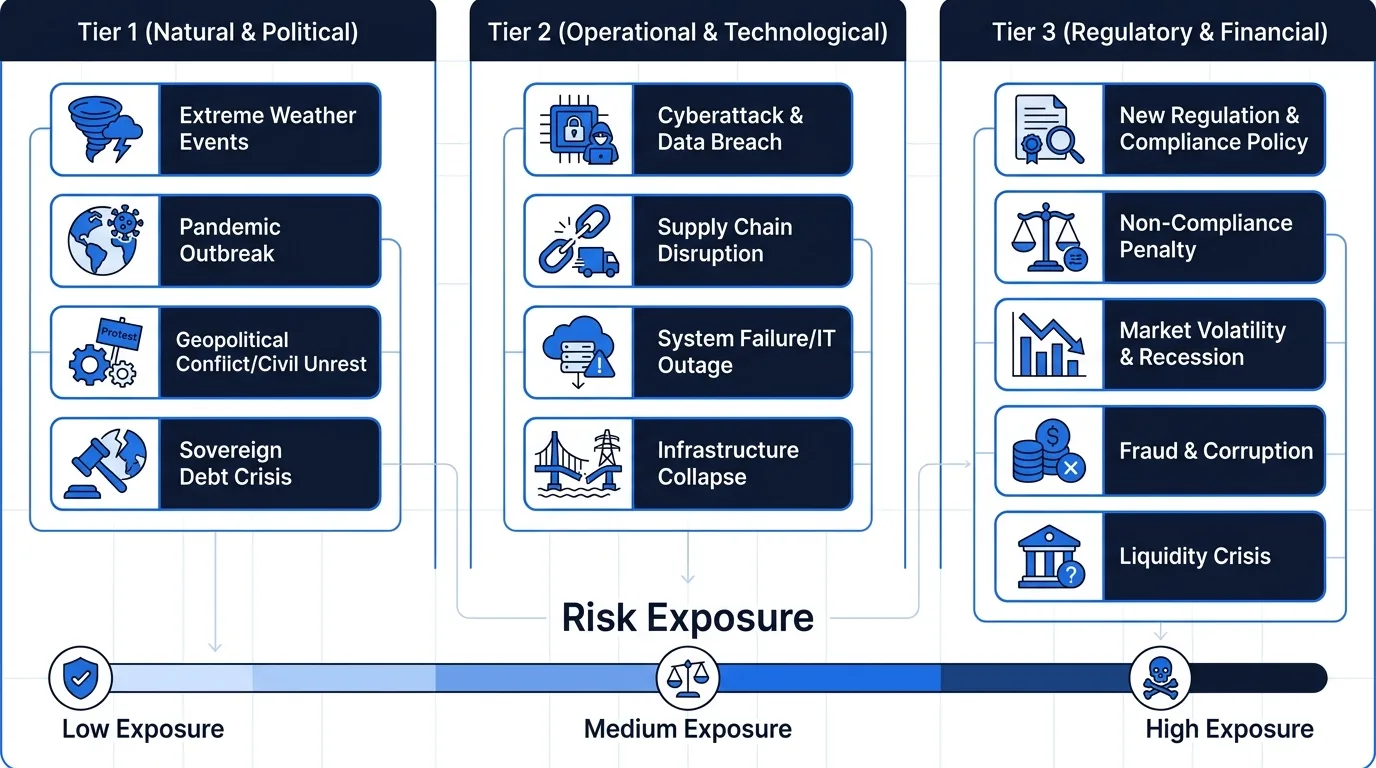
A well-drafted clause separates events into three tiers:
- Explicitly listed: Natural disasters, pandemics, government embargoes, labor strikes, and terrorism.
- Technological/operational: Cyberattacks, critical infrastructure failure, and third-party supplier collapse.
- Regulatory/political: Export controls, sudden tariff changes, licensing revocations, and civil unrest.
Frequently missed triggers include utility failures, financial market freezes, and transportation bottlenecks. If your business relies on just-in-time delivery or cross-border logistics, these omissions can leave you liable for delays you never caused.
The Three Legal Tests Every Clause Must Pass
Even a thoughtfully drafted clause will fail if it doesn’t satisfy jurisdiction-specific legal standards. Across common law and civil law systems, courts typically apply three tests:
- Unforeseeability: The event must not have been reasonably anticipated at the time of signing. If your industry routinely faces seasonal flooding, you cannot claim it as force majeure without explicit language.
- Inextricable causation: The event must directly prevent performance, not merely make it more expensive or inconvenient. Economic hardship alone rarely qualifies.
- Non-fault: The claiming party cannot have contributed to the event through negligence, poor planning, or failure to maintain backup systems.
Drafting against these tests means defining “impossibility” precisely. Many modern contracts use “commercial impracticability” or “material disruption” instead of strict impossibility, giving courts more flexibility to excuse performance without terminating the agreement. Pairing this language with industry-specific benchmarks—like port closure durations or data breach notification windows—strengthens enforceability.
Drafting a Force Majeure Clause That Holds Up
The difference between a clause that protects you and one that litigates against you comes down to specificity, structure, and trigger mechanics. Follow this framework:
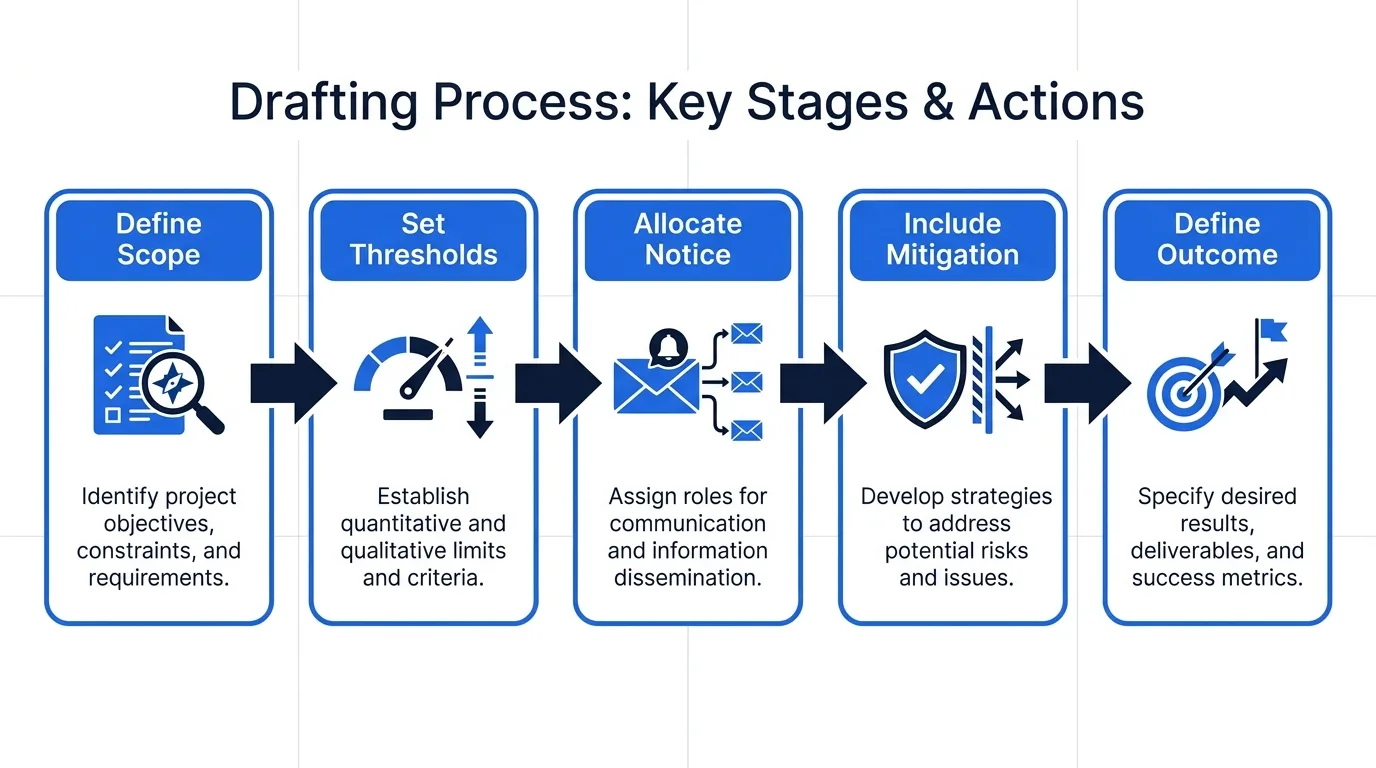
- Define the scope explicitly. List 8–12 high-probability events relevant to your industry. Add a narrow catch-all tied to the ejusdem generis rule (only covering events of the same kind as those listed).
- Set performance thresholds. Specify what level of disruption qualifies. “More than 10% cost increase” or “delivery delayed beyond 30 days” removes ambiguity.
- Allocate notice requirements. Require written notice within 5–10 business days of the event. Silence waives the defense in most jurisdictions.
- Include mitigation duties. Obligate the affected party to pursue alternatives, source substitutes, or adjust timelines before invoking the clause.
- Define the outcome. State whether performance pauses, renegotiates, or terminates after a set period (typically 60–90 days).
Modern contract platforms like AiDocX include a force majeure clause you can adapt to your jurisdiction and industry, saving you from rebuilding the framework from scratch.
Notice, Mitigation, and Termination Triggers
Invoking force majeure is not automatic. Most well-structured agreements treat it as a conditional defense with strict procedural steps.
- Notice window: Typically 5–10 business days. Late notice can forfeit the right to claim.
- Ongoing updates: Require periodic written updates as the event evolves or resolves.
- Mitigation obligation: The affected party must document all reasonable steps taken to minimize impact. Courts heavily weigh this during disputes.
- Termination trigger: If the event exceeds a defined period (e.g., 60 or 90 days), either party may terminate without penalty, often with a wind-down period for payments and deliverables.
- Fee/payment treatment: Specify whether prepaid fees are refunded, credited, or suspended during the disruption.
Skipping these mechanics turns a force majeure clause into a vague promise that judges will interpret against the drafter.
Quick Checklist Before You Sign
Before finalizing any agreement, run through this list:
- Are the listed events specific to our industry and supply chain?
- Does the clause define “impossibility” or “material disruption” clearly?
- Is the notice window realistic for our internal reporting?
- Are mitigation duties mutual or one-sided?
- Does it state what happens after the trigger period (pause, renegotiate, terminate)?
- Is the catch-all phrasing tied to the ejusdem generis rule?
- Have we aligned the clause with our insurance coverage?
Final Thoughts
A force majeure clause is only as strong as its specificity and its alignment with your actual operational risks. Vague language invites disputes; precise triggers preserve relationships and limit liability. When drafting or reviewing contracts this year, treat the clause as a core risk-management tool rather than a standard formality. If you want a jurisdiction-tested starting point, AiDocX templates include a modern force-majeure clause you can adapt to your specific deal structure.
Ready to automate your documents with AI?
Start free with AiDocX — AI contract drafting, meeting minutes, consultation notes, e-signatures, and more in one platform.
Get Started FreeMore from AiDocX Blog
Machine Shop Job Traveler Template: Routing Sheet + Example
Copy a machine shop job traveler template for small job shops. Includes a routing sheet, filled example, traceability fields, sign-offs, and setup tips.
Weekly Status Report Template: 4 Formats + Examples
Copy one of four weekly status report templates for individual work, projects, leadership, or blockers. See a worked example and a practical review checklist.
How to Read a Business Contract: A Founder's Checklist (2026)
A practical way to review parties, scope, money, IP, liability, and exit terms before signing a business contract.
 MinjiLee October 7, 2026 9 min