How to Write a Freelance Contract in 2026
Protect your income and clarify scope with a practical freelance contract template. Step-by-step clauses, payment terms, and e-sign workflow for solo creators.
 James · Content Manager July 4, 2026 5 min read
How to Write a Freelance Contract in 2026
Handshake agreements used to be enough. In 2026, they leave solo freelancers and small agencies exposed to scope creep, delayed payments, and ambiguous ownership. A written contract isn’t legal theater—it’s the operating manual for your client relationship. This guide breaks down exactly what to include, how to structure it, and how to get it signed without hiring an attorney.
Why You Need a Written Contract (Even for Repeat Clients)
Trust is the foundation of a good working relationship, but it is not a substitute for clarity. Verbal agreements fall apart when deadlines shift, revisions multiply, or a client claims they never approved a specific deliverable. A written contract:
- Sets clear expectations before work begins
- Protects your cash flow with defined payment schedules
- Provides a reference point when disagreements arise
- Builds professional credibility with serious clients
Even with long-term clients, a lightweight agreement prevents the most common freelance headaches: unpaid invoices, endless revision cycles, and unexpected liability.
The 7 Clauses Every Freelance Agreement Must Include
You do not need a 20-page document to be legally sound. Most freelance contracts succeed when they focus on the core operational terms. The essential clauses are:
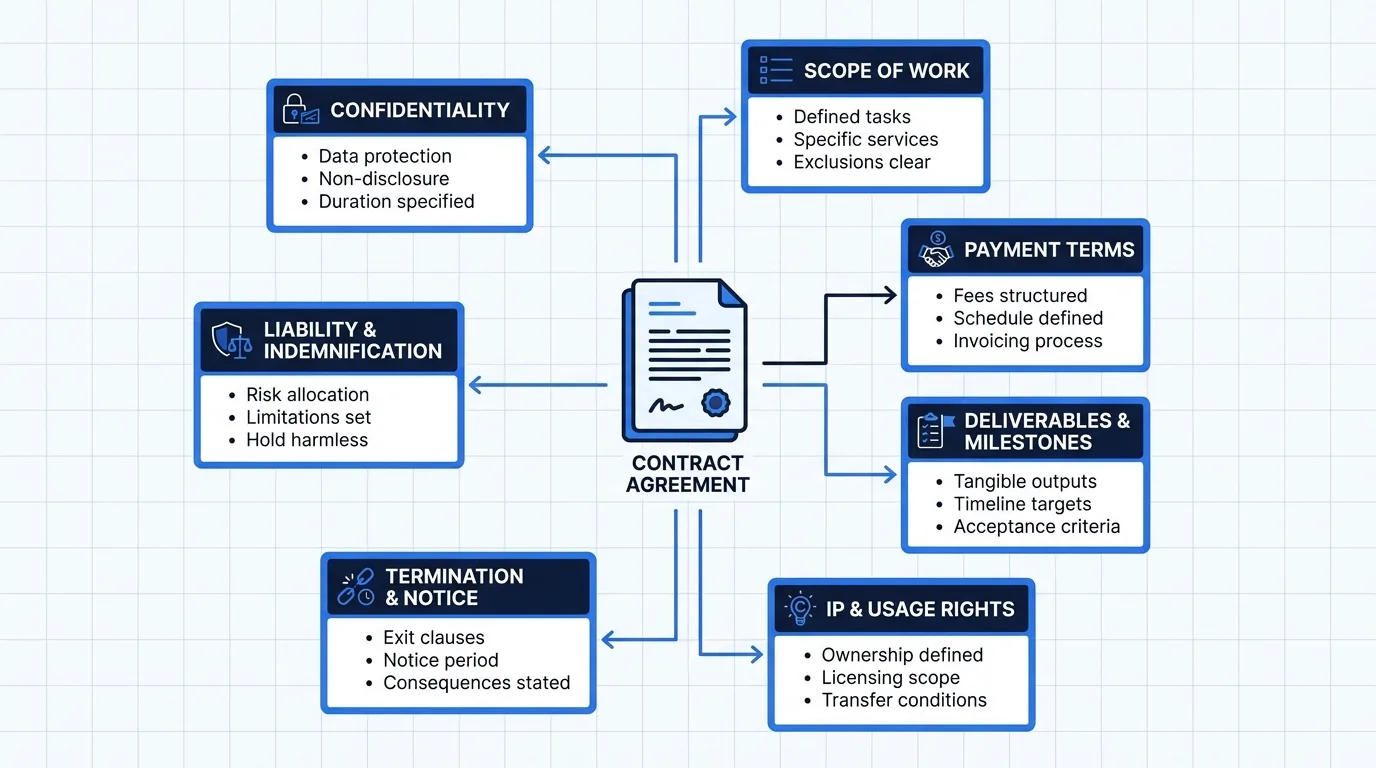
- Parties & Effective Date – Full legal names, roles, and when the agreement begins.
- Scope of Work – What you will deliver, in what format, and what is explicitly out of scope.
- Deliverables & Milestones – Specific outputs tied to dates or project phases.
- Payment Terms – Rates, schedule, invoicing method, and late-fee policy.
- Intellectual Property & Usage Rights – When ownership transfers and how the client may use the work.
- Termination & Notice – How either party can exit the agreement and what happens to unfinished work.
- Limitation of Liability & Confidentiality – Caps on financial exposure and rules around shared sensitive information.
Keeping these seven sections in mind gives you a complete framework without overcomplicating the document.
Scope, Deliverables, and Change Orders
Vague scope is the fastest route to unpaid work. Define the project in measurable terms: “Three blog posts of 1,200 words each, including basic SEO keyword integration and two revision rounds per post.” Pair that with a milestone schedule so both sides know what happens when.
Include a change-order clause that requires written approval for any work outside the original scope. This protects you from “quick favors” that quietly balloon into full project overruns. A simple line like “Any additional requests beyond the agreed scope will be billed at the hourly rate of $X” is enough to set boundaries.
Payment Terms and Late Fees
Payment terms are not a formality. They determine whether you get paid on time, late, or not at all. Specify:
- The total fee or hourly rate
- Payment schedule (e.g., 50% upfront, 50% on delivery, or monthly invoicing)
- Accepted payment methods
- Invoicing timeline (e.g., net 15 or net 30)
- Late payment interest (commonly 1.5% per month)
- Right to pause work if invoices remain unpaid past a set threshold
Clients who hesitate to agree to clear payment terms are often the same clients who delay payment. Transparency here filters for serious buyers.
Intellectual Property and Usage Rights
Who owns the work before payment? Who owns it after? State it explicitly. The standard freelance approach is to retain copyright until full payment is received, then transfer usage rights or ownership upon completion.
Clarify whether the client receives exclusive rights, a perpetual license, or a limited term license. If you reuse templates, frameworks, or stock assets, reserve the right to do so. This clause also covers moral rights and attribution requirements, which matter if you want credit for your work.
Termination and Liability Limits
Projects end. Sometimes they end poorly. A termination clause should outline:
- Notice period (typically 14–30 days)
- Kill fees or payment for work completed up to termination
- Return or destruction of confidential materials
- Survival clauses for payment obligations and IP rights
Pair this with a liability limitation. Cap your exposure to the total contract value and exclude indirect or consequential damages. This does not make you unprofessional; it makes you sustainable.
Tools to Draft, Review, and E-Sign in Minutes
You do not need a legal degree to produce a solid contract. Modern document platforms let you generate, customize, and e-sign agreements without leaving your workflow. You can input project details, select a freelance template, and let AI structure the clauses in minutes. The platform then routes the document for secure e-signature and stores the finalized copy for your records. This removes the friction of back-and-forth editing and keeps everything legally binding and timestamped.
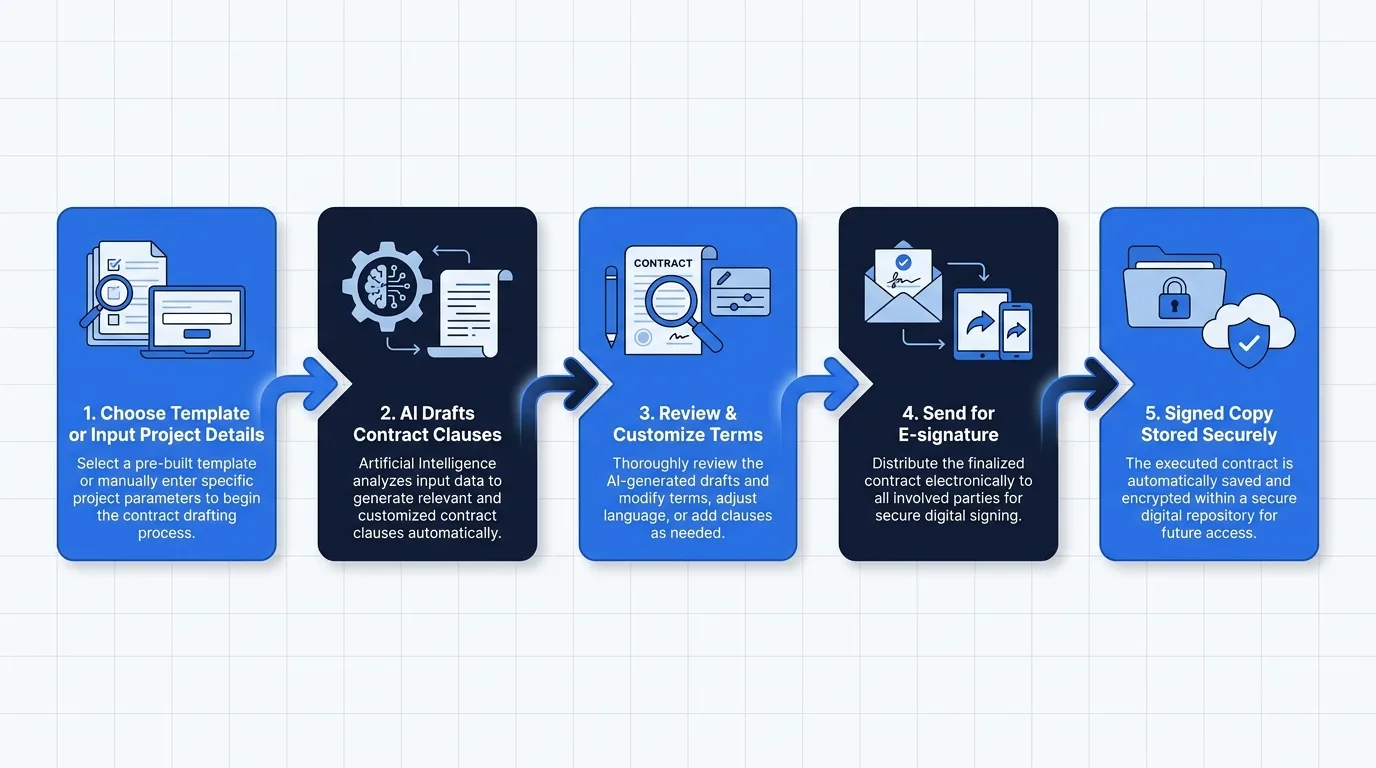
Whether you use a template library or build from scratch, the goal is the same: get a clear agreement in front of your client before a single deliverable is started.
Pre-Signing Checklist
- Scope and deliverables are written in measurable terms
- Payment schedule, method, and late-fee policy are explicit
- Change-order process is defined
- IP transfer triggers on full payment
- Termination notice period and kill fee are stated
- Liability cap and confidentiality terms are included
- Both parties will e-sign before work begins
Final Word
A freelance contract is not a barrier to collaboration—it is the structure that makes collaboration possible. Take ten minutes to draft one for your next project, share it for review, and send it for e-signature. If you want a faster path, AiDocX can generate & e-sign such contracts in minutes, so you can focus on the work itself.
Ready to automate your documents with AI?
Start free with AiDocX — AI contract drafting, meeting minutes, consultation notes, e-signatures, and more in one platform.
Get Started FreeMore from AiDocX Blog
Machine Shop Job Traveler Template: Routing Sheet + Example
Copy a machine shop job traveler template for small job shops. Includes a routing sheet, filled example, traceability fields, sign-offs, and setup tips.
Weekly Status Report Template: 4 Formats + Examples
Copy one of four weekly status report templates for individual work, projects, leadership, or blockers. See a worked example and a practical review checklist.

How to Read a Business Contract: A Founder's Checklist (2026)
A practical way to review parties, scope, money, IP, liability, and exit terms before signing a business contract.
 MinjiLee October 7, 2026 9 min