How to Get a Freelance Client to Pay Late Invoices in 2026
Stop chasing overdue invoices. Discover the exact payment-terms clauses, follow-up scripts, and legal leverage that actually get clients to pay on time.
 James · Content Manager July 4, 2026 5 min read
How to Get a Freelance Client to Pay Late Invoices in 2026
Late payments rarely come from malice. They come from unclear terms, competing priorities, and a freelancer who has already trained the client that chasing is part of the job. If you are tired of sending polite reminders that get ignored, the fix is not a better email. It is a better contract.
Why Clients Pay Late (and Why Polite Reminders Fail)
Most clients do not intentionally delay payment. They bill internally, they lose track of your invoice in a shared inbox, or they assume you will keep working while they sort out cash flow. When you respond with another friendly nudge, you accidentally reinforce the behavior. The client learns that your deadlines are suggestions and that you will not enforce them.
The root problem is that payment terms are usually an afterthought. They live in a one-line sentence at the bottom of a proposal, or worse, they are never written down. Without a clear, agreed-upon framework, every invoice becomes a negotiation. The solution is to build enforceable boundaries into the agreement before the first dollar changes hands.
The 4 Payment-Terms Clauses That Actually Work
Not every clause serves the same purpose. The most effective payment structure combines a clear deadline, a consequence for missing it, a trigger to pause work, and a billing rhythm that matches how clients actually process invoices.
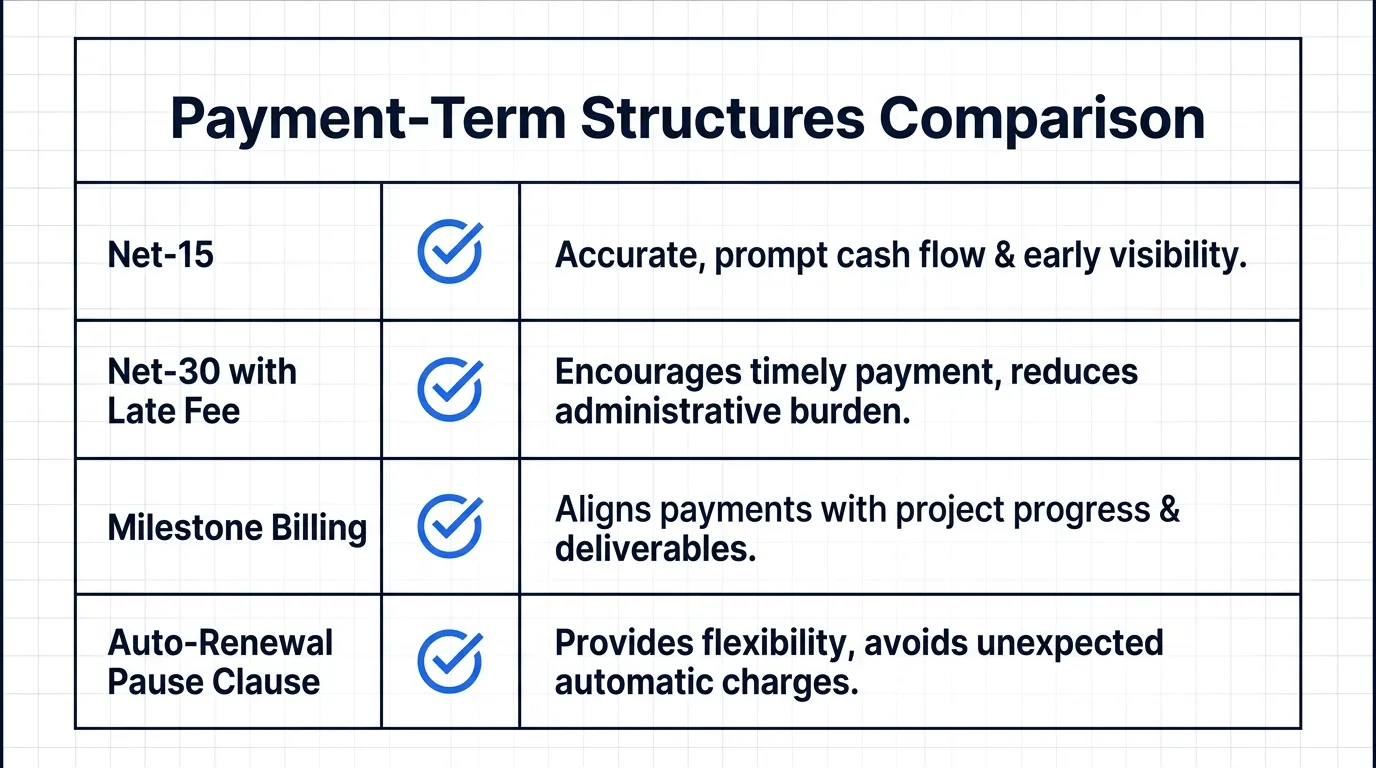
- Net-15 or Net-30 deadline: State exactly when payment is due. Avoid open-ended phrases like “payment upon receipt.”
- Late-fee or interest clause: Add a 1–1.5% monthly charge or a flat fee after the due date. This is not a penalty; it is a cost of doing business.
- Suspension-of-work clause: Reserve the right to pause deliverables if payment is more than seven days overdue.
- Milestone billing schedule: Tie invoices to specific deliverables rather than waiting for project completion.
When these four pieces sit together in a signed contract, late payment becomes a contract breach rather than a polite request.
How to Structure a Late-Fee Clause (Without Losing Clients)
Clients often push back on late fees because they picture them as punitive. Frame it differently: you are covering the administrative cost of chasing payment and the opportunity cost of delayed cash flow. Keep the language neutral and standard.
- Cap the fee at a reasonable maximum (e.g., 5% of the outstanding balance).
- Apply it only after a short, explicit grace period (usually 5–7 days past the due date).
- Include a clear statement that work may pause if the balance remains unpaid.
- Send the invoice with the terms restated in the subject line or a brief footer.
You do not have to build this from scratch. Platforms like AiDocX let you add enforceable late-fee clauses and e-sign the agreement upfront, so the terms are locked in before you start the work. The goal is simplicity: a clause that is easy to read, easy to enforce, and easy to reference later.
The Follow-Up Sequence That Gets Results
A contract sets the rules, but the follow-up sequence is where most freelancers lose leverage. The trick is to shift your tone at each stage. Polite first, firm second, final third. Never repeat the same message with different wording.
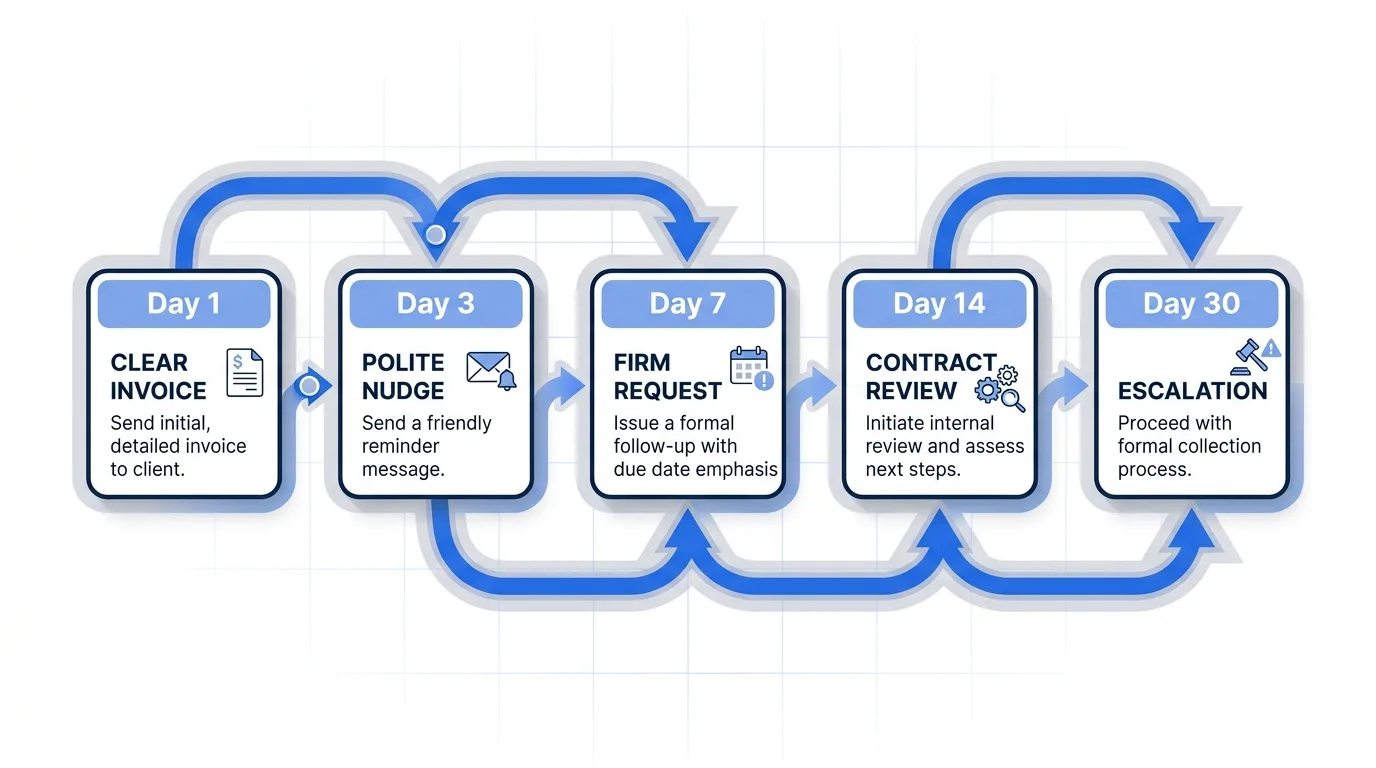
- Day 1 (due date): Send the invoice with a one-line reminder of the payment terms. Attach the contract link for reference.
- Day 3: Short nudge. “Just checking if you received the invoice. Let me know if you need a copy resent.”
- Day 7: Firm request. Restate the due date, mention the late-fee clause, and ask for a specific payment date.
- Day 14: Final notice. State that work will pause until the balance clears, per the signed agreement.
- Day 30: Escalation. Issue a formal demand letter and outline next steps (collections, small claims, or relationship reset).
Keep every message short, specific, and unemotional. The longer your drafts get, the more you signal that you are negotiating instead of enforcing.
When to Escalate: Contract Leverage vs. Relationship Cost
Not every overdue invoice deserves a legal threat. Evaluate three things before escalating: the dollar amount, the client’s payment history, and the lifetime value of the relationship.
- Under $1,000 with a one-time client: Often cheaper to write it off or use a payment platform than to spend hours chasing.
- Over $1,000 or repeat offender: Enforce the clause. Pause work immediately. Send a formal demand letter with a 7-day deadline.
- Long-term client with a cash-flow hiccup: Offer a structured payment plan in writing, but still invoke the late-fee clause to preserve your precedent.
The real leverage is not the lawsuit. It is the next project. Clients who respect your terms get priority scheduling. Clients who test them get paused deliverables or a clean break.
Quick Checklist: Protect Your Next Payment
- Define payment terms in the signed contract
- Add a late-fee clause (1–1.5% monthly or flat fee)
- Invoice immediately upon milestone completion
- Set up automated follow-up reminders
- Pause work after the agreed grace period
- Keep a paper trail of all communications
If a client can pay but not all at once, turn the overdue invoice into a signed installment schedule with our payment plan agreement template.
Stop Chasing. Start Contracting.
Late invoices are a symptom of weak payment terms, not bad clients. When you lock in clear deadlines, late fees, and work-pause triggers before the project starts, you remove the guesswork from follow-ups. Build your next agreement with enforceable terms, e-sign it upfront, and let the contract do the chasing. Your time is better spent on the work itself.
Ready to automate your documents with AI?
Start free with AiDocX — AI contract drafting, meeting minutes, consultation notes, e-signatures, and more in one platform.
Get Started FreeMore from AiDocX Blog
Machine Shop Job Traveler Template: Routing Sheet + Example
Copy a machine shop job traveler template for small job shops. Includes a routing sheet, filled example, traceability fields, sign-offs, and setup tips.
Weekly Status Report Template: 4 Formats + Examples
Copy one of four weekly status report templates for individual work, projects, leadership, or blockers. See a worked example and a practical review checklist.

How to Read a Business Contract: A Founder's Checklist (2026)
A practical way to review parties, scope, money, IP, liability, and exit terms before signing a business contract.
 MinjiLee October 7, 2026 9 min