How to Void or Cancel a Signed Contract in 2026
Learn the legal steps to void or cancel a signed contract, from valid grounds to proper notice and termination agreements. Protect your business today.
 James · Content Manager July 4, 2026 5 min read
How to Void or Cancel a Signed Contract in 2026
Signing a contract often feels like a point of no return, but contract law provides several legal pathways to void or cancel an agreement. Whether you discovered a material misrepresentation, the other party breached terms, or both sides simply want out, following the right procedure protects your business from liability. This guide covers the legal grounds, documentation steps, and notice requirements you need to terminate a contract properly.
Grounds for Voiding or Canceling a Contract
Not all contract endings are created equal. Legal professionals distinguish between voiding a contract (treating it as if it never existed) and canceling or terminating it (ending a valid agreement moving forward). Understanding which applies determines your next steps.
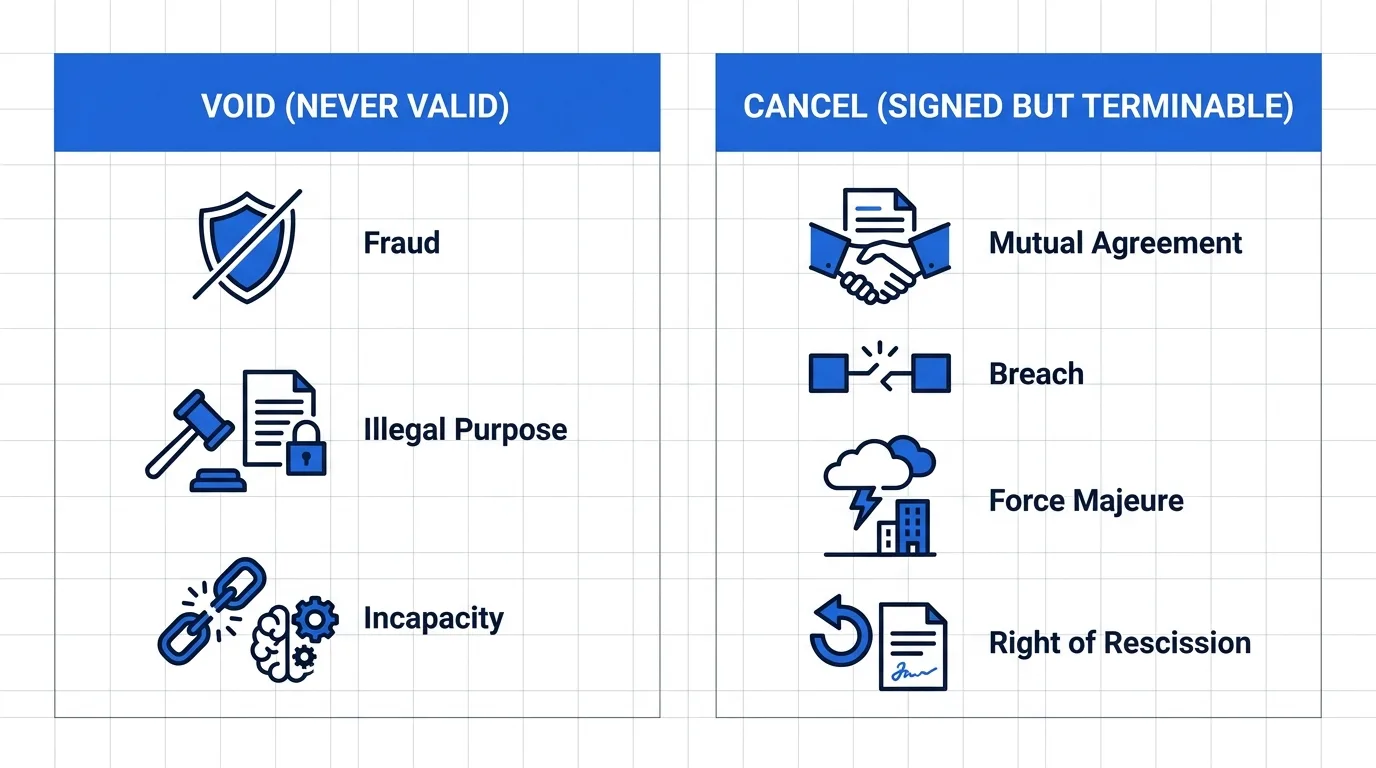
- Voidable grounds: fraud, misrepresentation, duress, undue influence, or a party lacking legal capacity.
- Unenforceable grounds: illegal subject matter, violation of public policy, or failure to meet Statute of Frauds requirements.
- Terminable grounds: mutual consent, material breach, failure to meet a condition precedent, force majeure, or statutory rescission rights.
Attempting to cancel without a recognized legal basis risks being deemed the breaching party, which could trigger damages or specific performance clauses.
Mutual Agreement vs. Unilateral Termination
The cleanest exit is always a mutual agreement. If the other party is willing to walk away, you can draft a simple termination agreement that releases both sides from future obligations. This approach eliminates ambiguity and prevents follow-up disputes.
Unilateral termination requires strict adherence to the contract’s own terms. Most commercial agreements include a termination clause specifying:
- Notice period (e.g., 30, 60, or 90 days)
- Permitted reasons (for cause vs. for convenience)
- Cure periods (time allowed to fix a breach before termination takes effect)
- Liquidated damages or early termination fees
Reviewing these provisions before acting prevents accidental breach claims. If the contract is silent on termination, you may still cancel for material breach under common law, but you must document the breach thoroughly.
Drafting a Termination or Rescission Agreement
Verbal “let’s just call it quits” conversations rarely hold up in court. A properly drafted termination or rescission agreement creates a paper trail that both parties can rely on. Key elements to include:
- Full legal names and addresses of both parties
- Reference to the original agreement (date, title, contract number)
- Clear statement of intent to terminate or rescind
- Effective date of cancellation
- Release of future obligations, with carve-outs for surviving clauses (confidentiality, indemnification, dispute resolution)
- Settlement terms, if any (refunds, return of property, final invoices)
- Mutual release of claims arising from the original contract
- Signature blocks for authorized representatives
Once drafted, circulate the document for review and secure compliant electronic signatures from all authorized signatories.
Sending Proper Notice and Meeting Deadlines
Even with a valid reason, termination fails if notice isn’t delivered correctly. Contracts often specify exact delivery methods—certified mail, overnight courier, designated email addresses, or personal delivery. Deviating from those instructions can invalidate otherwise legitimate notice.
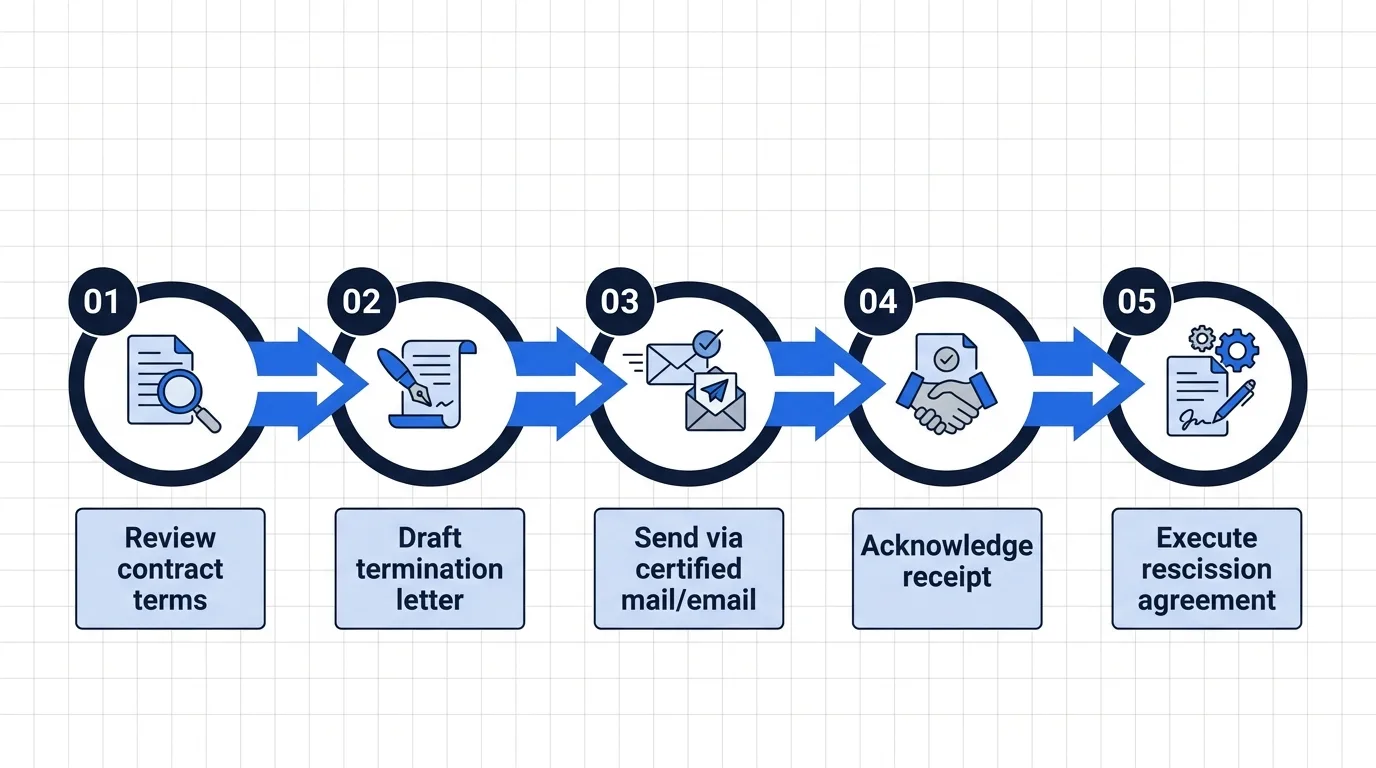
Best practices for sending termination notice:
- Cite the specific contract clause authorizing termination
- State the effective date clearly
- List outstanding obligations and deadlines
- Request written acknowledgment within a reasonable window
- Send via the method specified in the agreement, plus a backup channel for tracking
Keep copies of everything. If the other party ignores your notice, your documentation becomes your defense in any subsequent dispute.
Handling Obligations After Cancellation
Canceling a contract doesn’t automatically erase every duty. Certain obligations survive termination by design or by law:
- Confidentiality and non-disclosure clauses
- IP ownership and licensing terms
- Payment for services already rendered
- Return or destruction of proprietary materials
- Non-compete or non-solicit provisions (if reasonable in scope)
Create a closeout checklist with the other party. Document the return of assets, final payments, and any post-termination support periods. When both sides sign off on the closeout, you eliminate lingering exposure.
Common Mistakes That Invalidate Cancellation
Business owners often undermine their own termination efforts through avoidable errors:
- Continuing to perform under the contract after deciding to cancel (waiver of rights)
- Missing the contractual notice window or cure period
- Using informal communication channels instead of contract-specified methods
- Failing to address surviving clauses in the termination agreement
- Assuming silence equals consent to cancel
- Skipping legal review when the contract involves significant value or complex obligations
A single misstep can convert a lawful termination into a breach, exposing your business to damages or forced performance.
Quick Checklist for Contract Cancellation
Use this list to verify you’ve covered every legal and operational step before finalizing the exit:
- Identify the legal basis for voiding or terminating the contract
- Review the original agreement for termination clauses, notice requirements, and cure periods
- Draft a termination or rescission agreement with all essential terms
- Deliver notice using the exact method and timeline specified in the contract
- Secure written acknowledgment from the other party
- Execute the termination agreement with proper signatures
- Fulfill post-termination obligations (payments, asset returns, confidentiality)
- Archive all correspondence and signed documents in a secure repository
Getting the paperwork right matters as much as the legal justification. Platforms like AiDocX make it straightforward to generate a termination or rescission agreement, route it for e-signature, and store the executed copy in one place. If you need to cancel a signed contract without creating liability, start with the checklist above and draft your termination documents with precision.
Ready to automate your documents with AI?
Start free with AiDocX — AI contract drafting, meeting minutes, consultation notes, e-signatures, and more in one platform.
Get Started FreeMore from AiDocX Blog
Machine Shop Job Traveler Template: Routing Sheet + Example
Copy a machine shop job traveler template for small job shops. Includes a routing sheet, filled example, traceability fields, sign-offs, and setup tips.
Weekly Status Report Template: 4 Formats + Examples
Copy one of four weekly status report templates for individual work, projects, leadership, or blockers. See a worked example and a practical review checklist.
How to Read a Business Contract: A Founder's Checklist (2026)
A practical way to review parties, scope, money, IP, liability, and exit terms before signing a business contract.
 MinjiLee October 7, 2026 9 min