Letter of Intent vs MOU: What’s Binding in 2026
Confused about whether your LOI or MOU actually binds you? Learn the exact clauses that create legal obligations, plus a quick checklist for founders.
 James · Content Manager July 4, 2026 4 min read
Letter of Intent vs MOU: What’s Binding in 2026
Founders often treat a Letter of Intent (LOI) and a Memorandum of Understanding (MOU) as interchangeable placeholders. In reality, courts don’t look at the title—they look at the language. One misplaced clause can turn a “non-binding” preview into a legally enforceable contract, while overly rigid wording can kill a deal before it starts. Understanding which document serves which stage, and how to draft it, saves you from surprise obligations and wasted negotiation time.
The Core Difference: Purpose Over Title
An LOI and an MOU are both preliminary agreements, but they typically sit at different points in the negotiation lifecycle.
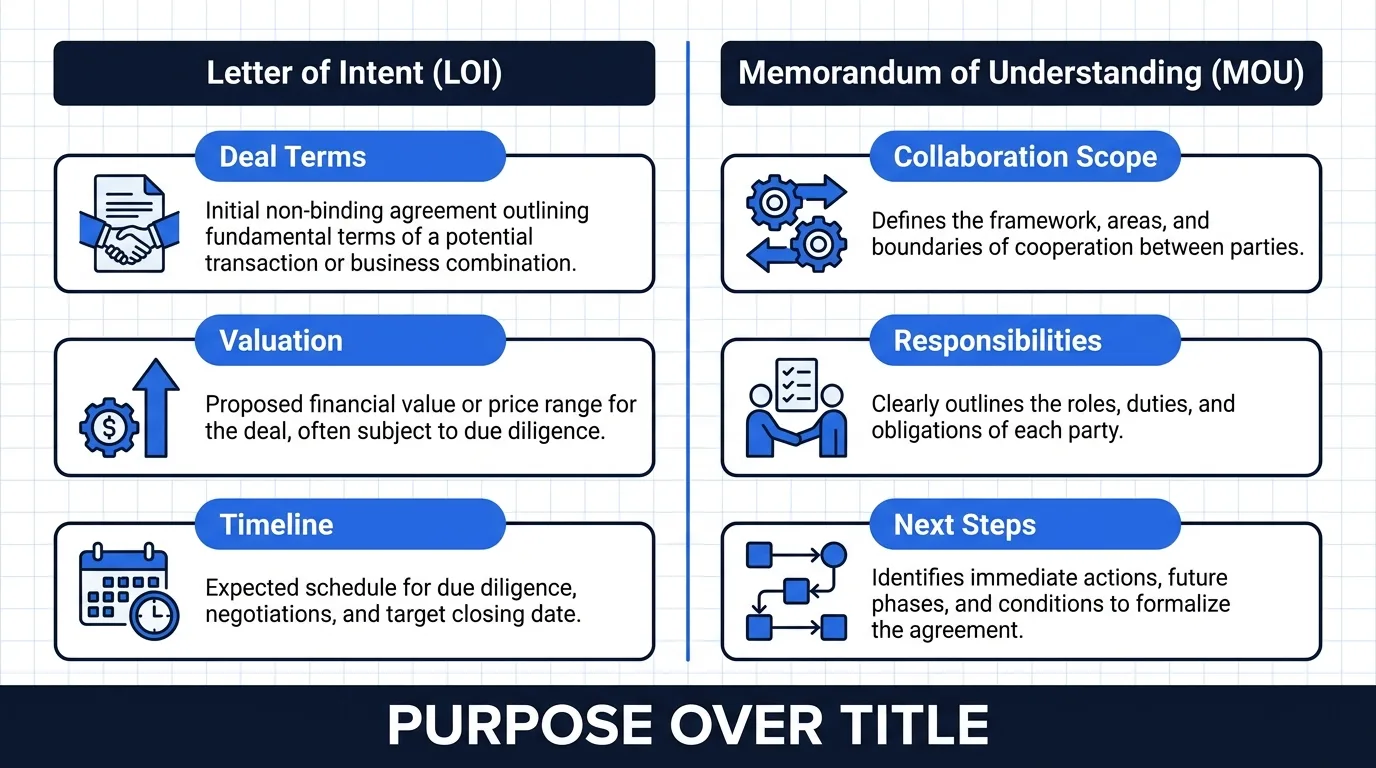
- Letter of Intent (LOI): Usually marks the transition from early discussions to structured deal terms. It outlines price, valuation, exclusivity windows, and key conditions precedent. Think of it as the term sheet’s legal cousin.
- Memorandum of Understanding (MOU): Often used when two parties want to formalize a collaboration, partnership, or joint effort before drafting a full operating agreement. It focuses on roles, communication cadence, and shared goals.
Neither title automatically grants or denies legal force. The document’s function in your deal flow is what matters.
When an LOI Actually Binds You
LOIs are frequently labeled “non-binding,” but courts will enforce them if the language crosses specific thresholds. An LOI becomes binding when it:
- Contains definitive commitment language (e.g., “Party A shall purchase…” instead of “Party A intends to purchase…”)
- Specifies essential deal terms with enough precision that a contract could be enforced as-is
- Includes an exclusivity or no-shop clause that operates independently of the main transaction
- Shows clear consideration or an exchange of value (even if nominal)
If you’re negotiating a startup acquisition or a major vendor contract, treat every LOI as potentially binding until a lawyer explicitly carves out the non-binding provisions.
When an MOU Keeps Things Flexible
MOUs shine when you need to lock in cooperation without locking in liability. They work best when:
- Both parties want to test compatibility before committing capital
- The relationship involves ongoing coordination (joint ventures, licensing, co-development)
- You need a framework for dispute resolution, confidentiality, or data sharing before the main agreement
- Regulatory or internal approval processes require a documented understanding first
Because MOUs often lack consideration and use aspirational phrasing, they frequently survive as non-binding documents—provided the drafters intentionally avoid enforceable promises.
The “Binding vs. Non-Binding” Trap
The most common mistake founders make is assuming that a heading like “Non-Binding Provisions” automatically protects them. It doesn’t. Courts apply a multi-factor test:
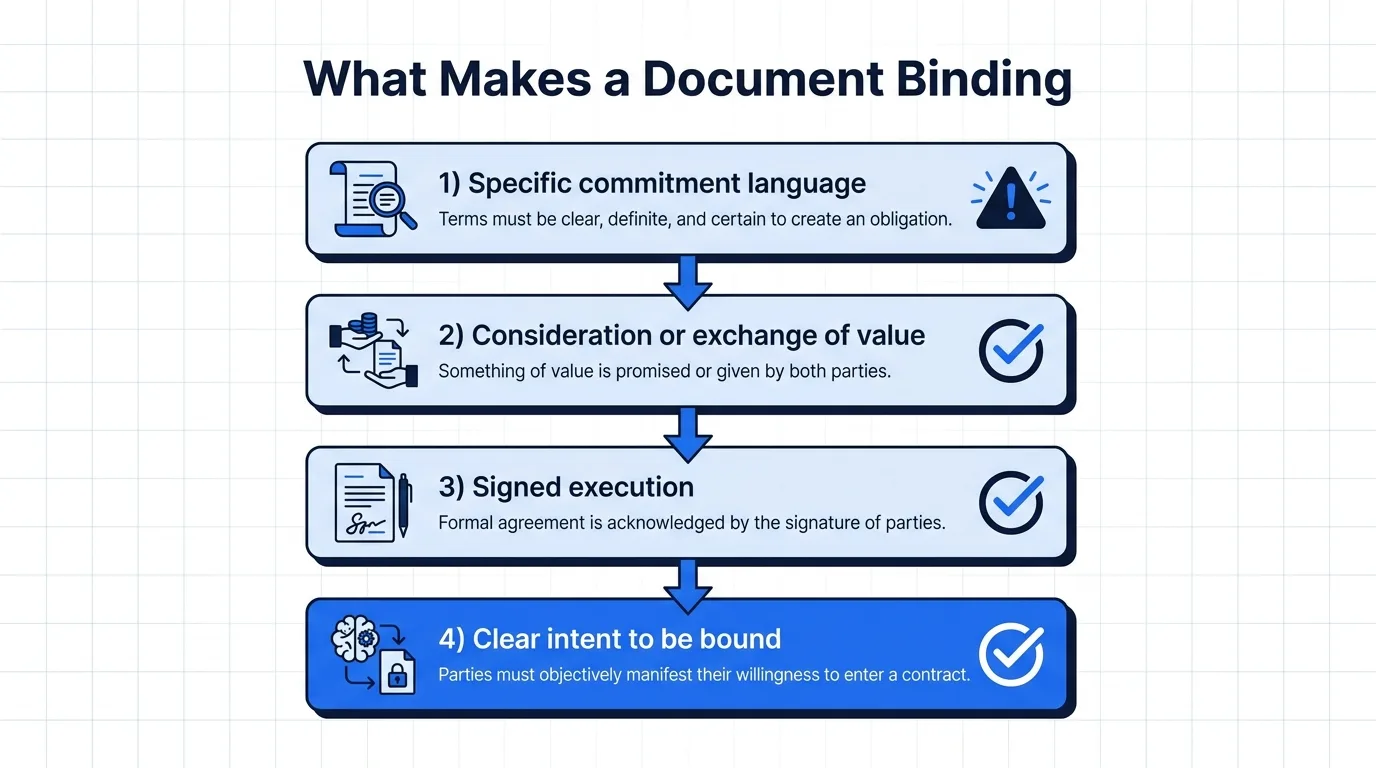
- Subjective intent: Did both parties actually intend to be bound?
- Objective language: Would a reasonable person read the document as a promise?
- Negotiated terms: Are the essential elements (price, scope, timeline) sufficiently definite?
- Partial performance: Did one side already act on the document?
When in doubt, separate binding and non-binding clauses into distinct sections. Use explicit carve-outs like “This exclusivity period is binding; all other terms are non-binding until a definitive agreement is executed.” Clarity beats assumption every time.
How to Draft Clear Language
The difference between a deal-killer and a deal-maker usually comes down to three drafting choices:
- Define the legal effect upfront. State clearly which sections are binding and which are not, right after the title.
- Use conditional verbs. Swap “shall” and “must” for “will explore,” “intends to,” or “agrees to negotiate in good faith” in non-binding sections.
- Cap the binding window. Tie any binding obligations (like exclusivity) to a specific deadline or milestone, so they don’t drag on indefinitely.
If you prefer a starting point that doesn’t require reinventing the wheel, AiDocX offers LOI and MOU templates with clearly marked binding and non-binding clauses so you can focus on the deal, not the fine print.
Quick Checklist for Your Next Deal
Before you send an LOI or MOU to the other side, run through this:
- Identify which clauses must survive signature (exclusivity, confidentiality, governing law)
- Remove definitive commitment language from non-binding sections
- Add a clear “Legal Effect” statement at the top
- Set expiration dates for any binding periods
- Have counsel review before sharing externally
- Keep a version-controlled draft log to track changes
Next Steps
Preliminary documents set the tone for your entire negotiation. Treat them as strategic tools, not paperwork. When you know exactly what binds you and what stays flexible, you negotiate from clarity instead of guesswork.
Start with a structured template, draft your terms in plain language, and reserve the final commitment for a definitive agreement. If you want a clean starting point that separates binding obligations from exploratory language, explore AiDocX’s LOI and MOU templates built for founders who move fast and sign smart.
Ready to automate your documents with AI?
Start free with AiDocX — AI contract drafting, meeting minutes, consultation notes, e-signatures, and more in one platform.
Get Started FreeMore from AiDocX Blog
Machine Shop Job Traveler Template: Routing Sheet + Example
Copy a machine shop job traveler template for small job shops. Includes a routing sheet, filled example, traceability fields, sign-offs, and setup tips.
Weekly Status Report Template: 4 Formats + Examples
Copy one of four weekly status report templates for individual work, projects, leadership, or blockers. See a worked example and a practical review checklist.
How to Read a Business Contract: A Founder's Checklist (2026)
A practical way to review parties, scope, money, IP, liability, and exit terms before signing a business contract.
 MinjiLee October 7, 2026 9 min