Podcast Guest Release Form: Why You Need One + Free 2026 Template
Protect your show with a signed guest release. Learn what it covers, avoid legal risk, and download a free template ready for e-signature in 2026.
 James · Content Manager July 4, 2026 5 min read
Podcast Guest Release Form: Why You Need One + Free 2026 Template
Every podcast episode featuring an outside guest carries legal exposure you didn’t ask for. A signed guest release form removes that ambiguity, gives you documented permission to publish, edit, and monetize the conversation, and protects both you and your interviewee. Whether you record solo episodes or remote video interviews, having a standardized release is the fastest way to keep your show compliant and your rights intact.
What a Guest Release Form Actually Covers
A guest release is a short legal agreement that grants you the right to record, edit, and distribute a person’s voice, likeness, and words. It does not transfer ownership of your guest’s underlying ideas, but it does secure a broad, revocable license for your specific production. Without it, you are operating on a handshake and hope.
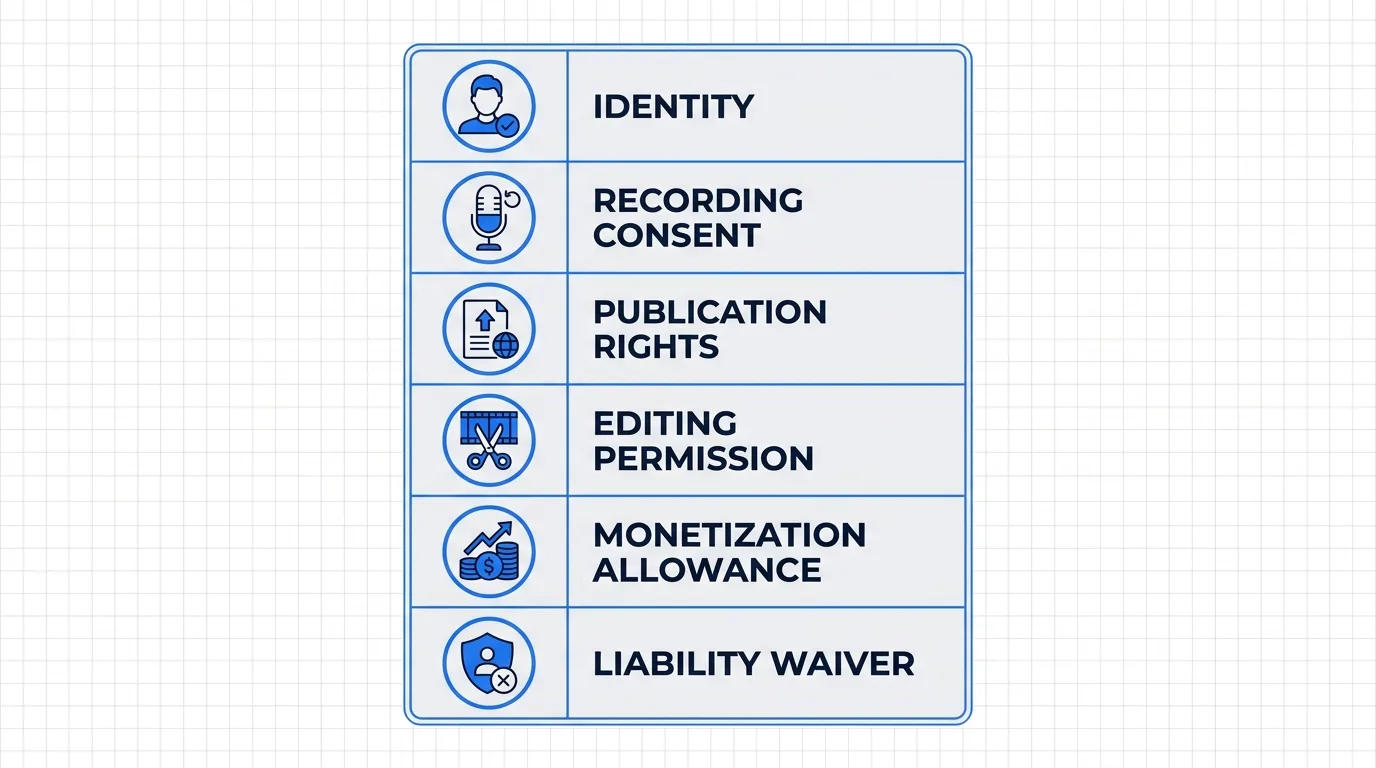
The form typically addresses:
- Confirmation of the guest’s identity and age
- Voluntary consent to be recorded on audio and video
- Permission to edit, excerpt, or remix the raw footage
- Right to publish across your podcast, YouTube channel, social clips, and newsletters
- Allowance for monetization, ads, and paid distribution
- Credit or attribution expectations (if any)
- Liability waiver for statements made during the interview
Why You Can’t Rely on a Verbal “Sure, Go Ahead”
Verbal permission sounds fine until a listener disputes a claim, a brand questions your licensing chain, or a platform flags your content. At that point, you need proof. A signed release creates a paper trail that demonstrates good faith and gives you defensible rights if someone challenges your use of the recording.
It also sets expectations upfront. Guests who sign a release know exactly what they are agreeing to, which reduces awkward retraction requests later and keeps the conversation focused. For remote interviews, where recording quality and consent boundaries are harder to verify, a written form is even more critical.
The 6 Clauses Every Podcast Release Should Include
Keep your release tight. Overcomplicated forms get ignored or signed under confusion. The following six clauses cover the essentials without unnecessary legalese:
- Parties and Date – Full legal names and the recording date.
- Recording Consent – Explicit permission to capture audio and video, in person or remotely.
- Publication and Distribution Rights – Broad license to publish on all current and future platforms.
- Editing and Derivative Works – Right to trim, rearrange, or excerpt without further approval.
- Monetization – Permission to run ads, sell sponsorships, or use the clip in paid promotions.
- Release of Claims – Guest waives the right to sue over standard editorial use of the recording.
Guest Release vs. Appearance Release: What’s the Difference?
People often confuse these two documents, but they serve different purposes. A guest release covers recorded content meant for broadcast or streaming. It focuses on audio/video rights, editing, and distribution. An appearance release covers on-camera presence at an event, live stream, or behind-the-scenes shoot where the footage may be used for promotional stills, event recaps, or social media clips.
If you are doing a video podcast with a guest sitting at a mic, you need a guest release. If you are filming a B-roll segment at a conference where the guest happens to appear, you need an appearance release. Many shows use both, depending on the format.
How to Collect E-Signatures Without the Paperwork Headache
The biggest friction point is not drafting the form—it is getting it signed before the mic drops. PDF attachments get buried. Email threads get lost. Manual tracking creates delays that kill momentum.
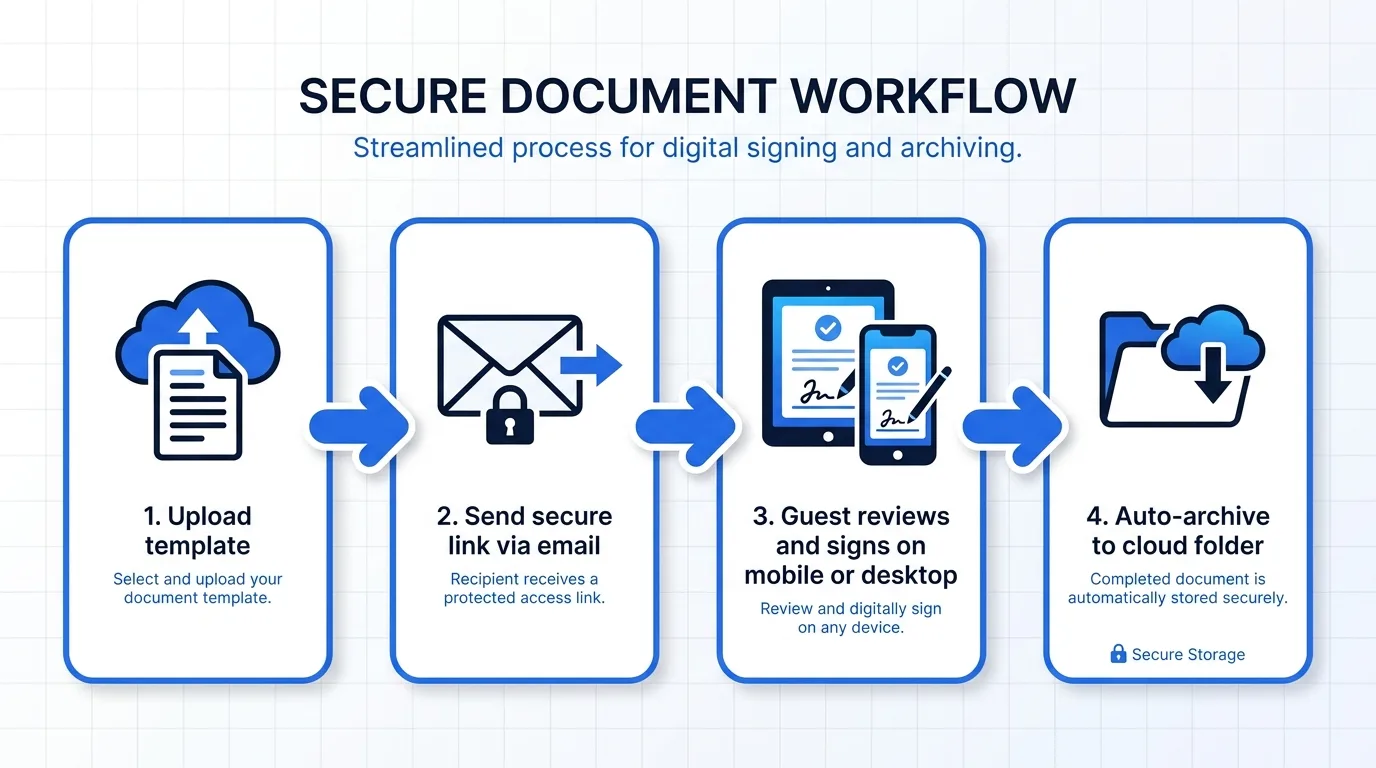
Sending a digital release through an e-signature workflow solves this. You upload the template, paste the guest’s email, and they receive a secure link to review and sign on any device. The signed copy is timestamped, stored, and ready to attach to your distribution checklist. Tools like AiDocX let you send a guest release for e-signature before recording, so you never have to chase a signature mid-edit.
Free Podcast Guest Release Template (2026)
Below is a plain-English template you can adapt for your show. Replace the bracketed fields, keep it to one page, and run it through a quick legal review if your budget allows.
PODCAST GUEST RELEASE FORM Host/Producer: [Your Name / Company] Guest: [Full Legal Name] Date of Recording: [MM/DD/YYYY] Podcast Title: [Show Name] Episode Title/Number: [If known]
By signing below, I confirm that:
- I am at least 18 years old and have the legal right to grant this permission.
- I voluntarily consent to be recorded on audio and video for the episode listed above.
- I grant [Host/Producer] a non-exclusive, worldwide, royalty-free license to edit, publish, distribute, and monetize the recording across all current and future platforms, including YouTube, social media, podcasts, newsletters, and paid promotions.
- I understand that the recording may be excerpted, clipped, or rearranged for editorial purposes.
- I waive any right to approve or censor the final edited version.
- I release [Host/Producer] from liability for standard editorial use of this recording.
- I am not owed compensation for this appearance unless otherwise agreed in writing.
Guest Signature: ________________________ Date: __________ Host Signature: ________________________ Date: __________
Pre-Recording Checklist
- Verify guest identity and confirm age (18+)
- Send release via e-signature link at least 48 hours before recording
- Confirm receipt and resolve any questions the guest raises
- Save the signed PDF to your episode folder and back it up
- Note any special restrictions (e.g., off-the-record segments, NDAs)
- Brief your recording setup to capture clean audio and video
Protecting your show does not require a law degree. It requires a clear agreement, a reliable signing workflow, and a habit of collecting permissions before you hit record. Start using a standardized release today, and you will spend less time worrying about rights and more time making episodes your audience actually wants to hear.
For photo and video shoots, use a model release form instead.
Ready to automate your documents with AI?
Start free with AiDocX — AI contract drafting, meeting minutes, consultation notes, e-signatures, and more in one platform.
Get Started FreeMore from AiDocX Blog
Machine Shop Job Traveler Template: Routing Sheet + Example
Copy a machine shop job traveler template for small job shops. Includes a routing sheet, filled example, traceability fields, sign-offs, and setup tips.
Weekly Status Report Template: 4 Formats + Examples
Copy one of four weekly status report templates for individual work, projects, leadership, or blockers. See a worked example and a practical review checklist.
How to Read a Business Contract: A Founder's Checklist (2026)
A practical way to review parties, scope, money, IP, liability, and exit terms before signing a business contract.
 MinjiLee October 7, 2026 9 min