UGC Creator Agreement Template: Rights, Exclusivity & Payment (2026)
Learn how to structure a UGC creator agreement that protects usage rights, sets clear exclusivity windows, and locks in fair payment terms for both sides.
 James · Content Manager July 4, 2026 5 min read
UGC Creator Agreement Template: Rights, Exclusivity & Payment (2026)
User-generated content drives modern marketing, but without a clear contract, both creators and brands risk misunderstandings that cost time and money. A well-drafted UGC creator agreement locks in usage rights, exclusivity windows, and payment terms before a single video is shot. This guide breaks down the clauses that actually matter in 2026 and shows how to structure them for long-term partnerships.
Why UGC creators need a written agreement
The rise of TikTok, Instagram Reels, and YouTube Shorts turned casual creators into professional content partners. Brands now commission hundreds of UGC assets annually, and informal DM deals no longer hold up in disputes. A written agreement does three things:
- Clarifies deliverables so scope creep doesn’t derail timelines
- Protects both parties if a campaign underperforms or gets pulled
- Establishes a professional baseline that attracts higher-budget clients
Even if you’ve worked together before, every new campaign deserves its own agreement. Creative direction, platform algorithms, and ad spend change fast. A fresh contract keeps expectations aligned.
Usage rights and licensing scope
Usage rights define where, how long, and on what channels a brand may publish your content. This is the single most negotiated section in UGC contracts.
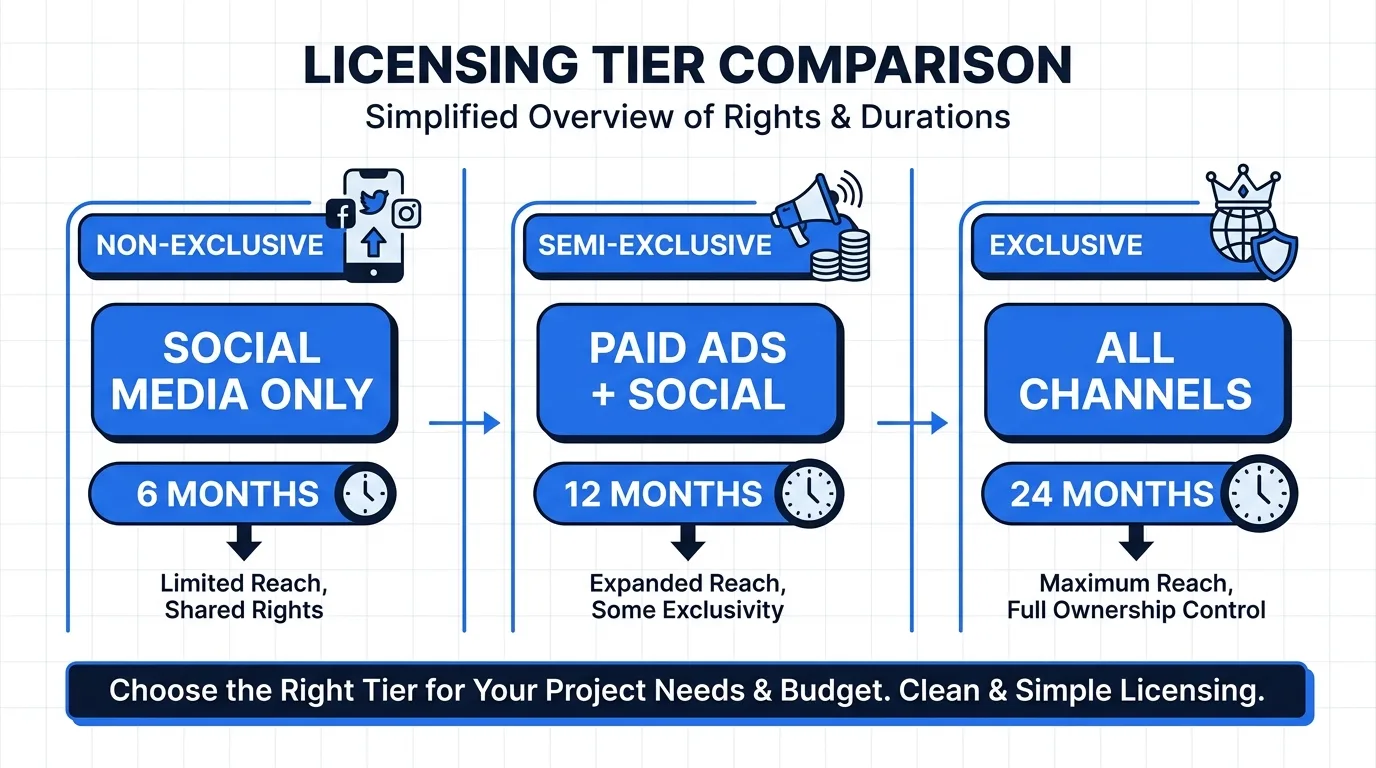
Most agreements fall into three licensing tiers:
- Non-exclusive (organic/social only): The brand uses your content on their owned social channels. You retain full ownership and can license the same asset to competitors. Typical duration: 3–6 months.
- Semi-exclusive (paid ads + social): The brand runs your content in Meta, TikTok, or YouTube ads. You can still license it elsewhere, but the brand gets priority placement during the campaign window. Typical duration: 6–12 months.
- Exclusive (all channels + whitelisting): The brand has sole rights to use, modify, and distribute the content across every channel, including influencer whitelisting and third-party marketplaces. You usually receive a higher fee and cannot license the asset elsewhere for 12–24 months.
Always specify whether the license covers edits, captions, voiceovers, or AI-generated overlays. Brands often assume they can tweak your content freely; a clear clause prevents unwanted alterations.
Exclusivity windows and territorial limits
Exclusivity protects the brand’s ad spend, but poorly worded exclusivity clauses can lock creators out of their own niche for too long.
Key elements to define:
- Category exclusivity: Specify the exact product category (e.g., “plant-based protein powders,” not just “supplements”). Vague language leads to disputes.
- Geographic scope: Limit exclusivity to regions where the brand actually runs ads. A global exclusivity clause is rarely justified for UGC work.
- Time-bound windows: Tie exclusivity to the campaign duration or ad spend threshold. Once the budget pauses, exclusivity should lapse unless renewed in writing.
- Competitor list: If the brand wants to block specific companies, attach a named list. Open-ended “direct competitors” language is unenforceable in many jurisdictions.
Creators should push back on perpetual exclusivity. Brands that pay premium rates can negotiate longer windows; creators who accept low fees should keep exclusivity short and narrowly scoped.
Payment terms and milestone structure
Unclear payment terms are the fastest path to late invoices and strained relationships. The cleanest UGC agreements use milestone-based payouts tied to deliverables.
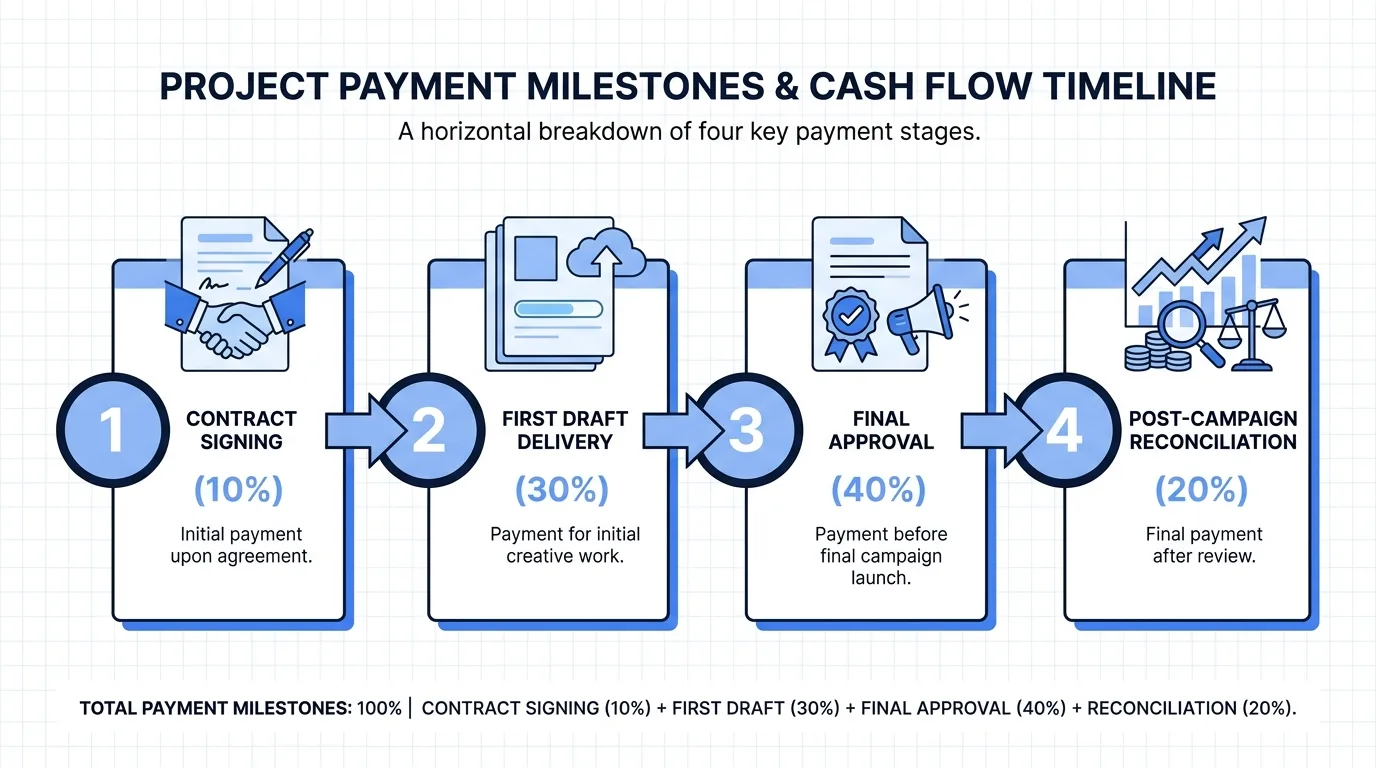
A standard structure looks like this:
- 10% upon signing: Covers initial concepting and scheduling
- 30% after first draft delivery: Paid once raw or edited footage meets the creative brief
- 40% after final approval: Released when the brand signs off on the final cut
- 20% post-campaign reconciliation: Paid 15–30 days after campaign launch, covering any minor revisions or performance-based bonuses
Always include:
- Net payment terms (Net 15, Net 30)
- Late fee policy (e.g., 1.5% monthly on overdue balances)
- Expense reimbursement rules (shipping, props, talent releases)
- Tax documentation requirements (W-9 or W-8BEN for international creators)
When platforms or brands request custom payment structures, get every term in writing. Verbal promises about “performance bonuses” rarely materialize without a contract.
Content ownership and moral rights
In most UGC agreements, creators retain copyright ownership while granting the brand a license to use the content. This distinction matters. Ownership means you can repurpose the footage for your portfolio, show it in case studies, and license it to other clients (unless exclusivity applies).
Moral rights—your right to be credited and to object to derogatory treatments—vary by jurisdiction but should still be addressed:
- Specify whether attribution is required (e.g., “@creatorhandle on social posts”)
- State whether the brand can alter tone, context, or messaging
- Clarify whether you can remove content from your portfolio after exclusivity ends
Brands that want full ownership typically pay a buyout fee. If you’re licensing rather than selling, keep the ownership language explicit.
Termination and revision policies
Campaigns get paused. Creative directions shift. A solid agreement outlines what happens when things change.
Include:
- Kill fee: Compensation if a brand cancels after work has begun (usually 50% of the remaining balance)
- Revision limits: Specify the number of included revisions (typically 2–3 rounds) and the rate for additional edits
- Termination for cause: Grounds for immediate cancellation (breach of brand guidelines, missed deadlines, unauthorized use)
- Force majeure: Standard language covering delays from platform outages, natural disasters, or supply chain issues
Both sides benefit from clear exit ramps. Brands avoid paying full price for unused content; creators avoid working on dead campaigns indefinitely.
Quick pre-signing checklist
Use this list before finalizing any UGC agreement:
- Usage rights tier matches the agreed campaign scope
- Exclusivity window is time-bound and category-specific
- Payment milestones align with deliverable dates
- Late fee and expense reimbursement terms are explicit
- Revision limits and kill fees are stated
- Portfolio and credit rights are preserved
- Both parties have signed and received a copy
If you need a starting point, AiDocX offers a UGC creator agreement template you can customize and e-sign directly in the platform. It covers usage rights, exclusivity, and payment milestones without the legal jargon.
Final thoughts
A UGC creator agreement isn’t a barrier to collaboration—it’s the foundation of it. When usage rights, exclusivity windows, and payment terms are locked in upfront, creators get paid fairly and brands get content they can actually scale. Treat every contract like a campaign brief: specific, measurable, and mutually respectful.
Ready to formalize your next partnership? Draft your agreement, track revisions, and collect signatures without switching tools. Start with a template that fits how UGC work actually moves in 2026.
Creators who also record voice work or sell commissioned art can adapt the voiceover contract template or the artist commission contract template.
Ready to automate your documents with AI?
Start free with AiDocX — AI contract drafting, meeting minutes, consultation notes, e-signatures, and more in one platform.
Get Started FreeMore from AiDocX Blog
Machine Shop Job Traveler Template: Routing Sheet + Example
Copy a machine shop job traveler template for small job shops. Includes a routing sheet, filled example, traceability fields, sign-offs, and setup tips.
Weekly Status Report Template: 4 Formats + Examples
Copy one of four weekly status report templates for individual work, projects, leadership, or blockers. See a worked example and a practical review checklist.
How to Read a Business Contract: A Founder's Checklist (2026)
A practical way to review parties, scope, money, IP, liability, and exit terms before signing a business contract.
 MinjiLee October 7, 2026 9 min