Vendor Agreement Template 2026: Small Business Guide
Protect your small business with a solid vendor agreement. Learn essential clauses for pricing, liability, and data privacy in our 2026 guide.
 James · Content Manager August 2, 2026 11 min read
Vendor Agreement Template 2026: Small Business Guide
Entering into a business relationship with a new supplier or vendor is a pivotal moment for any small business. It can unlock growth, improve efficiency, and expand your market reach. However, without a clear, written contract, that same relationship can quickly become a source of financial loss, operational chaos, and legal vulnerability. In 2026, with evolving data privacy laws and tighter supply chain scrutiny, a generic handshake deal is no longer sufficient protection.
This guide outlines exactly what small business owners need in a vendor agreement before signing on the dotted line. We will break down the essential clauses, highlight common pitfalls, and provide a practical checklist to ensure your business is protected. By the end, you will know how to draft or review a contract that safeguards your interests, clarifies expectations, and sets the stage for a successful partnership.
1. Why You Can’t Rely on a Handshake
Many small business owners hesitate to draft formal contracts because they want to appear friendly or assume that trust is enough. In the early stages of a relationship, this might seem reasonable. However, as soon as a problem arises—whether it’s a late delivery, a billing error, or a quality issue—the lack of a written agreement becomes a significant liability.
A verbal agreement is difficult to enforce and often leads to "he said, she said" disputes. A written vendor agreement serves as the single source of truth for both parties. It removes ambiguity and ensures that both the vendor and the buyer have a shared understanding of what is being delivered, at what cost, and under what conditions.
Furthermore, formal contracts are often required by other stakeholders. If you are seeking investment, applying for loans, or partnering with larger enterprises, they will require proof of standardized vendor management practices. A robust vendor agreement demonstrates professionalism and operational maturity, which can enhance your credibility in the marketplace.
2. Scope of Work and Deliverables
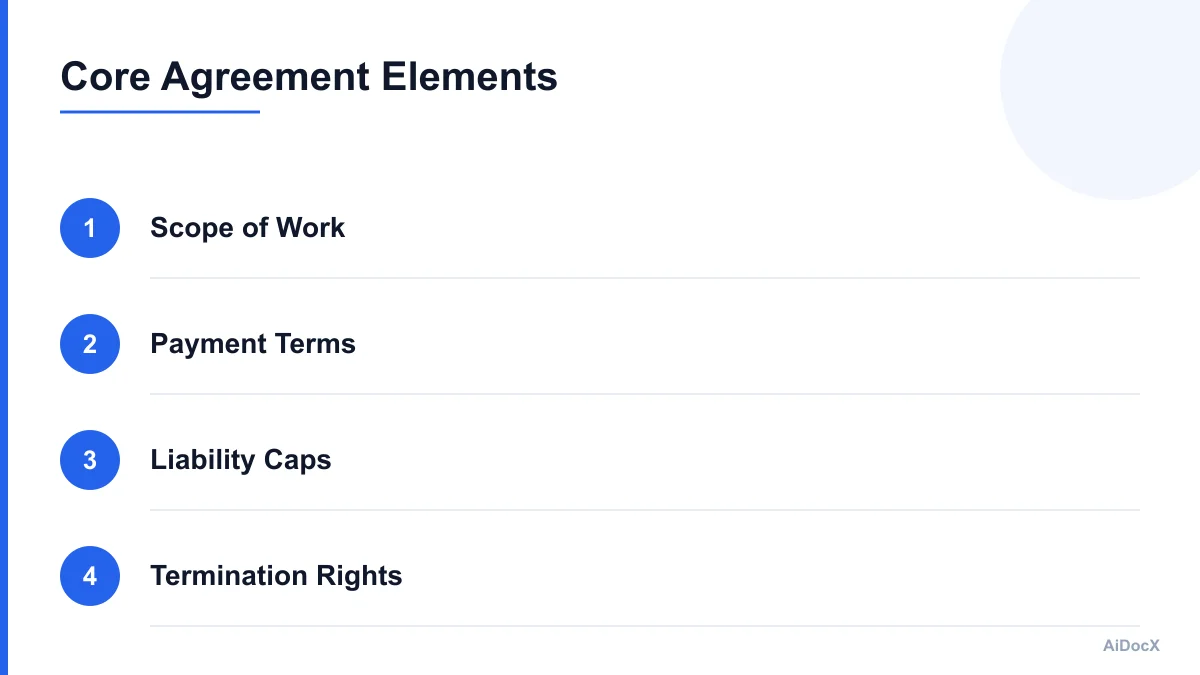
The heart of any vendor agreement is the Scope of Work (SOW). This section defines exactly what the vendor will do for your business. Vagueness here is the number one cause of project failure and dissatisfaction. Instead of general terms like "provide marketing services" or "supply office materials," you need specific, measurable deliverables.
Be Specific About Deliverables
For a software vendor, this might mean specifying the number of user licenses, the level of technical support, and the uptime guarantee. For a manufacturing supplier, it could involve detailing the materials used, the quality standards (e.g., ISO certifications), and the acceptable defect rate.
Define Acceptance Criteria
How will you know the work is done? Establish clear acceptance criteria. For example, if you are hiring a graphic design agency, define how many revisions are included and what constitutes "final" approval. If you are sourcing raw materials, define the inspection process upon delivery. Without these metrics, a vendor may consider their job complete when you are still unsatisfied.
Include Milestones and Timelines
Break down the scope of work into manageable milestones with clear deadlines. This allows you to monitor progress and address issues early. If a milestone is missed, the contract should outline the consequences, such as a right to cure the defect or a penalty fee.
3. Payment Terms and Pricing Structure
Money matters should never be left to assumption. The payment section of your vendor agreement must detail how, when, and why payments will be made. Disputes over invoicing are common and can strain cash flow and relationships.
Fixed Price vs. Time and Materials
Determine the pricing model that best fits your project. A fixed-price contract is predictable and protects you from cost overruns, but it may be higher initially as vendors factor in risk. Time and materials (T&M) contracts offer flexibility but can lead to budget creep if not strictly monitored. For ongoing supplier relationships, a volume-based pricing structure with tiered discounts might be more appropriate.
Payment Schedule and Net Terms
Specify the payment schedule. Will payments be made upfront, upon milestone completion, or on a recurring basis? Define the "Net" terms clearly. Common terms include Net 15, Net 30, or Net 60, meaning payment is due 15, 30, or 60 days after the invoice date. Late payment penalties should also be included to incentivize timely payments from your side and protect your cash flow.
Expense Reimbursement
If the vendor will incur expenses on your behalf (such as travel or third-party software licenses), define the process for reimbursement. Require pre-approval for expenses over a certain amount and specify the type of receipts required. This prevents unexpected costs from appearing on your final invoice.
4. Liability, Indemnification, and Insurance
One of the most critical sections of a vendor agreement is liability. This part of the contract determines who is responsible if things go wrong. Whether a vendor’s product causes injury, their negligence leads to data loss, or they breach confidentiality, you need to know who bears the financial burden.
Limitation of Liability
Vendors often try to cap their liability to a small percentage of the contract value (e.g., 100% of fees paid). As the buyer, you may want this cap to be higher or excluded for certain types of damages, such as gross negligence, willful misconduct, or intellectual property infringement. Conversely, vendors will insist on caps to manage their risk. Negotiate a balance that reflects the potential impact of a failure.
Indemnification Clauses
An indemnification clause requires the vendor to compensate you for losses resulting from their actions. For example, if a vendor’s software infringes on a third party’s copyright and you get sued, the vendor should cover your legal costs and damages. Similarly, if a vendor’s product causes physical harm to your customer, they should indemnify you against those claims.
Insurance Requirements
Require the vendor to maintain specific insurance coverage. This might include general liability, professional liability (errors and omissions), and cyber liability insurance. Specify the minimum coverage amounts and require them to provide certificates of insurance periodically. This ensures that if a claim is made, there is an insurance fund to cover it, rather than leaving you to chase a small business for compensation.
5. Data Privacy and Security Clauses
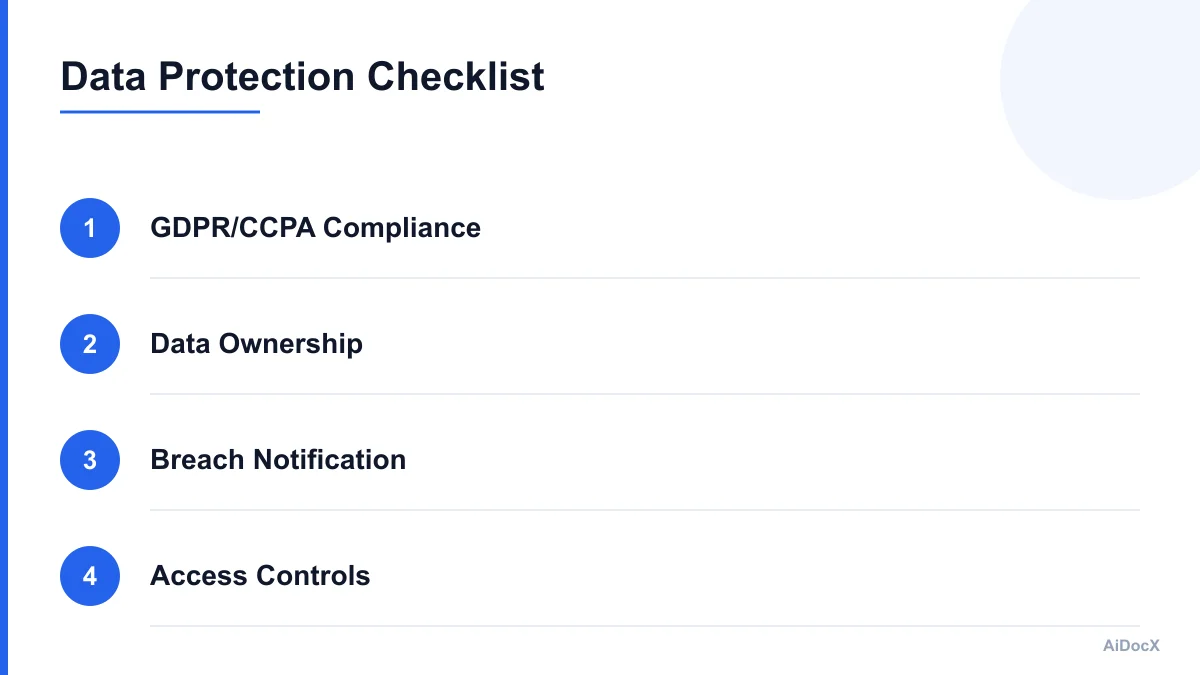
In 2026, data privacy is not just a legal compliance issue; it is a core business risk. If your vendor handles customer data, employee information, or proprietary business data, your agreement must include robust data protection clauses. Regulations like GDPR, CCPA, and emerging state-level laws impose strict obligations on both data controllers and processors.
Data Ownership and Usage
Clearly state that you retain ownership of all data provided to the vendor. The vendor should not use your data for their own purposes, such as training AI models or selling to third parties, unless explicitly permitted. Define the scope of data processing and ensure it aligns with your privacy policy.
Security Standards and Breach Notification
Require the vendor to implement industry-standard security measures, such as encryption, access controls, and regular security audits. Specify the timeline for notifying you in the event of a data breach. Typically, this should be within 24-72 hours of discovery. Late notification can exacerbate the damage and lead to regulatory fines that you may be held liable for.
Subcontractor Restrictions
Vendors often outsource parts of their work. Restrict their ability to subcontract your data processing without your prior written consent. If they do subcontract, ensure that the subcontractor is bound by the same data protection obligations as the primary vendor.
6. Termination and Exit Strategies
It is essential to plan for the end of the relationship before it begins. Life is unpredictable, and business needs change. A well-drafted vendor agreement includes clear termination clauses that allow you to exit the relationship smoothly, whether due to poor performance, change in strategy, or simply mutual agreement.
Termination for Convenience
Ideally, you want the right to terminate the contract "for convenience," meaning you can end the relationship without needing to prove a breach. This clause usually requires a notice period, such as 30 or 60 days, giving the vendor time to wind down operations.
Termination for Cause
Define what constitutes a material breach that allows for immediate termination. Examples include failure to meet service level agreements (SLAs), insolvency, illegal activity, or repeated failure to deliver. Specify the cure period, if any, allowing the vendor a chance to fix the issue before termination.
Transition and Knowledge Transfer
Upon termination, require the vendor to assist in the transition. This may include transferring data, providing documentation, and training your staff or a new vendor. Specify that all confidential information and proprietary materials must be returned or destroyed, with certification provided in writing. A smooth exit prevents operational disruption and protects your intellectual property.
7. Common Mistakes to Avoid
Even with a template, small business owners often make critical errors when drafting vendor agreements. Being aware of these pitfalls can save you significant time and money.
- Ignoring Intellectual Property (IP) Rights: Assume that hiring someone does not automatically give you ownership of their work. Explicitly assign IP rights in the contract, especially for custom work, software, or creative content.
- Overlooking Dispute Resolution: Specify how disputes will be resolved. Arbitration can be faster and cheaper than litigation, but it may limit your appeal rights. Define the governing law and jurisdiction to avoid costly legal battles in unfamiliar venues.
- Neglecting Auto-Renewal Clauses: Many contracts have automatic renewal provisions. Ensure you understand the notice period required to opt-out. If you miss the window, you may be locked in for another year.
- Using Outdated Templates: Legal landscapes change. Using a template from five years ago may not account for current data privacy laws or industry-specific regulations. Always review and update your templates regularly.
8. Streamlining with AiDocX
Drafting a comprehensive vendor agreement from scratch can be time-consuming for small business owners who are already wearing many hats. While legal counsel is ideal for complex contracts, many small businesses need a practical, efficient solution for standard vendor relationships.
This is where tools like AiDocX can be invaluable. AiDocX drafts a vendor agreement covering pricing, delivery, and liability, then gets it signed and stored with a verifiable audit trail. By leveraging AI, you can generate a customized contract in minutes, ensuring that all essential clauses are included and tailored to your specific needs. The platform not only simplifies the drafting process but also manages the signing and storage of documents, providing peace of mind and organization.
Whether you are onboarding a freelance graphic designer or a manufacturing supplier, AiDocX helps you maintain professional standards without the overhead of legal fees. It ensures that every agreement is consistent, compliant, and easily accessible for future reference.
9. Pre-Signing Checklist
Before you sign any vendor agreement, use this checklist to ensure you have covered all bases. This final review step can prevent costly misunderstandings and legal issues down the line.
- Scope of Work: Are deliverables, timelines, and acceptance criteria clearly defined?
- Payment Terms: Are pricing, payment schedules, and late fee policies explicit?
- Liability: Are liability caps and indemnification clauses fair and protective?
- Data Privacy: Are data ownership, security standards, and breach notification terms included?
- Termination: Are the conditions and notice periods for termination clearly stated?
- IP Rights: Is intellectual property ownership assigned to your business?
- Dispute Resolution: Is the governing law and dispute mechanism specified?
- Insurance: Does the vendor meet your insurance requirements?
- Signatures: Are all necessary parties signed and dated?
Conclusion
A vendor agreement is more than just a legal formality; it is a strategic tool that protects your small business and sets the foundation for a successful partnership. By clearly defining the scope, payment, liability, and data privacy terms, you minimize risk and maximize clarity. In 2026, with increasing regulatory complexity, taking the time to draft a robust agreement is not optional—it is essential.
Don’t let the fear of complexity prevent you from protecting your business. Start by using a reliable template or platform like AiDocX to draft your initial agreements. As your business grows, you can refine these documents with legal counsel. Remember, a good contract isn’t about distrust; it’s about clarity and mutual respect. Take the first step today by reviewing your current vendor relationships and ensuring they are backed by solid, written agreements. Your future self will thank you.
Ready to automate your documents with AI?
Start free with AiDocX — AI contract drafting, meeting minutes, consultation notes, e-signatures, and more in one platform.
Get Started FreeMore from AiDocX Blog
AI Press Release Generator: Write One in Minutes (+ Template)
Learn what a press release is, the AP-style format, and how to use an AI press release generator to draft one in minutes with a fill-in template.
James September 21, 2026 10 min
Angel Investment Agreement (2026): Key Terms + Template Guide
Angel investor agreement explained: the four structures founders actually sign, key terms, securities basics, a closing checklist and a summary term sheet.
James September 21, 2026 12 min
Artist Commission Contract Template (2026): Free Template + Guide
Free artist commission contract template with license tiers, deposit, revision, refund and AI-training clauses, plus a guide to getting it e-signed.
James September 21, 2026 12 min