Web Design Contract Template: Scope, Revisions & Payment (2026)
Protect both parties with a clear web design contract. Covers project scope, revision limits, IP ownership, and payment schedules. Download a free template.
 James · Content Manager July 4, 2026 5 min read
Web Design Contract Template: Scope, Revisions & Payment (2026)
A web design contract isn’t just paperwork—it’s the difference between a smooth launch and a scope-creep nightmare. Whether you’re a freelancer onboarding a new client or a business hiring a designer, clear terms protect both sides from day one. This template walks you through the four clauses that actually matter: scope, revisions, ownership, and payment.
Scope of Work: Define Exactly What’s Included
Vague descriptions like “build a website” are the fastest path to unpaid overtime. A well-drafted scope of work lists every deliverable, platform, and milestone. Be specific about page counts, content type, integrations, and testing requirements. When scope is ambiguous, clients naturally assume everything falls under your responsibility, which typically costs designers 30–40% of projected profit.
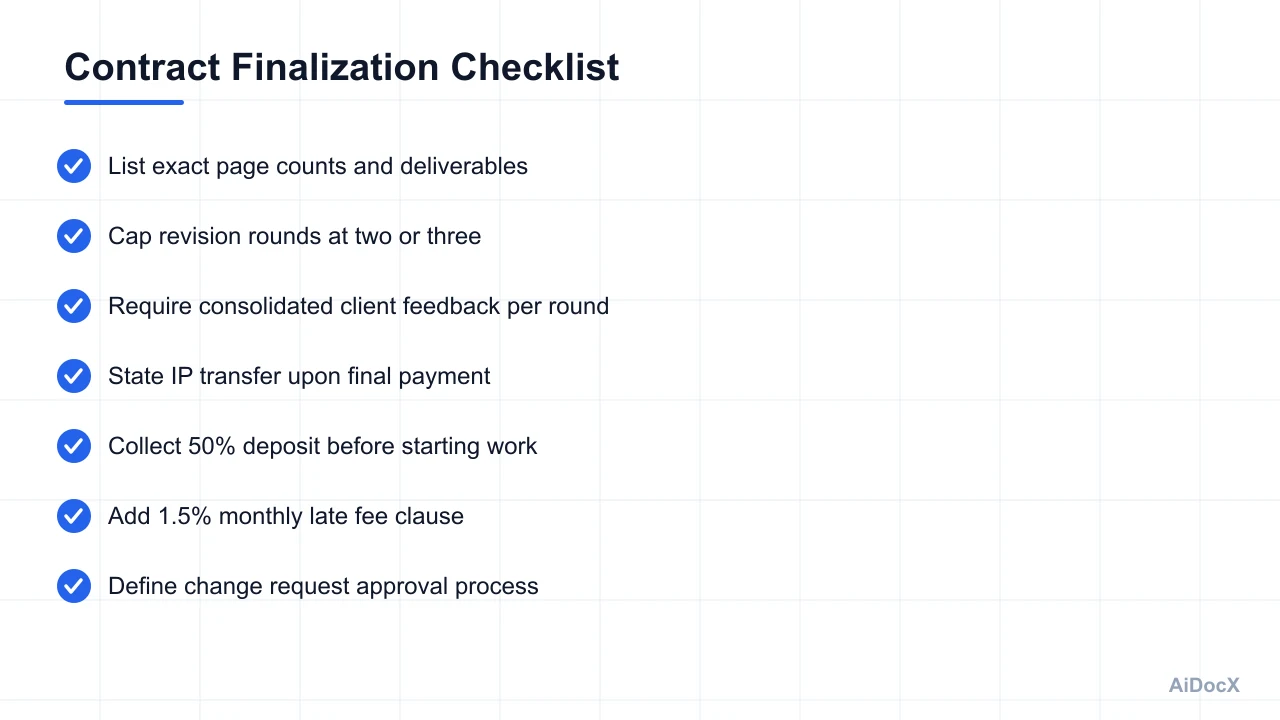
When defining scope, include:
- Number of pages and their primary purpose (e.g., homepage, about, contact, blog)
- Design assets (custom illustrations, stock photography licensing, brand guidelines)
- Technical setup (hosting, domain, CMS selection, email integration)
- Third-party tools (payment gateways, CRM connections, analytics)
- Deliverables format (Figma/Adobe XD files, source code, style guide)
Ambiguity here is what fuels client requests like “Can you also handle SEO and social media setup?” If it isn’t written down, it isn’t in scope.
Revision Limits and Change Requests
“Unlimited revisions” sounds like a competitive advantage, but it rarely is. Without a cap, a project can stretch months past the original deadline while the designer chases moving targets. Feedback fatigue is real, and so is the need for structure.
Set a clear revision cycle in your contract:
- Specify the number of revision rounds (typically 2–3)
- Define what counts as a revision vs. a new request (minor tweaks vs. structural changes)
- Require all feedback in a single consolidated email per round
- State the turnaround time for client responses (e.g., 5 business days)
- Charge a fixed rate for additional rounds or out-of-scope changes
Change requests should follow a simple paper trail: client submits request → designer assesses impact → written approval → adjusted timeline/invoice. This keeps both parties aligned and prevents passive-aggressive Slack threads.
Intellectual Property and Ownership
Who owns the final website? Who owns the design files before payment clears? These questions need explicit answers.
Standard practice in 2026:
- Pre-payment: The designer retains full copyright over all drafts, mockups, and source files.
- Upon final payment: Ownership of the final website code and approved design transfers to the client.
- Designer portfolio rights: Include a clause allowing you to display the work in your portfolio, case studies, or award submissions.
- Third-party assets: Clarify that stock photos, plugins, and licensed fonts remain under their original licenses, and specify who is responsible for renewal fees.
- Open-source code: Note that any open-source components retain their original licenses and do not transfer as exclusive property.
If you’re the client, make sure the contract states exactly when IP transfers. Vague language like “rights transfer upon completion” can leave you legally exposed if a payment dispute arises.
Payment Schedule and Late Fees
Cash flow kills more design businesses than bad clients. A structured payment schedule keeps projects moving and sets professional expectations. Pairing this with automated invoicing and payment reminders removes the awkwardness of chasing balances.
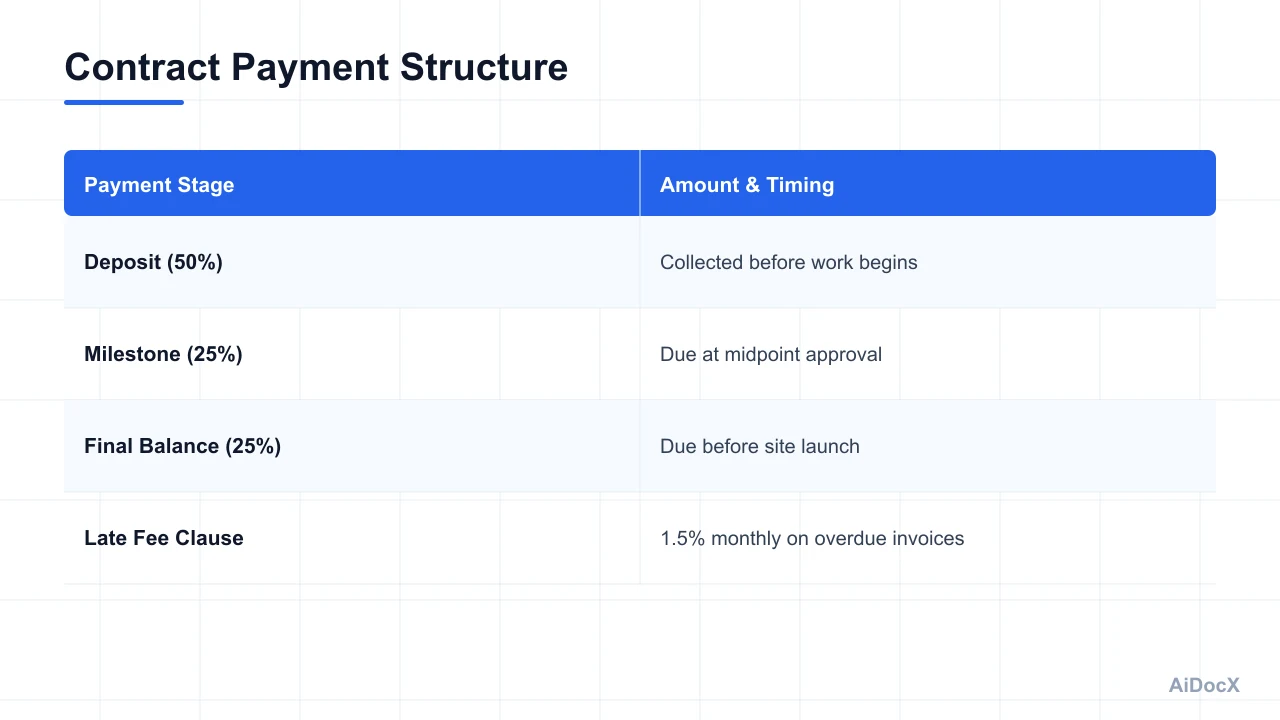
Recommended structure:
- Deposit (50%): Collected before any work begins. Non-refundable once design work starts.
- Milestone payment (25%): Due at the midpoint (e.g., after wireframes or homepage approval).
- Final balance (25%): Due before final files are exported or the site goes live.
- Late fee clause: Add a 1.5% monthly interest charge on overdue invoices, or pause work after 10 days past due.
- Expense reimbursement: Pre-approve hosting, domain, and premium plugin costs, and bill them directly or add them to the final invoice.
Never ship the final build or transfer hosting credentials until the last invoice clears. A simple “payment due before launch” line in the contract is your enforcement mechanism.
Kill Fee and Termination Clauses
Projects don’t always end happily. A termination clause protects you if the client disappears, the budget gets slashed, or the working relationship breaks down. Keep all termination communications in writing to avoid misunderstandings later.
Include:
- Notice period: Either party can terminate with 14 days’ written notice.
- Kill fee: Client owes 100% of the deposit plus a percentage (usually 50%) of the remaining balance for work already completed.
- Work stoppage: Designer pauses all tasks immediately upon termination notice.
- Asset return: Client receives only the files they paid for; unreleased drafts revert to the designer.
- Mutual release: Both parties agree no further claims will be made after settlement.
Having this clause doesn’t mean you expect a breakup. It means you have a professional exit ramp if things go sideways.
Checklist: Finalize Your Contract Before Signing
Before you send the agreement to signature, run through this quick audit:
- Scope lists every deliverable, page count, and technical requirement
- Revision limit is stated (e.g., “3 rounds of minor revisions”)
- Change request process and pricing are defined
- IP transfer triggers on final payment, not “project completion”
- Portfolio usage rights are granted to the designer
- Payment schedule includes deposit, milestones, and late fees
- Termination clause covers kill fees and work stoppage
- Both parties have space to sign, date, and print names
Working on brand and print design instead? Our graphic design contract template covers usage rights, source files and licensing of fonts and stock.
Ready to Send Your Contract?
A web design contract only works if it’s signed and stored properly. AiDocX generates web design contracts with revision limits and IP terms, ready to e-sign, so you can stop copy-pasting clauses and start building. Upload your project details, review the generated terms, and send it to your client in minutes.
Protect your time, get paid on schedule, and keep your next launch on track.
Ready to automate your documents with AI?
Start free with AiDocX — AI contract drafting, meeting minutes, consultation notes, e-signatures, and more in one platform.
Get Started FreeMore from AiDocX Blog
Machine Shop Job Traveler Template: Routing Sheet + Example
Copy a machine shop job traveler template for small job shops. Includes a routing sheet, filled example, traceability fields, sign-offs, and setup tips.
Weekly Status Report Template: 4 Formats + Examples
Copy one of four weekly status report templates for individual work, projects, leadership, or blockers. See a worked example and a practical review checklist.

How to Read a Business Contract: A Founder's Checklist (2026)
A practical way to review parties, scope, money, IP, liability, and exit terms before signing a business contract.
 MinjiLee October 7, 2026 9 min