Wet vs Electronic Signatures: What’s Legally Valid in 2026?
Discover whether wet or electronic signatures hold legal weight in 2026. Learn compliance rules, audit requirements, and how to choose safely.
 James · Content Manager July 4, 2026 5 min read
Wet vs Electronic Signatures: What’s Legally Valid in 2026?
If you’ve ever hesitated before clicking “Sign” on a contract, you’re not alone. The shift from paper to digital has been complete, but questions about legal validity still linger. The short answer: electronic signatures are legally binding in 2026 for virtually all business documents, and they often carry stronger security and audit protections than their ink-and-paper counterparts.
The Short Answer: E-Signatures Are Now the Default
Electronic signatures have been legally recognized for over two decades. Laws like the U.S. ESIGN Act, the EU eIDAS regulation, and similar frameworks across Asia and Latin America established that a digital mark carries the same legal weight as a handwritten one. By 2026, that baseline has only solidified. Most commercial agreements, vendor contracts, NDAs, employment offers, and procurement documents are now routinely executed electronically.
The shift isn’t just cultural—it’s operational. Organizations that still default to wet signatures face slower deal cycles, higher mailing costs, and greater risk of lost or misfiled paperwork. That said, “legally valid” doesn’t mean “unregulated.” Validity depends on how the signature is applied, recorded, and stored.
How E-Signatures Meet Legal Standards
Courts and regulators don’t just accept any digital mark. To hold up under scrutiny, an electronic signature must satisfy three core requirements:
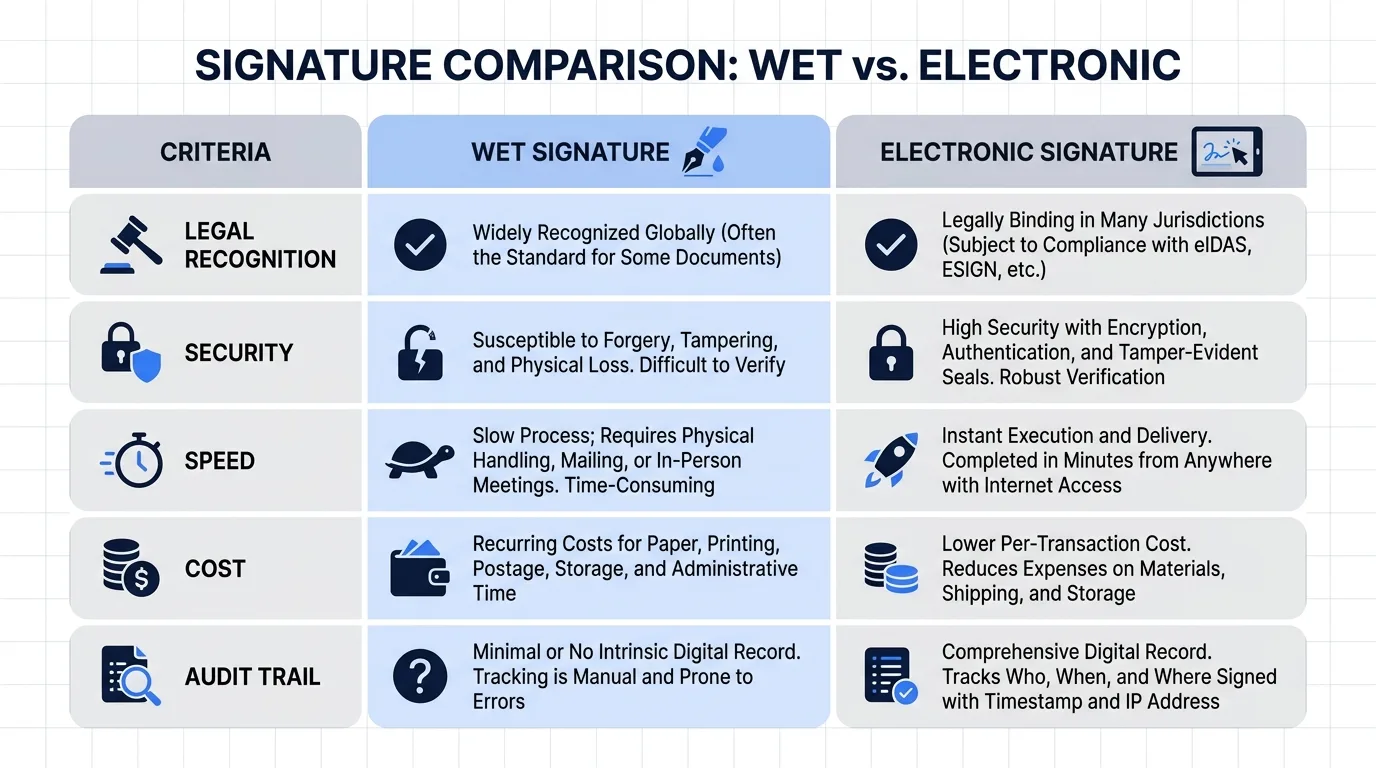
- Intent to sign: The signer must demonstrate a clear willingness to be bound by the document. Clicking a “I Agree” button, typing a name in a signature field, or drawing a mark with a stylus all qualify.
- Association with the record: The signature must be logically linked to the specific document version. This means the signed file and the signature data cannot be separated without breaking the chain of custody.
- Record retention: The signature event must be captured in a way that proves who signed, when, and from where. Timestamps, IP addresses, and device fingerprints form the backbone of this record.
When these elements are in place, the signature is legally enforceable. Platforms like AiDocX e-signatures are legally valid with a full audit trail, meaning every action is logged in a tamper-evident format that stands up to internal reviews and external disputes.
When a Wet Signature Is Still Required
Despite the broad acceptance of digital signatures, certain documents still carry wet-signature requirements. These exceptions are narrowing but remain relevant in 2026:
- Real estate transactions: Many jurisdictions still require notarized wet signatures for deeds, mortgages, and title transfers due to fraud prevention statutes.
- Wills and estate planning: Several states and countries mandate handwritten or notarized wet signatures for last wills and trusts.
- Certain family law documents: Divorce decrees, adoption papers, and guardianship filings often require physical execution.
- Government-issued forms: Some tax filings, immigration applications, and licensing documents still specify ink-only execution.
- Counterparty preference: If the other party explicitly requires a wet signature in their vendor policy, you may need to honor that request to close the deal.
Even in these cases, the trend is toward hybrid execution. Remote online notarization (RON) and digitally certified documents are gaining acceptance, but you should always verify local requirements before switching formats.
Security and Fraud Prevention in 2026
One of the strongest arguments for electronic signatures is their security profile. A wet signature on a printed contract offers almost no built-in protection against alteration or impersonation. Once signed, the document can be photocopied, scanned, or edited without leaving a trace.
Electronic signatures solve this through cryptographic controls and workflow enforcement:
- Tamper-evident sealing: Once signed, the document is hashed. Any change to the file invalidates the seal, alerting all parties immediately.
- Multi-factor authentication: Requiring SMS codes, email verification, or SSO logins ensures the person signing is who they claim to be.
- IP and geolocation logging: Courts increasingly view location data as supporting evidence of signer identity and voluntary execution.
- Role-based access control: Only authorized personnel can initiate, modify, or approve documents before they reach the signature stage.
These controls don’t just protect against fraud—they simplify dispute resolution. When a counterparty claims they never signed, the audit log provides a complete timeline of invitations, views, and executions.
Choosing Between Wet and Electronic Signatures
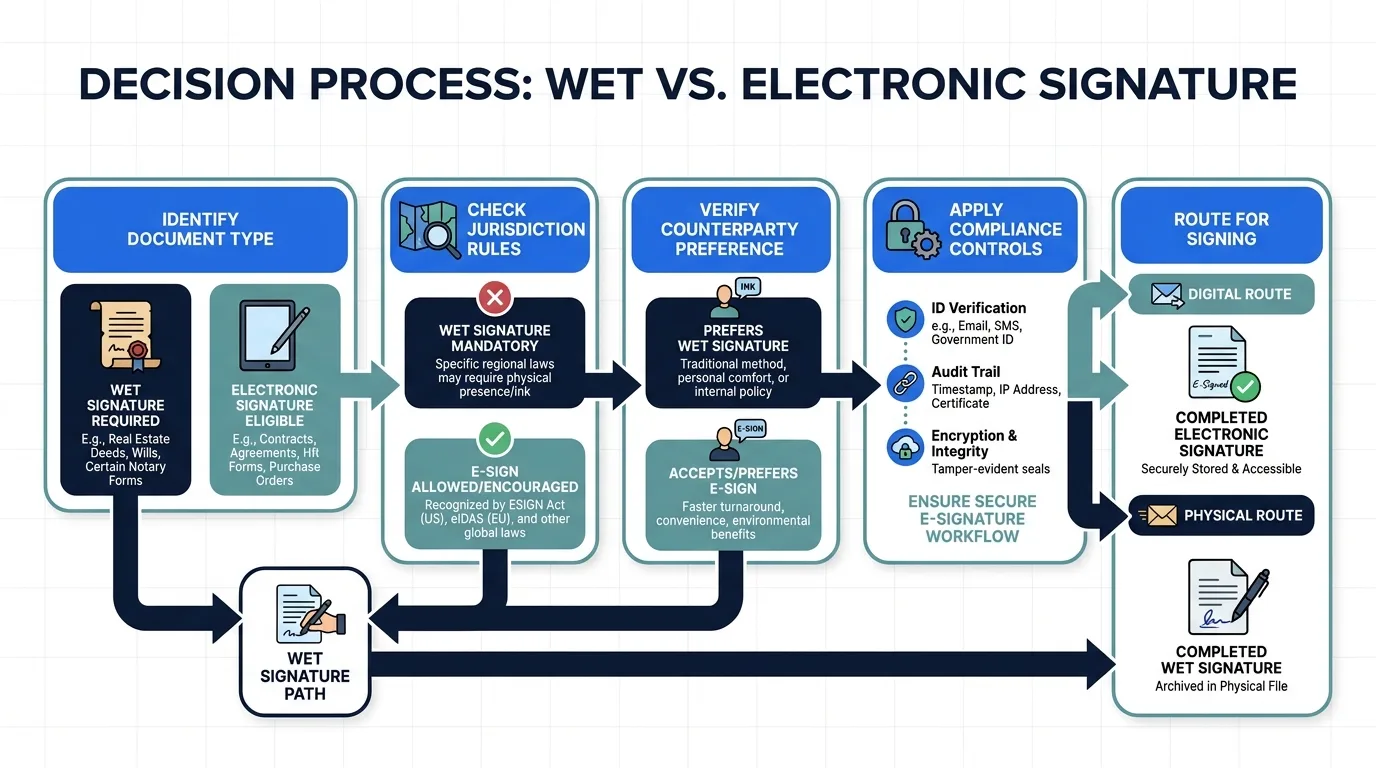
Deciding which format to use shouldn’t require guesswork. Follow this decision framework for business documents:
- Check the legal baseline: Is the document type explicitly exempt from e-signature laws in your jurisdiction? If not, digital is acceptable.
- Review counterparty policy: Does the other organization have a digital-first signing policy? Aligning with their workflow speeds up execution.
- Assess risk and volume: High-volume, low-risk agreements (NDAs, SOWs, purchase orders) are ideal for electronic signing. Low-volume, high-stakes deals may benefit from a hybrid approach.
- Verify storage and retention needs: Ensure your signing platform meets your data residency and archival requirements before routing documents.
- Document the decision: Keep a brief internal note explaining why a specific format was chosen. This supports compliance audits later.
Quick Compliance Checklist
Use this list before routing any document for signature:
- Confirm the document type is eligible for electronic execution in the applicable jurisdiction
- Verify that the signing platform captures intent, association, and retention records
- Ensure multi-factor authentication is enabled for high-value agreements
- Test that the final PDF includes a visible signature field and audit summary
- Store the executed document in a compliant archive with version control
- Notify all parties of the signing deadline and next steps
Final Thoughts
The wet vs. electronic signature debate has largely been resolved. For business documents in 2026, electronic execution is the standard, not the exception. The real question is no longer whether a digital signature is valid, but whether your current process captures it correctly. Building a signing workflow that enforces authentication, logs every action, and stores documents securely will protect your organization far more than insisting on ink.
If you’re looking to standardize how your team executes contracts, explore a platform that prioritizes compliance and transparency. AiDocX e-signatures are legally valid with a full audit trail, so you can move deals forward without sacrificing control.
Ready to automate your documents with AI?
Start free with AiDocX — AI contract drafting, meeting minutes, consultation notes, e-signatures, and more in one platform.
Get Started FreeMore from AiDocX Blog
Machine Shop Job Traveler Template: Routing Sheet + Example
Copy a machine shop job traveler template for small job shops. Includes a routing sheet, filled example, traceability fields, sign-offs, and setup tips.
Weekly Status Report Template: 4 Formats + Examples
Copy one of four weekly status report templates for individual work, projects, leadership, or blockers. See a worked example and a practical review checklist.

How to Read a Business Contract: A Founder's Checklist (2026)
A practical way to review parties, scope, money, IP, liability, and exit terms before signing a business contract.
 MinjiLee October 7, 2026 9 min