White-Label Subcontractor Agreement Template for Agencies (2026)
Outsource delivery without losing your client. Use this white-label subcontractor agreement template to protect scope, IP, and confidentiality.
 James · Content Manager July 4, 2026 4 min read
White-Label Subcontractor Agreement Template for Agencies (2026)
Outsourcing delivery is how agencies scale, but revealing your vendors to clients creates a retention risk. A white-label subcontractor agreement keeps your end vendor hidden while locking in clear scope, payment terms, and confidentiality. Below is a practical template framework agency owners can adapt immediately.
Why Agencies Need a White-Label Subcontractor Agreement
When you hand off work to a freelancer or specialized firm, the client still pays you a margin. Without a written white-label agreement, you leave three things to chance: who actually owns the deliverables, how your vendor communicates with the client, and what happens if the vendor tries to take the client directly.
A white-label contract solves this by explicitly stating that the vendor works under your brand, cannot contact the client without your approval, and must treat your pricing and processes as confidential. It also protects you if the vendor misses a deadline or delivers subpar work. Instead of managing client fallout, you manage the subcontractor.
Core Clauses Every Template Must Include
Most agencies draft these agreements from scratch, but the structure stays consistent across industries. A solid template covers the following sections:
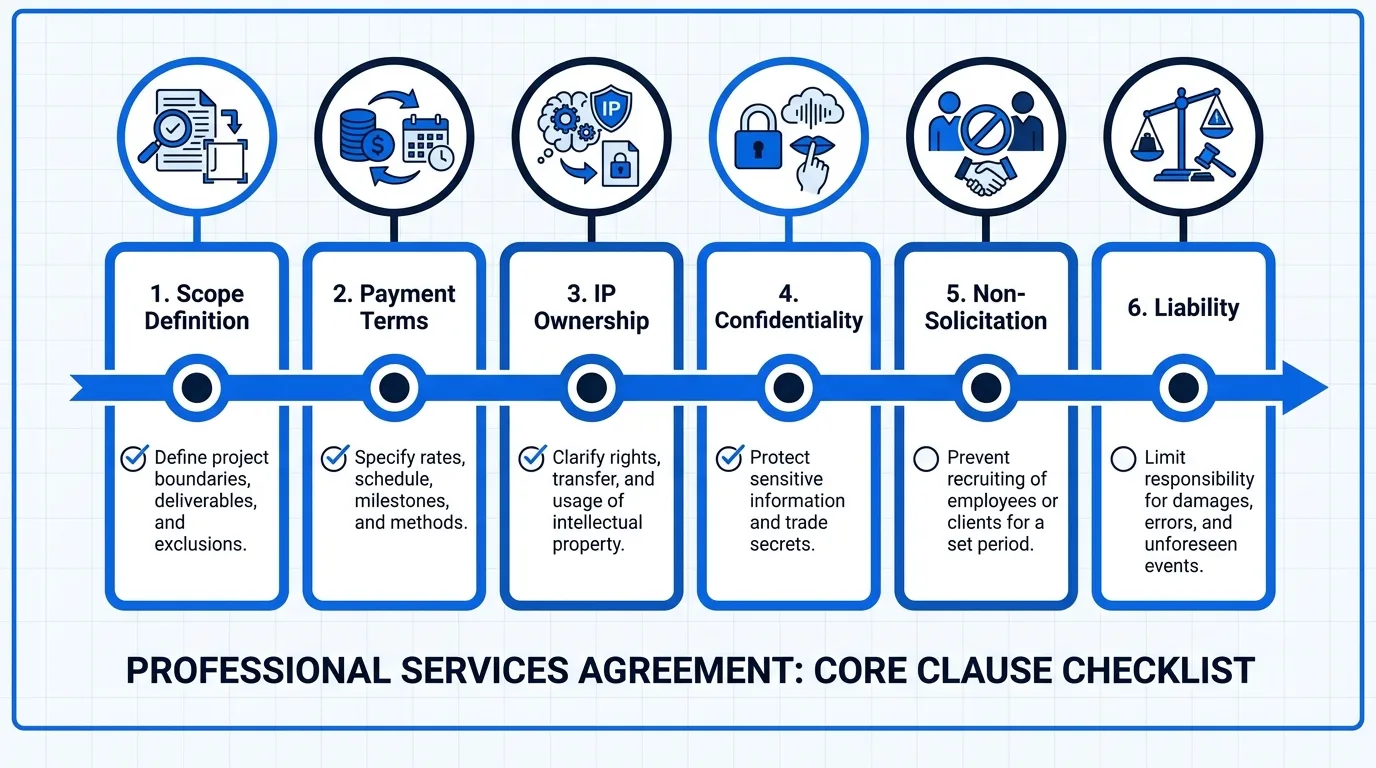
- Scope of Work: Exact deliverables, revision limits, and acceptance criteria.
- Payment Terms: Fixed fee or hourly rate, invoicing schedule, and late payment penalties.
- Intellectual Property Assignment: Clear statement that all work product transfers to the agency upon payment.
- Confidentiality: NDA language covering client data, internal processes, and pricing.
- Non-Solicitation: Prohibition on contacting, hiring, or poaching the agency’s clients.
- Liability & Indemnification: Cap on damages and vendor responsibility for third-party claims.
- Termination: Notice period, kill fee, and handoff requirements.
How to Structure Scope, Pricing, and Payment Terms
Vague scope is the fastest way to burn margin on outsourced work. Define deliverables in measurable units (e.g., “three landing page variants,” “10,000-word whitepaper,” “four social posts per week”). Pair each deliverable with a hard deadline and a revision ceiling.
For pricing, choose either a fixed project rate or a capped hourly block. Fixed rates protect your margin when the vendor underestimates effort; capped hours protect you when the vendor overestimates. Specify that payment triggers on written acceptance from you, not from the end client. Add a 10–15% retention clause if the project spans multiple months, releasing the final tranche after the last deliverable passes QA.
Confidentiality and Non-Solicitation: Keeping the Client Yours
The real asset you outsource is your relationship with the client, not just your time. A white-label subcontractor agreement must include a standalone non-solicitation clause that lasts 12–24 months after contract termination. It should explicitly forbid the vendor from:
- Reaching out to the client without written agency consent
- Using client data for their own marketing or case studies
- Bidding on the client’s future projects directly
Pair this with a mutual confidentiality clause that treats your internal pricing, client lists, and operational workflows as trade secrets. If the vendor leaks your client’s identity or your margin structure, you need clear liquidated damages or injunctive relief language to act fast.
Workflow: From Draft to Signed Agreement in Minutes
Manual contract creation kills momentum. Instead of emailing Word documents back and forth, agencies typically use a standardized workflow:
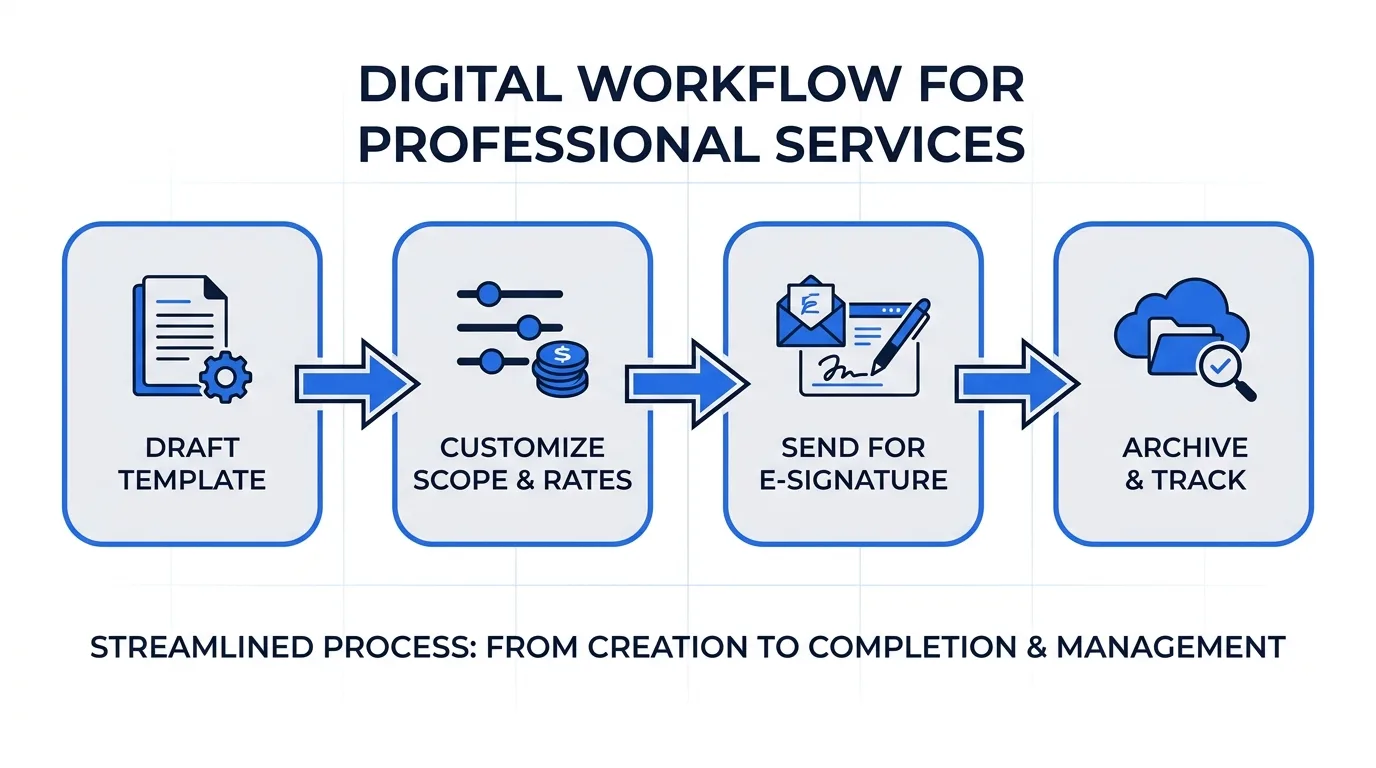
- Pull the white-label template from your contract library.
- Fill in project-specific fields (scope, rate, deadlines).
- Route the document to the vendor for review.
- Send for e-signature with role-based access controls.
- Archive the executed copy and link it to the project file.
Platforms like AiDocX let agencies generate and e-sign white-label subcontractor agreements without switching between three different tools. You keep version control, audit trails, and client-ready formatting in one place.
Quick Implementation Checklist
Before onboarding your next vendor, run through this list:
- Scope defined with measurable deliverables and deadlines
- Payment structure fixed or capped with clear invoicing dates
- IP assignment clause explicitly states work-for-hire upon payment
- Confidentiality covers client data, pricing, and internal processes
- Non-solicitation clause lasts 12–24 months post-termination
- Termination section includes notice period and file handoff requirements
- Change order process documented for scope adjustments
- Executed copy archived in a searchable contract repository
If the partner will sell your product under your brand rather than theirs, see our distribution agreement template instead.
Next Steps for Scaling Your Agency’s Delivery
A white-label subcontractor agreement isn’t a legal formality—it’s a margin protection tool. When scope, payment, confidentiality, and non-solicitation are locked in writing, you can outsource aggressively without fearing client leakage. Standardize your template, automate the signing workflow, and track execution in one system. That’s how agencies turn subcontracting into a repeatable growth engine instead of a recurring compliance headache.
Ready to automate your documents with AI?
Start free with AiDocX — AI contract drafting, meeting minutes, consultation notes, e-signatures, and more in one platform.
Get Started FreeMore from AiDocX Blog
Machine Shop Job Traveler Template: Routing Sheet + Example
Copy a machine shop job traveler template for small job shops. Includes a routing sheet, filled example, traceability fields, sign-offs, and setup tips.
Weekly Status Report Template: 4 Formats + Examples
Copy one of four weekly status report templates for individual work, projects, leadership, or blockers. See a worked example and a practical review checklist.
How to Read a Business Contract: A Founder's Checklist (2026)
A practical way to review parties, scope, money, IP, liability, and exit terms before signing a business contract.
 MinjiLee October 7, 2026 9 min