Project vs Retainer Freelance Contracts in 2026
Learn when to use project-based or retainer freelance contracts. Compare pricing, scope control, and cash flow to pick the right billing model.
 James · Content Manager July 4, 2026 5 min read
Project vs Retainer Freelance Contracts in 2026
Choosing how you bill a client is one of the highest-leverage decisions a freelancer makes. A project contract locks scope to a specific deliverable, while a retainer contract secures recurring access and predictable income. Neither is inherently better—each solves a different business problem. This guide breaks down when to use each model, how they affect pricing and scope, and how to match the right contract to your capacity and client needs.
Project-Based vs. Retainer: The Core Difference
The distinction comes down to time, scope, and billing rhythm.
- Project contract: You deliver a defined output (a website, a brand guide, a quarterly audit) by a set deadline. Payment is tied to milestones or final delivery.
- Retainer contract: You reserve a set block of hours or days per month for a client. Payment is recurring, and the relationship extends beyond a single deliverable.
One is a transaction. The other is a partnership. Your contract template should reflect that difference from day one.
When to Choose a Project Contract
Project contracts work best when the work is discrete, measurable, and time-bound.
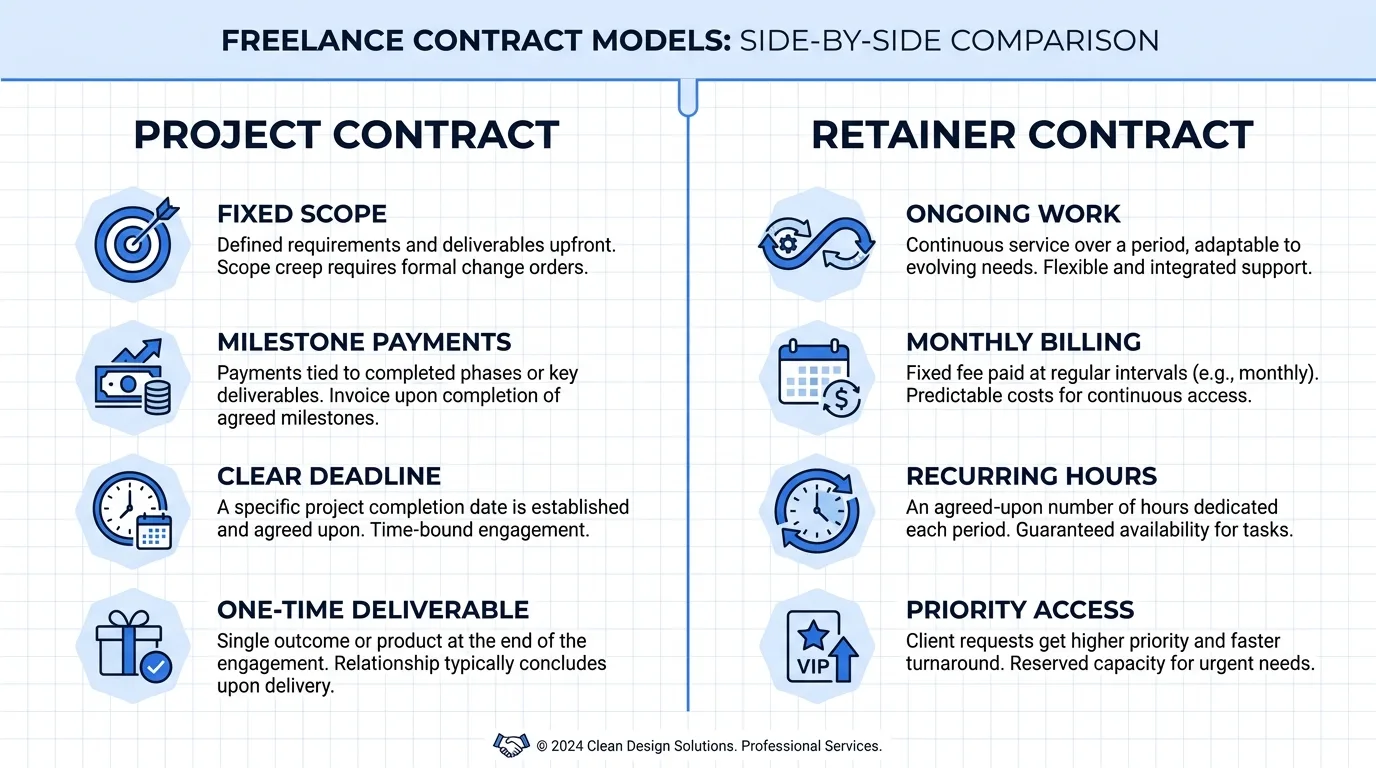
- Clear deliverables: The client knows exactly what they want and when they need it.
- One-off needs: A product launch, a compliance review, a single campaign.
- Scope is stable: Requirements won’t shift once the contract is signed.
- You need cash flow predictability per phase: Milestone payments reduce the risk of chasing invoices.
If a client says, “We need this done by Friday,” a project contract keeps both sides aligned. It also makes it easier to quote accurately because you can estimate hours against a fixed brief.
When to Choose a Retainer Contract
Retainers suit ongoing work, advisory roles, and clients who value priority access over per-task pricing.
- Recurring needs: Monthly content, continuous marketing support, ongoing development.
- Unpredictable daily workload: You can’t easily scope hours week to week.
- Client wants fast turnaround: Retainers typically include SLAs or priority scheduling.
- You want stable monthly revenue: Predictable cash flow makes business planning simpler.
Retainers also reduce client acquisition costs. A signed retainer means less time pitching and more time delivering.
Pricing and Payment Structure
How you price each model affects both your income stability and your client’s budget.
Project pricing
- Fixed fee per deliverable or milestone
- Deposits (typically 25–50%) to secure the start date
- Final payment before handover or within 15–30 days
- Best for: Well-defined scope, limited revisions, clear acceptance criteria
Retainer pricing
- Monthly flat fee for a set hour block (e.g., 10, 20, or 40 hours)
- Rollover options for unused hours (or “use it or lose it” clauses)
- Quarterly rate adjustments tied to inflation or scope shifts
- Best for: Ongoing support, advisory work, clients with steady operational needs
Neither model is cheaper overall. A project contract might cost more per hour, while a retainer often discounts the rate in exchange for guaranteed availability.
Scope Control and Change Management
Scope creep kills both project margins and retainer capacity. The contract should dictate how changes are handled.
For project contracts:
- Define revision limits upfront (e.g., two rounds included, additional rounds billed at an hourly rate)
- Require written sign-off before moving to the next milestone
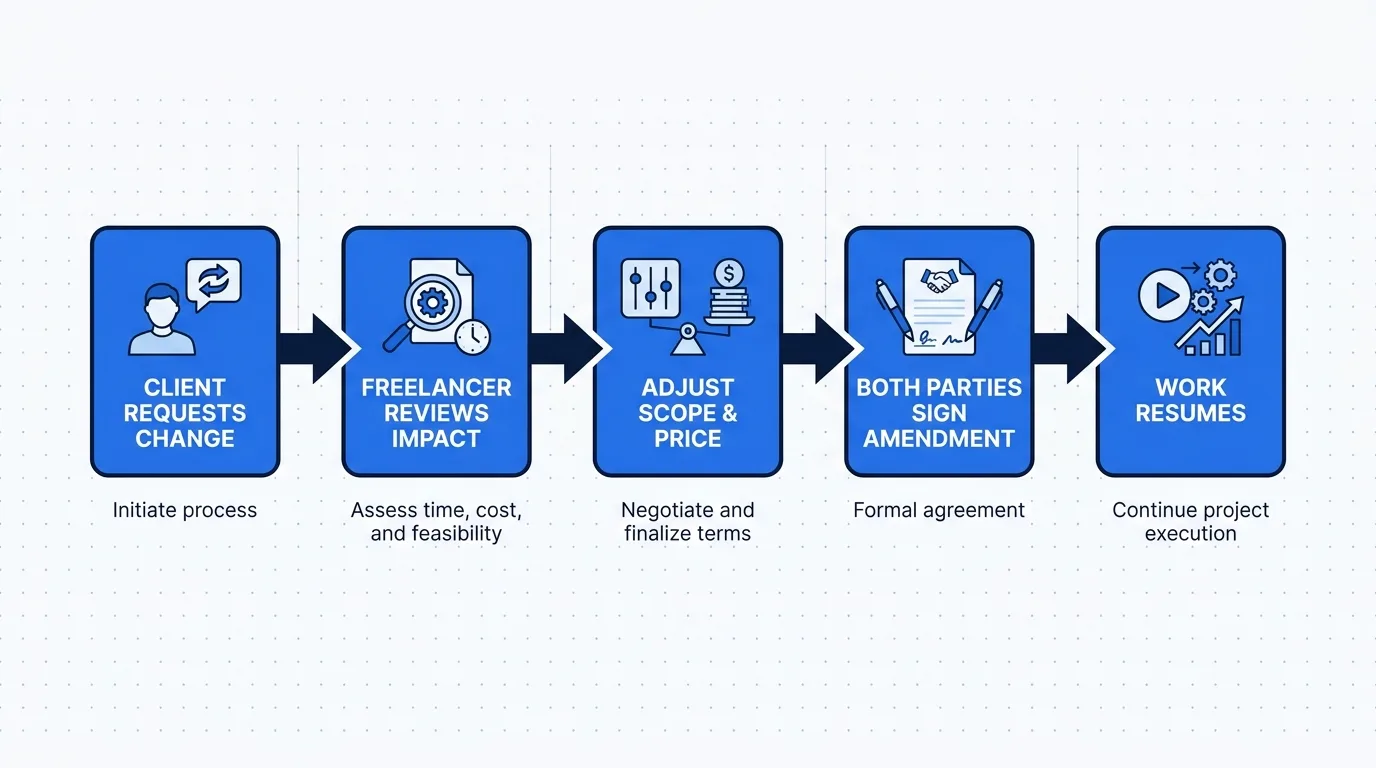
- Add a change order clause for requests outside the original brief
For retainer contracts:
- Cap monthly hours and specify what happens when you exceed them
- Classify requests by priority (urgent, standard, backlog)
- Include a pause or reduction clause if the client’s workload drops for two consecutive months
Both models benefit from a documented change process. Without it, “quick favors” become unpaid labor.
Which Contract Type Fits Your Workflow?
Match the contract to your capacity, client behavior, and business goals.
- Choose project if you prefer finishing work, onboarding new clients regularly, or working with clients who have one-time needs.
- Choose retainer if you want recurring revenue, deeper client relationships, or a steady pipeline without constant prospecting.
- Mix both if you run a hybrid practice. Many freelancers secure retainer clients for baseline income and take project work for higher-margin spikes.
AiDocX has both project and retainer contract templates ready to customize, so you can switch models without rewriting terms from scratch.
Quick Decision Checklist
Use this before signing your next agreement:
- Is the deliverable clearly defined and time-bound?
- Can I estimate hours within a 15% margin of error?
- Does the client need ongoing support or a one-time output?
- Do I need predictable monthly cash flow?
- Have I included a change order or hour-overage clause?
- Is payment tied to milestones or a fixed monthly date?
- Does the contract specify revision limits or priority tiers?
If you answered yes to the first four, lean project. If you answered yes to the last three, lean retainer. If you answered yes to all, a hybrid structure may be your best fit.
Ready to Lock In the Right Agreement?
The contract you choose shapes how you work, how you get paid, and how you grow. Pick the model that matches your client’s needs and your capacity, then document scope, payment terms, and change management before work begins. If you want a starting point, AiDocX offers customizable project and retainer contract templates that cover the essentials—so you can spend less time drafting and more time delivering.
Ready to automate your documents with AI?
Start free with AiDocX — AI contract drafting, meeting minutes, consultation notes, e-signatures, and more in one platform.
Get Started FreeMore from AiDocX Blog
Machine Shop Job Traveler Template: Routing Sheet + Example
Copy a machine shop job traveler template for small job shops. Includes a routing sheet, filled example, traceability fields, sign-offs, and setup tips.
Weekly Status Report Template: 4 Formats + Examples
Copy one of four weekly status report templates for individual work, projects, leadership, or blockers. See a worked example and a practical review checklist.

How to Read a Business Contract: A Founder's Checklist (2026)
A practical way to review parties, scope, money, IP, liability, and exit terms before signing a business contract.
 MinjiLee October 7, 2026 9 min