What Happens to Your Stock Options When You Leave a Startup (2026)
Leaving a startup with vested stock options? Here's exactly what happens — the 90-day exercise window, vested vs unvested options, what it costs to exercise, good vs bad leaver rules, and the steps to take before you resign.
 MinjiLee · Strategic Lead June 28, 2026 9 min read
What Happens to Your Stock Options When You Leave a Startup
You're resigning from a startup, and somewhere in your offer letter from two years ago was a grant of stock options. Now the practical questions hit: Do you keep them? Do they expire? Do you have to pay for them — and when? Getting this wrong is expensive, because the most common outcome is the quietest one: people walk away and let valuable options disappear simply because they didn't understand the deadline.
This guide walks through exactly what happens to your options when you leave, in plain terms.
Vested vs. Unvested: The First Split
The moment you give notice, your options divide into two buckets.
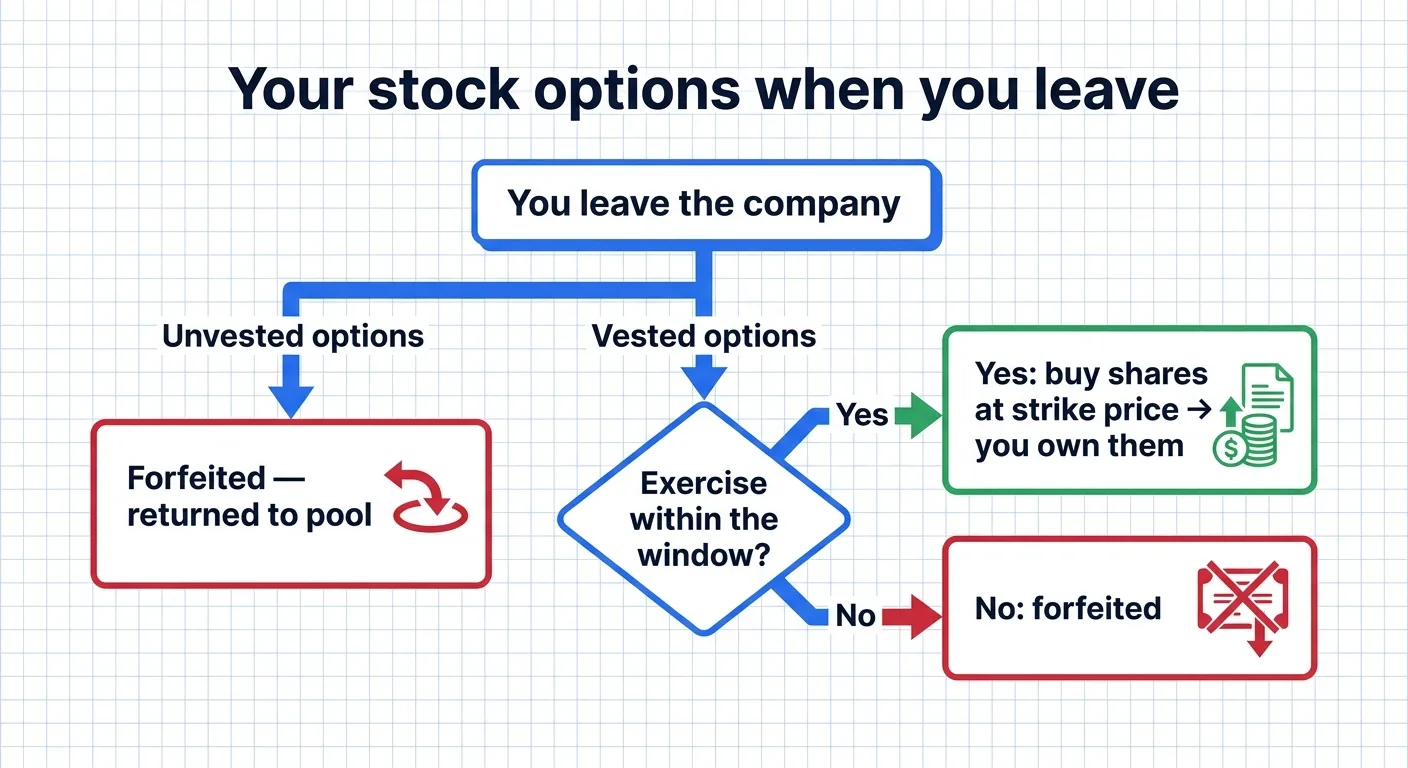
- Unvested options are forfeited. Vesting rewards staying; the portion you haven't earned yet goes back to the company pool the day you leave. (See how vesting schedules work in our ESOP and vesting guide.)
- Vested options are yours to exercise — but usually only for a limited time, and usually only if you pay for them.
So the real question isn't "do I keep my options?" It's "what do I do with my vested options before the clock runs out?"
The Exercise Window: The Deadline That Catches People
When you leave, a post-termination exercise (PTE) window starts. Historically this has been just 90 days. If you don't exercise your vested options within the window, they're gone — forfeited back to the company no matter how much they're worth.
This 90-day rule has become controversial precisely because it punishes long-tenured employees who can't afford to exercise on short notice. In response, some startups now offer extended exercise windows — often up to 10 years — as a fairer, more competitive perk. The only way to know which applies to you is to read your grant documents. Don't assume.
What It Actually Costs to Exercise
Exercising isn't free. To exercise, you buy the shares at your strike price (the fixed price set when the options were granted). If you have 10,000 vested options at a $1.00 strike, exercising costs $10,000 in cash.
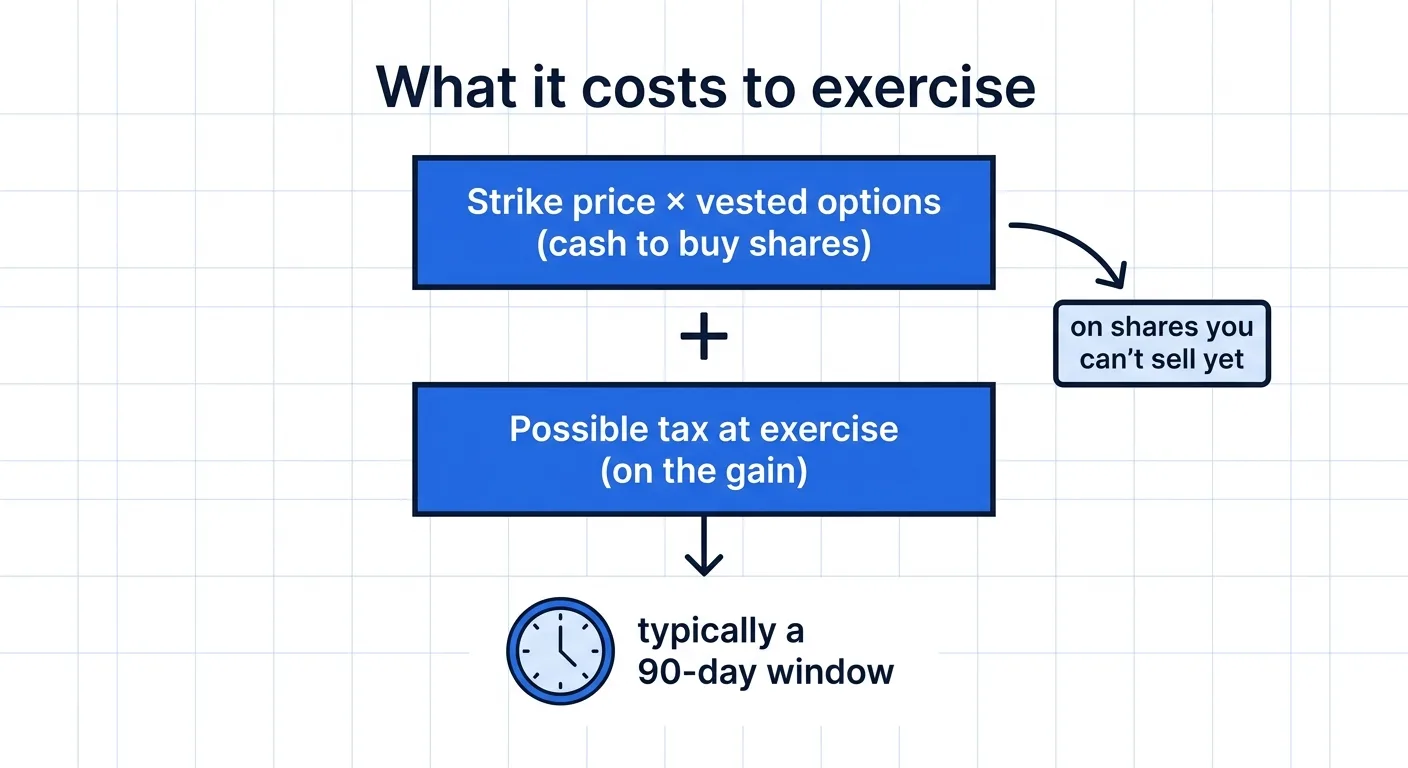
And there can be a second cost: tax. Depending on your country and the type of option, exercising can create a taxable event on the difference between the strike price and the current fair market value — even though you haven't sold anything or received any cash. This "phantom" tax bill is what makes the 90-day window so painful: people are asked to spend real money, and possibly owe tax, on shares they can't yet sell.
The combination of strike price + potential tax, on a short deadline, for illiquid shares is the single biggest reason employees forfeit valuable options. Plan for it before you resign, not after.
Good Leaver vs. Bad Leaver
How you leave can change what you keep. Many plans distinguish:
- Good leaver — you leave on ordinary terms (resignation in good standing, redundancy, illness). You typically keep your vested options and the standard exercise window applies.
- Bad leaver — you're terminated for cause or breach an agreement. Plans can shorten the window, or in some cases let the company repurchase even vested shares, sometimes at a lower price.
These definitions live in your stock option agreement and the company's plan documents. If "cause" is defined broadly, it matters — read it.
What to Do Before You Resign
A short checklist that protects you:
- Find your documents. Your grant agreement and the plan document define your strike price, vested amount, exercise window, and leaver terms. Everything below depends on them.
- Confirm your exact vested count and the window length. Don't rely on memory — ask for a current statement in writing.
- Model the cost. Strike price × vested options = cash to exercise. Then get advice on the likely tax. Know the total number before you decide.
- Ask about an extended window. If your plan offers one, or the company has granted them before, it's worth asking.
- Get the timing right. Because the window starts at termination, the date you leave starts the clock. Coordinate your decision with that date.
The goal is simple: make a deliberate decision about valuable options, instead of discovering the deadline after it's passed.
Frequently Asked Questions
Do I lose my stock options when I leave a startup? You lose unvested options immediately. Your vested options are yours to exercise, but typically only within a limited post-termination window (historically 90 days) and only if you pay the strike price. Miss the window and the vested options are forfeited too.
How long do I have to exercise stock options after leaving? The classic window is 90 days from your termination date, but many startups now offer extended windows of up to several years. Your grant documents state the exact period — check them rather than assuming 90 days.
Do I have to pay to exercise my vested options? Yes. Exercising means buying the shares at your strike price, and depending on your jurisdiction and option type there can also be tax due at exercise — even before you can sell the shares.
What is the difference between a good leaver and a bad leaver? A good leaver (e.g. ordinary resignation) generally keeps vested options under the standard terms. A bad leaver (e.g. termination for cause) may face a shortened window or company repurchase rights, depending on the plan.
The Bottom Line
Vested options are a real asset, but they come with a deadline and a cost. The employees who capture their value are the ones who read the documents, model the numbers, and decide on purpose — well before they hand in their notice. If your grant currently lives in an old email, dig it out and read it today, not in your final week.
Want to understand the document itself? You can upload your stock option agreement and ask AI to explain it in plain English — vesting, window, and leaver terms included — free to start.
Ready to automate your documents with AI?
Start free with AiDocX — AI contract drafting, meeting minutes, consultation notes, e-signatures, and more in one platform.
Get Started FreeMore from AiDocX Blog
Buy Sell Agreement Template (2026): Triggers, Valuation and Funding for Co-Owners
A free buy sell agreement template for co-owners, with triggering events, valuation methods, insurance funding and cross-purchase vs. redemption structures.
 James September 26, 2026 12 min
Consignment Agreement Template (2026): Commission, Title, Risk of Loss and Unsold Goods
Free consignment agreement template for makers, artists and boutiques: commission split, title, insurance and how to protect consigned inventory.
James September 26, 2026 9 min
Distribution Agreement Template (2026): Territory, Exclusivity, Minimums and Reseller Terms
Free distribution agreement template (works as a reseller agreement template too): territory, exclusivity, minimums, pricing, IP and termination.
James September 26, 2026 13 min